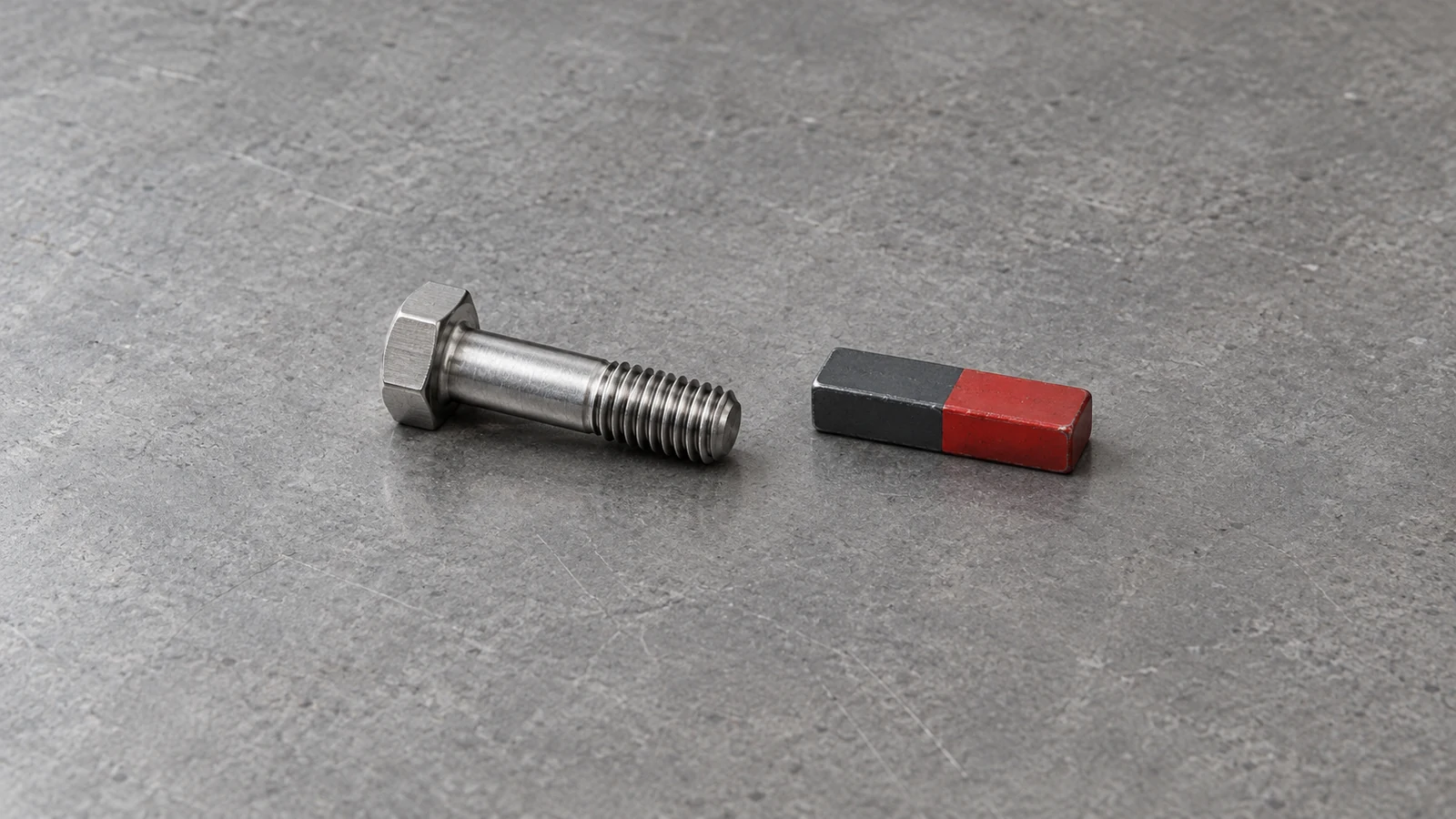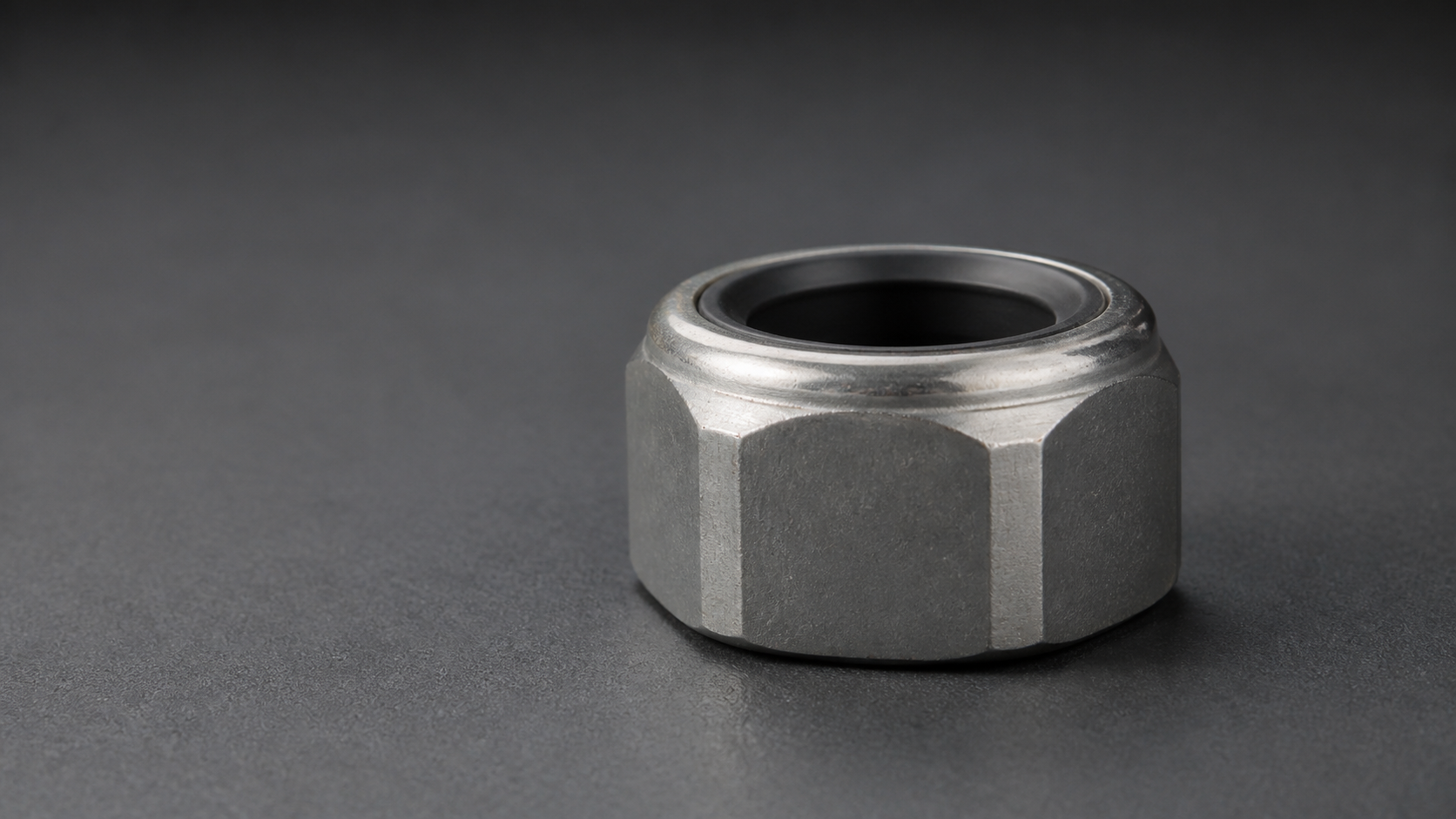
A sample M12 lock nut runs onto the buyer's bolt and the insert is easy to see, yet incoming inspection may still have no basis for signing it off. The problem can sit in a short RFQ description—“M12 nylon insert lock nut”—that does not identify the nut form, the required mechanical properties, the prevailing-torque requirement or the rules for accepting the delivery lot.
The insert is only one construction feature. A purchase specification becomes testable when it separates four decisions: the product identity, the nut's mechanical property class, the functional prevailing-torque requirement and lot acceptance.
One M12 description can refer to different nut forms
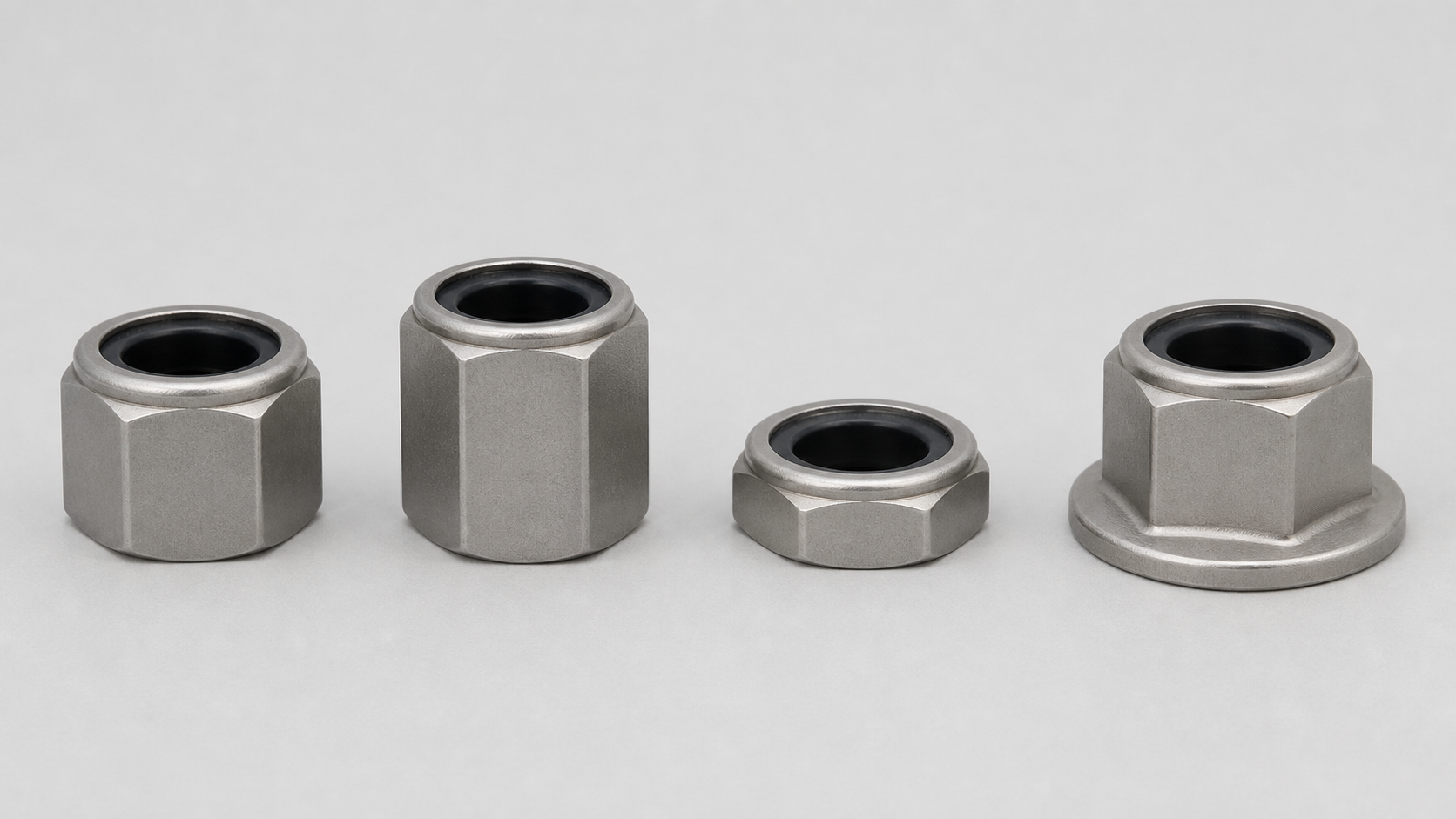
Current ISO product standards distinguish several non-metallic-insert prevailing-torque hexagon nuts. ISO 7040:2025 covers regular nuts, ISO 7041:2025 covers high nuts and ISO 10511:2025 covers thin nuts. The flanged form discussed here has its own basis in ISO 7043:2012. A shared nominal diameter and a visible insert do not make these products interchangeable.
The distinction affects more than catalogue wording. The public scope of ISO 10511 warns that thin nuts have reduced loadability compared with regular or high nuts and are not designed to provide resistance to thread stripping. Limited space or a similar width across flats is therefore not enough to approve a thin nut as a substitute.
Wohe Fastener also lists its non-metallic-insert hexagon lock nut and non-metallic-insert flange lock nut as separate product entries. The RFQ should retain the applicable product standard or controlled drawing. Similar names across ISO, GB/T, DIN or a company specification do not establish equivalence.
Nut property class and prevailing torque are separate requirements
For nuts made from carbon or alloy steel, ISO 898-2:2022 can be referenced within its scope for mechanical and physical properties and nut property classes. Its public scope explicitly excludes prevailing-torque properties, torque/clamp-force properties, weldability and corrosion resistance.
ISO 2320:2015 addresses the functional properties of prevailing-torque steel nuts. It covers all-metal and non-metallic-insert types within its stated scope and treats prevailing torque as a requirement that can be specified and tested separately. Writing “property class 10 nut” therefore does not say how the locking function will be accepted. Seeing an insert does not establish the nut property class either.
If the purchase changes to stainless steel, the mechanical-property basis also changes. ISO 3506-2:2020 covers specified grades and property classes of stainless-steel nuts within its scope, but it likewise excludes prevailing-torque properties. Material family and locking function remain two lines of evidence.
A functional report has to match the ordered condition
ISO 2320 states that its specified prevailing-torque values are based on laboratory test conditions, that actual values in practical applications can vary, and that temperature can influence functional properties. A report headed only “lock nut—pass” cannot be connected reliably to an order.
The buyer needs to know which product standard or drawing, thread, material and property class, finish, mating test part and test basis the report represents. If disassembly and reassembly are expected, the order also needs the applicable project rule or controlled standard for reuse. A single assembly feel cannot create a universal reuse count, service-temperature claim or vibration guarantee.
All-metal and non-metallic-insert nuts are both addressed by ISO 2320, but they retain separate product identities. The project should select and verify the specified product rather than rank two broad families without service conditions.
Sample approval does not define lot acceptance
A sample can help confirm visible form, available space and how that one sample engages with a particular mating part. It does not replace dimensional conformity, evidence of nut mechanical properties, the prevailing-torque functional test or acceptance of the later inspection lot.
ISO 3269:2019 provides a purchaser inspection procedure where no prior agreement exists and a reference procedure for certain conformity disputes. Its public scope excludes high-volume machine assembly, special-purpose applications and specially engineered applications requiring more advanced process control and lot traceability. ISO lists the 2019 edition as current but due for revision; a draft is not a published replacement.
The practical route is to agree sampling and the quality plan before the PO. Appearance and dimensions identify the product; agreed material records address material information; applicable mechanical-property evidence addresses the nut; functional testing addresses prevailing torque; and the project-agreed sampling and acceptance plan determines how the lot is received. Citing ISO 3269 alone does not make it the automatic quality plan for every order.
Turn “M12 nylon insert lock nut” into an executable RFQ
For one order line, record the fields that actually control quotation, testing and receipt:
- product standard or controlled drawing, including regular, high, thin or flanged form;
- nominal diameter × pitch and the specified thread requirements;
- material family and applicable nut property class;
- the delivered finish or uncoated condition;
- mating bolt or functional-test-part information;
- service conditions and whether disassembly or reassembly is expected;
- the prevailing-torque standard or customer specification, required report and lot-acceptance agreement; and
- quantity.
These fields do not replace joint design. They align the quotation, sample approval and incoming inspection with the same product. For an enquiry to Wohe Fastener, send the product standard or drawing, thread, material/property class, finish, mating part, service conditions, functional and acceptance requirements, and quantity. Special service conditions and final approval remain with the customer's project specification and responsible engineer.
Technical references
- ISO 7040:2025, ISO 7041:2025, ISO 10511:2025 and ISO 7043:2012 support the product-form boundaries.
- ISO 898-2:2022 and ISO 3506-2:2020 support the mechanical-property boundaries for their respective material scopes.
- ISO 2320:2015 supports the prevailing-torque functional boundary.
- ISO 3269:2019 supports the limited acceptance-inspection discussion.
The public status and scope of these standards were rechecked on 31 August 2026. Public summaries do not replace controlled standard text. Numerical torque limits, test procedures, sampling and acceptance criteria must come from the applicable current standard, customer drawing or project specification.