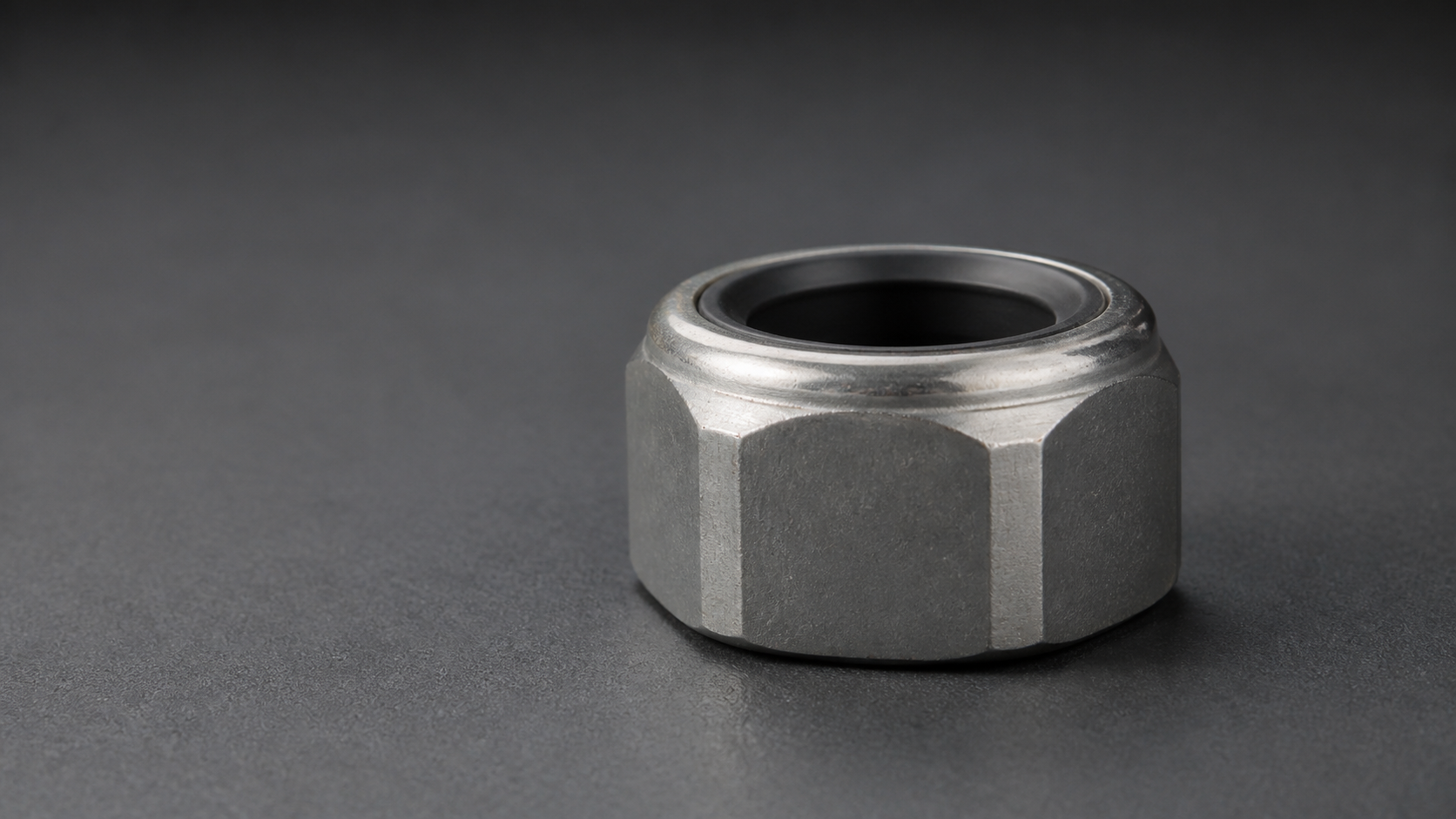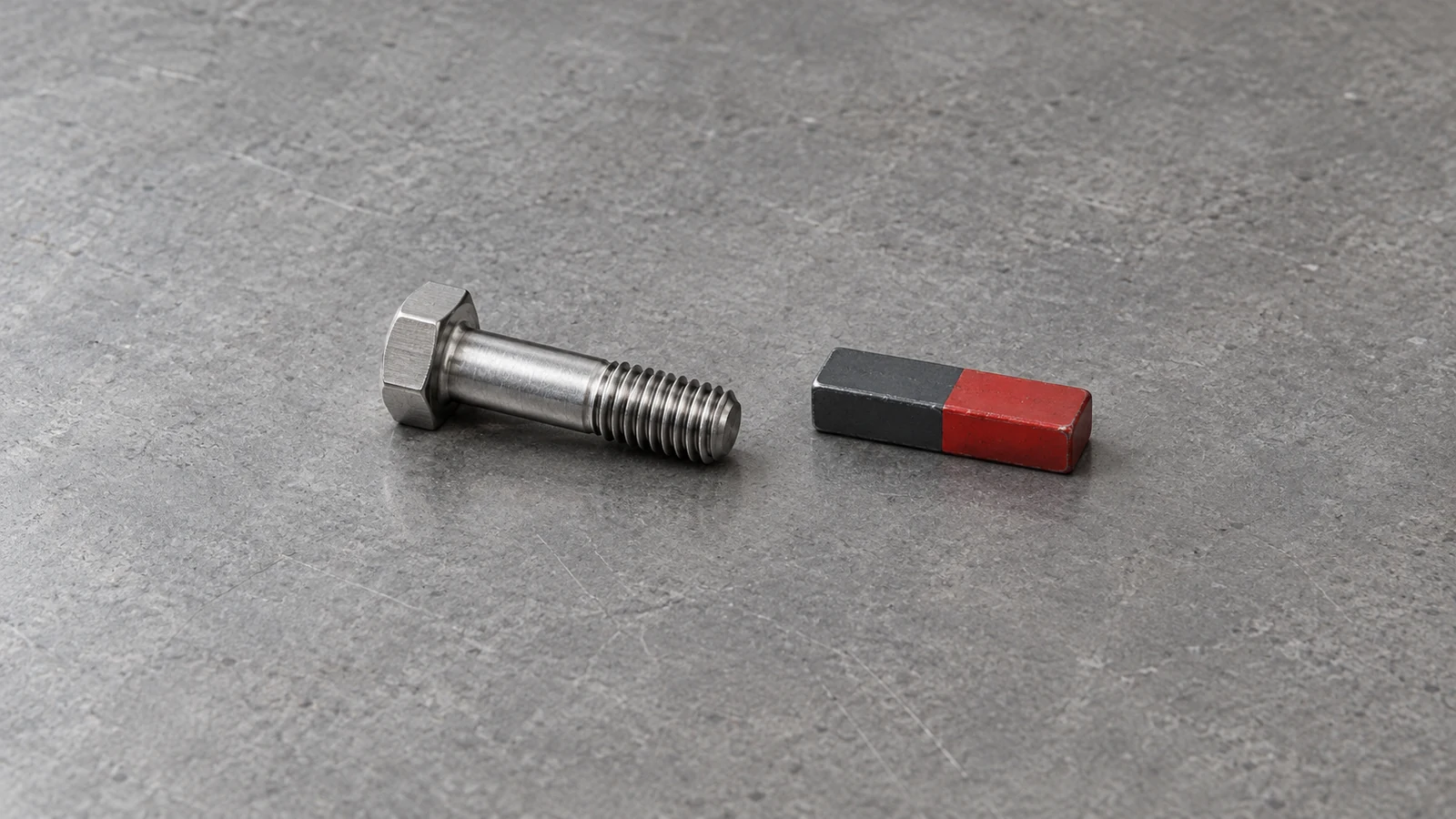
A receiving inspector brings a magnet close to a bolt identified in the order as austenitic stainless steel. The magnet is attracted to the bolt. That is a valid observation—but it is not a material certificate.
Magnetic attraction alone does not prove that the specified grade is wrong, and the absence of attraction does not prove that the grade is right. Keep the affected packages and samples identifiable, confirm exactly what the order requires, connect the parts to their lot and documents, and then choose verification that can answer the actual specification question.
Direct answer
Do not turn one magnet observation into a grade or lot verdict
A magnet can show that attraction occurred under a particular set of conditions. It cannot by itself identify a stainless steel grade, confirm an ISO 3506 designation, establish mechanical properties or decide whether the full lot conforms. It is a reason to investigate—not automatic evidence for acceptance, rejection or supplier exoneration.
For a review with Wohe Fastener, the useful next step is to send the exact ordered designation, product standard, package or lot label, linked inspection documents and a factual record of the magnet observation. Wohe can help identify whether the immediate gap is in the specification, traceability or verification evidence and coordinate the next supplier response; that coordination does not turn a magnet observation into a grade determination.
First confirm what “stainless steel” means in this order
The purchase requirement may name an ISO 3506 stainless steel designation and property class, a material grade under another specification, or only the broad phrase “stainless steel.” Those are not equally complete instructions.
ISO 3506-1:2020, confirmed by ISO in 2025, covers bolts, screws and studs made of corrosion-resistant stainless steels within its scope. Nuts are addressed separately by ISO 3506-2:2020. The product and the governing standard therefore have to be identified before a designation is interpreted.
Do not silently rewrite A2-70, A4-80, 304 or 316 as though they were interchangeable fields. Preserve the exact designation and standard stated in the order. If a proposed relationship between two designation systems matters to acceptance, it should be documented and agreed for that order rather than assumed from common trade language.
Two separate questions
Question 1: Can an austenitic stainless product show magnetic attraction? In some conditions, yes. Question 2: Does that attraction prove this lot meets the ordered grade? No. A possible material explanation is not a conformity decision.
Why an austenitic stainless part may show magnetic attraction
Outokumpu's technical overview of the stainless steel family explains that austenitic grades are generally non-magnetic in the solution-annealed condition. It also notes that cold working can make certain grades magnetic because some martensite may form. Carpenter Technology gives the same important boundary in its discussion of magnetic properties of stainless steels: response within a grade can vary with chemistry and the degree of cold work.
This explains why a magnet response is not automatically evidence of a wrong material. It does not establish that cold work caused the response in the received parts. The actual material, processing history and product condition remain unknown until supported by traceable evidence. It is also unsafe to claim that every A2, A4, 304 or 316 product will respond after cold work, or that stronger attraction represents a particular grade or amount of processing.
Record what happened without naming the material
A useful receiving record is factual. Identify the magnet or tool used, whether it touched the part or remained at a distance, where on the fastener the response was noticed, which samples were checked and which package or lot label each sample came from. If the observation is repeated, keep the conditions reasonably consistent and record differences instead of converting them into an unofficial strength scale.
| The observation can record | The observation cannot confirm by itself |
|---|---|
| Whether attraction was noticed with a stated magnet, position and distance/contact condition | The exact steel grade or a particular A2/A4 designation |
| Which sampled parts and labeled packages showed the same or different response | Chemical composition, mechanical property class or corrosion performance |
| A repeatable reason to hold identity and request further review | That cold work is the cause, or that the entire lot must be accepted or rejected |
The reverse inference is equally weak. Little or no attraction does not prove that a bolt is 304, 316, A2, A4 or compliant with the order. A magnet is not a substitute for product identity and the evidence required by the purchase specification.
Build the identity chain before selecting a verification route
Keep the affected stock separated by its existing package or lot identity while the question is open. Then connect four records: the ordered requirement, the physical fastener, the package or lot label, and the inspection document or report. Head markings may be one input when they apply, but they do not replace the rest of the chain.
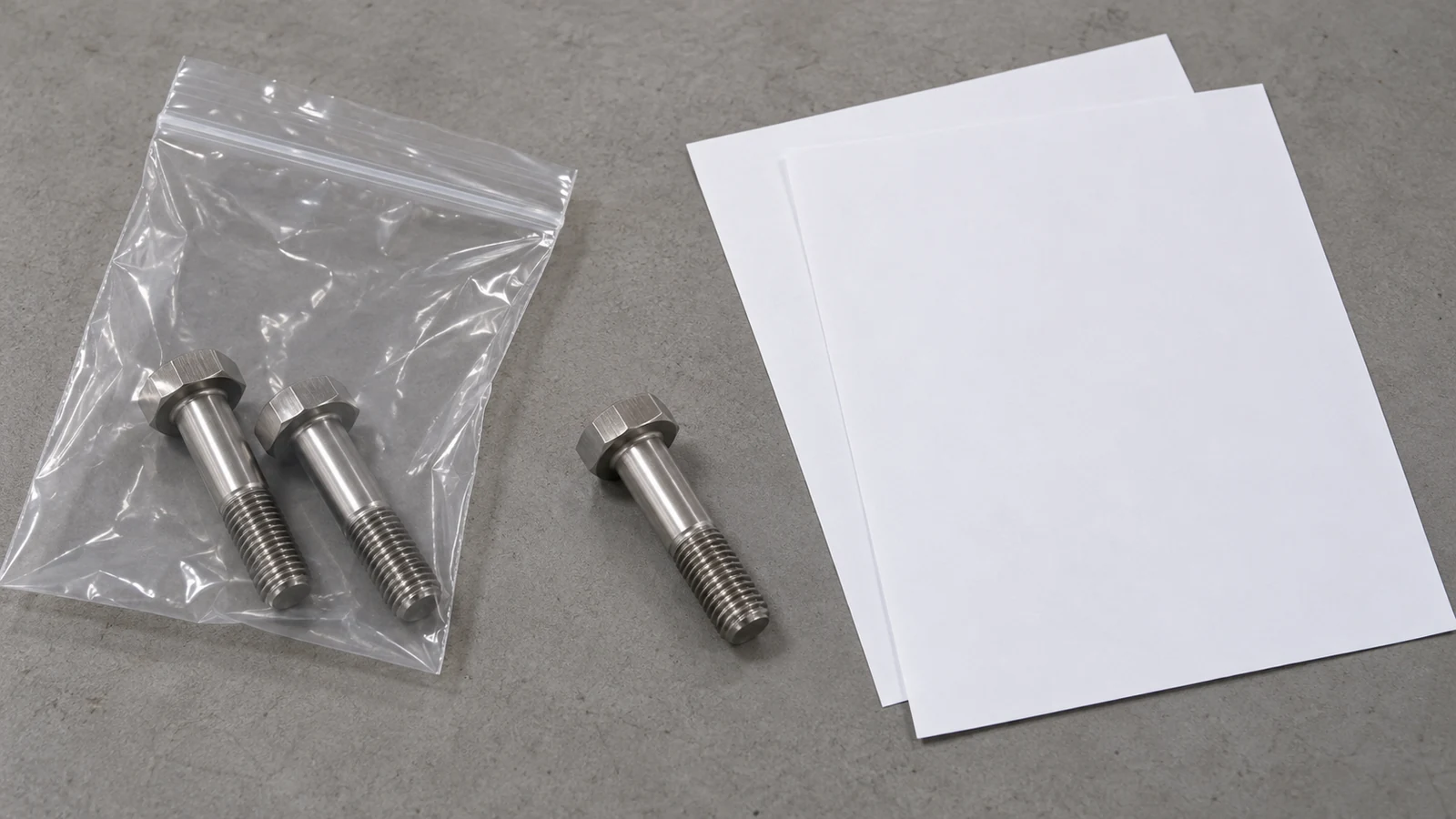
ISO 16228:2017, confirmed by ISO in 2022, addresses inspection documents for fasteners. Its public scope makes an important procurement point: the requested document type and content are tied to the order, relevant standards and specified requirements. A certificate with no demonstrated connection to the received product and lot does not close a material question merely because its values look plausible.
- Read the controlled requirement. Record the product standard or drawing, exact material or stainless designation, property class where applicable, size, finish and required inspection document.
- Preserve lot identity. Keep sample IDs, package labels, quantities and document references connected. Do not mix questioned parts into accepted stock while the review is open.
- Define the question for verification. Is the dispute about the material family, a specified composition, an ISO 3506 designation, a mechanical property, document traceability or something else? Different questions require different evidence.
- Agree on a suitable route. Use the purchase requirement, applicable standard and an appropriately qualified laboratory or agreed verification provider. No single handheld instrument should be presented as a universal answer for grade, strength and corrosion performance.
- Make the disposition under the agreed acceptance basis. Accept, continue holding, retest, request concession or reject only after the relevant evidence is compared with the order and the parties' agreed procedure.
This sequence keeps the conclusion tied to evidence. A possible material or process explanation should not be mistaken for proof of either conformity or nonconformity, and an explanation such as cold work cannot replace missing traceability or the evidence required by the order.
Send the supplier a reviewable evidence package
“A magnet attracts the bolt” is not enough information for a technical response. Send a short package that lets the supplier trace the issue and state what remains unresolved:
Receiving-review format
Ordered identity: [product standard/drawing, exact stainless or material designation, property class if applicable, size and finish]
Received identity: [part description, head marking if applicable, package/lot label, quantity and arrival reference]
Documents: [certificate/report number and how it is linked to the package or lot]
Magnet observation: [magnet/tool, contact or distance, location on part, sampled quantity, repeated result, photos/video]
Control status: [stock held separately, samples retained, no mixing status]
Requested response: [confirm traceability, explain the evidence, propose an agreed verification route, and state the disposition basis]
This is an editorial working format, not an ISO form. Adapt it to the purchase contract, the buyer's quality system and any agreed claim procedure.
Where Wohe can help—and where the evidence must lead
Wohe Fastener can help compare the purchase description with the product standard, size, material or stainless designation, property class, finish, package label and requested inspection documents. Wohe can also coordinate the information needed for a supplier response or an agreed follow-up verification. The grade and lot decision, however, must come from the applicable requirement and traceable evidence—not from a photograph, a magnet video or a sales statement.
Prepare a traceable stainless-fastener review
Send the requirement, lot identity and observation together
Share the controlled order or drawing requirement, product standard, exact material or stainless designation, property class if applicable, size, finish, package/lot labels, document references, affected quantity and a factual record of the magnet observation.
Wohe can help identify specification or traceability gaps and organize the next supplier response. A magnet response will be treated as a question to resolve—not as a standalone grade certificate or automatic lot verdict.
Send a stainless fastener specification for reviewPrimary sources used
Official lifecycle and materials pages were rechecked on 2026-10-13. Sources: ISO 3506-1:2020; ISO 3506-2:2020 where nuts are concerned; ISO 16228:2017; Outokumpu's official stainless steel technical guidance; Carpenter Technology's official materials guidance; and the current Wohe Fastener English website for company scope and inquiry fields only. Wohe product-page marketing statements are not used as evidence for magnetic behavior or grade identification. Public summaries support only the scoped statements above and do not replace purchased standards, contracts or laboratory reports.