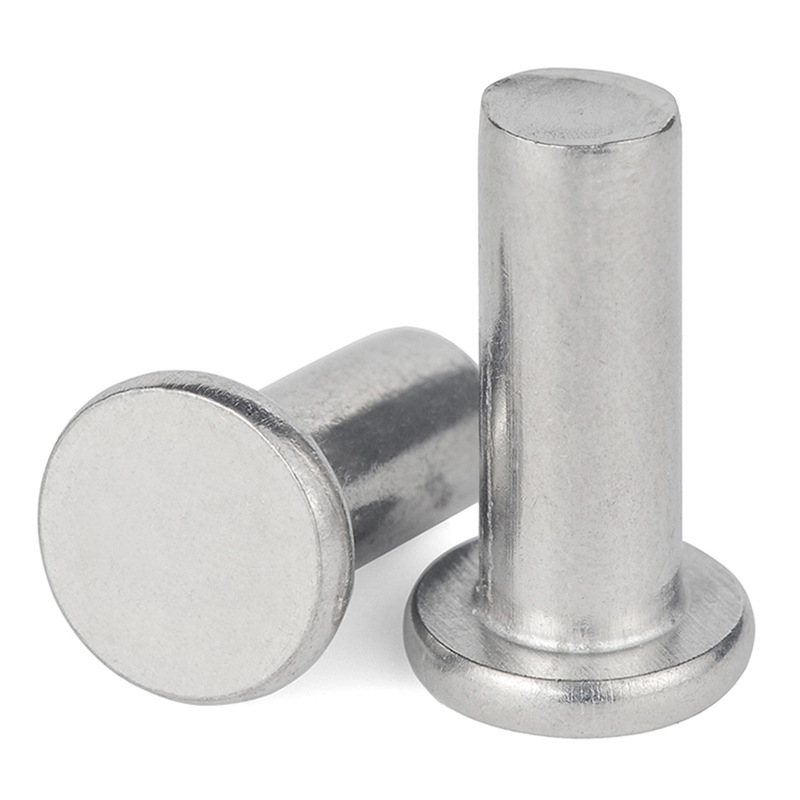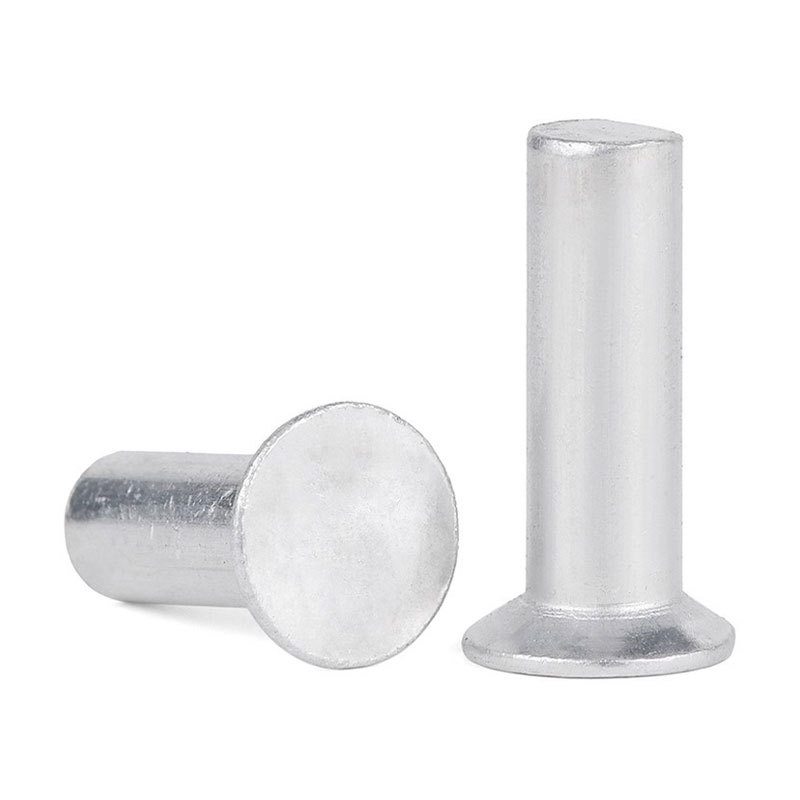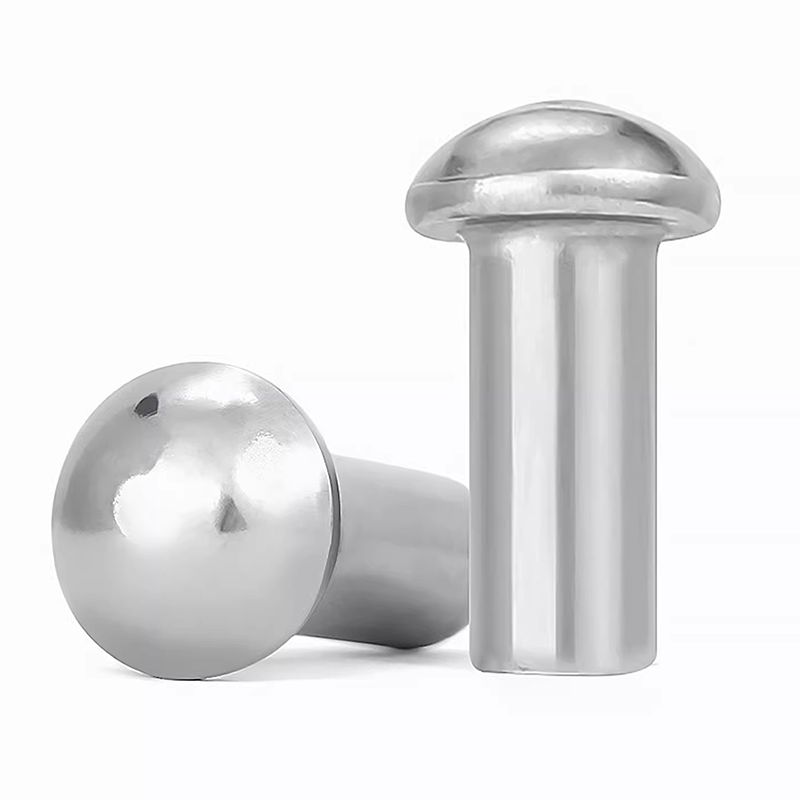
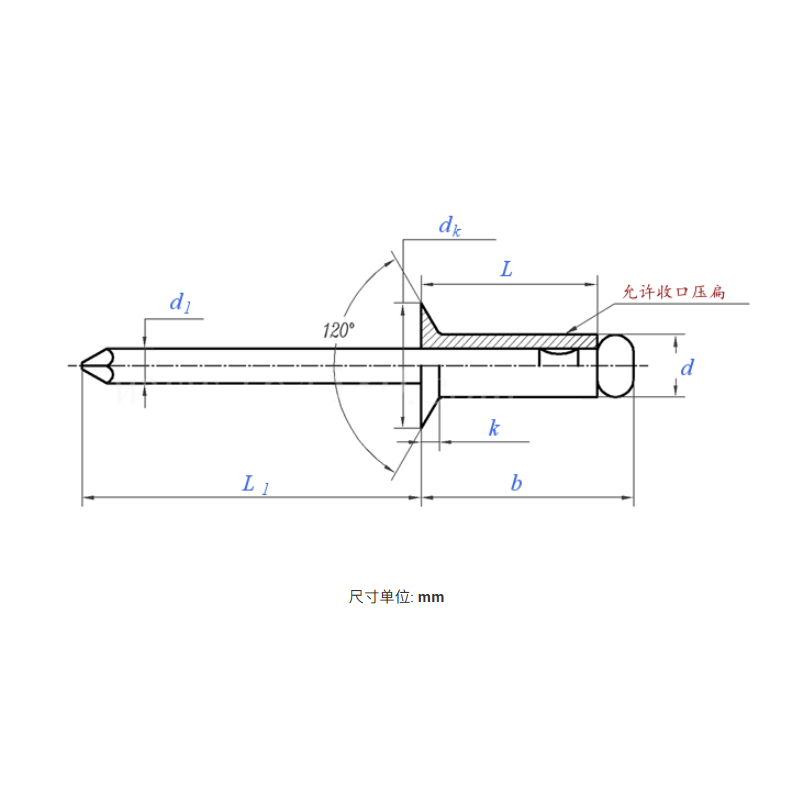
Product Specifications
| Model / Specification | M3 - M6 |
| Material | Aluminum Alloy |
| Nom. Dia. d |
Φ3 | (Φ3.2) | Φ4 | Φ5 | Φ6 | |
| d | Max. | 3.07 | 3.29 | 4.09 | 5.09 | 6.09 |
| Min. | 2.93 | 3.11 | 3.91 | 4.91 | 5.91 | |
| dk | Max. | 6.24 | 6.24 | 8.29 | 9.89 | 12.35 |
| Min. | 5.76 | 5.76 | 7.71 | 9.31 | 11.65 | |
| k | Max. | 1.2 | 1.2 | 1.4 | 1.6 | 2 |
| d1 | ≈ | 1.8 | 1.8 | 2.18 | 2.8 | 3.6 |
| L1 | Min. | 26 | 26 | 27 | 27 | 31 |
| b | Max. | L+3.4 | L+3.5 | L+3.5 | L+4 | L+4.5 |
| Wt./1,000 pcs (steel) ≈ kg | - | - | - | - | - | |
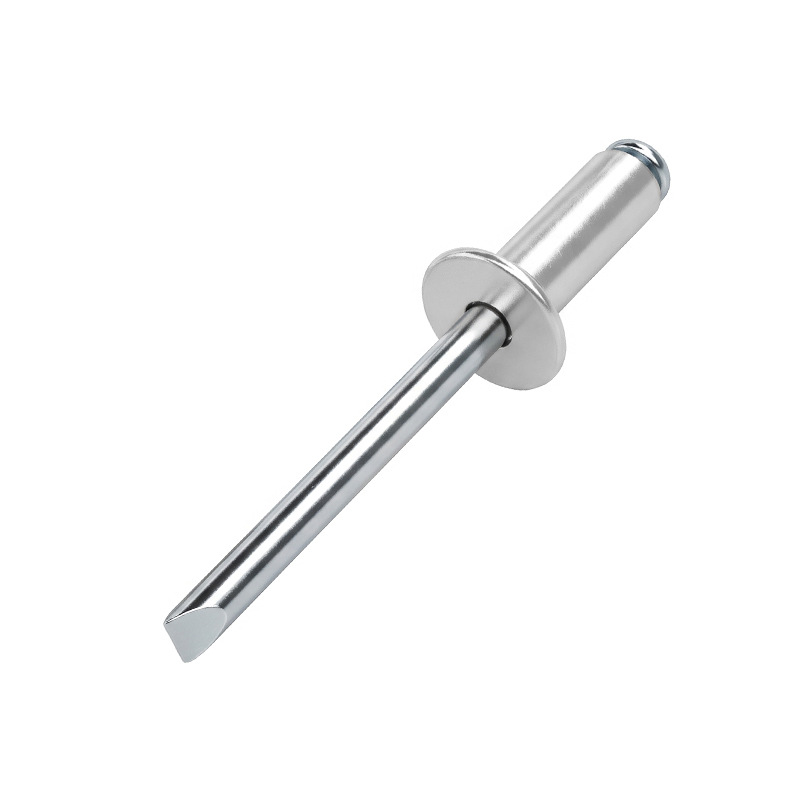
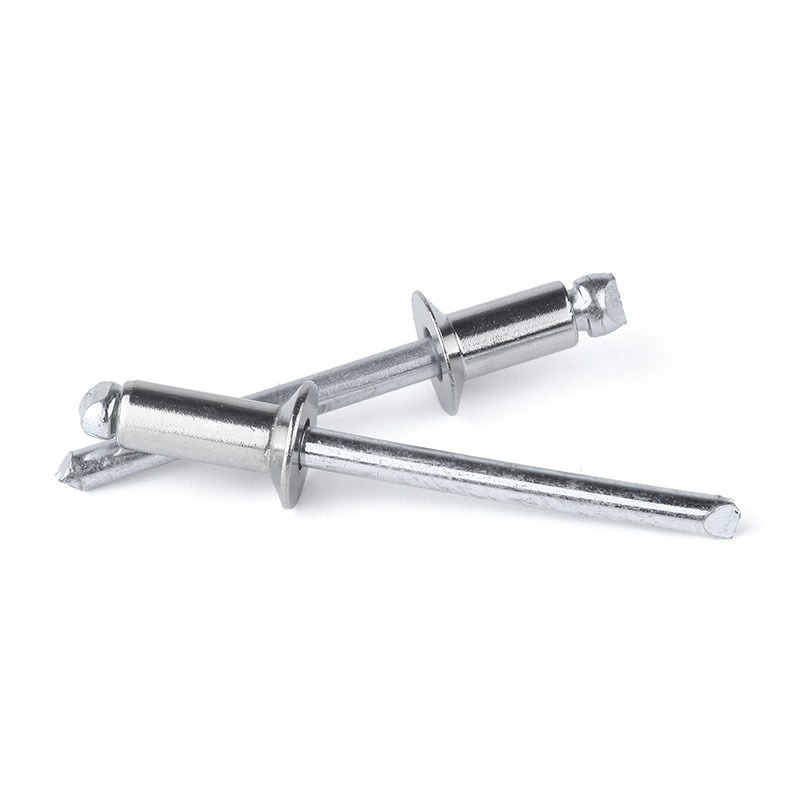
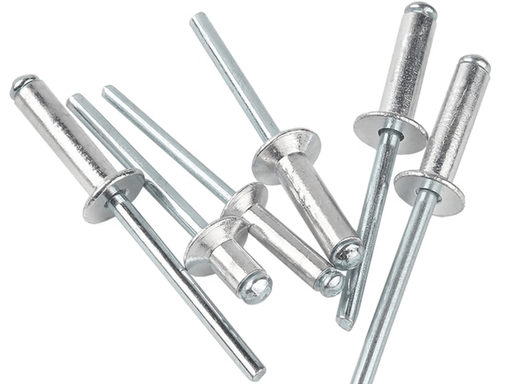
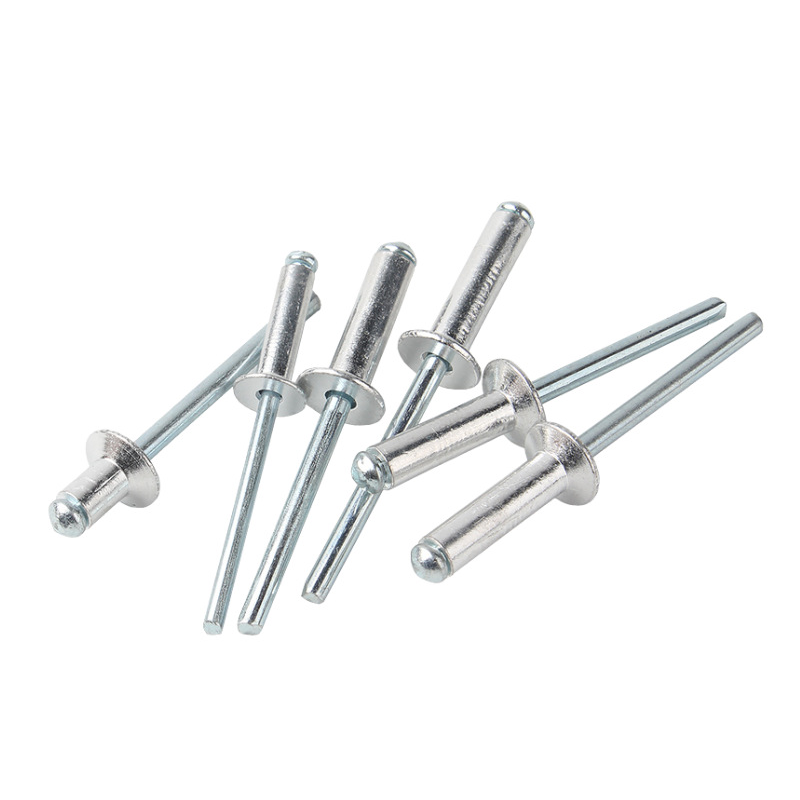
Open End Countersunk Head Blind Rivet — Product Introduction
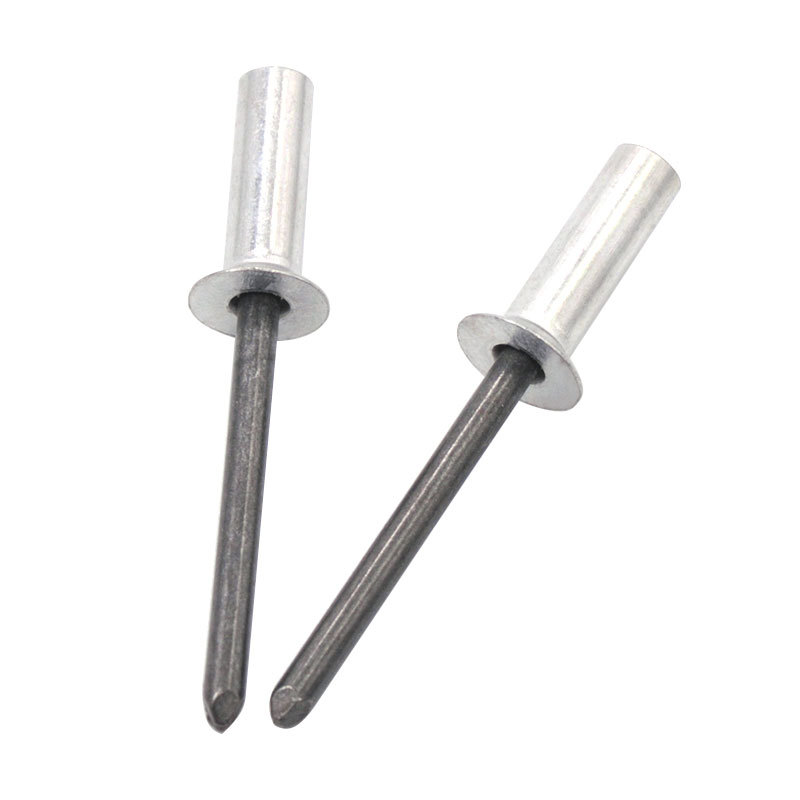
GB/T 12617—1990 open end countersunk head blind rivet is a single-side riveting fastener consisting of a rivet body and a mandrel. During riveting, the rivet is pulled from one side, and the mandrel is drawn into the rivet body, causing the tail of the rivet body to expand and form a blind end until the mandrel breaks at a predetermined position, completing the connection. After riveting, the rivet head is countersunk and essentially flush with the workpiece surface. Common material combinations for this rivet include aluminum alloy rivet body/steel mandrel, carbon steel rivet body/steel mandrel, stainless steel rivet body/stainless steel mandrel, etc., corresponding to performance grades such as 11, 30, 50, etc. It is one of the most widely used blind rivets in thin sheet connections.
1. Product Features
• Single-side riveting: Operation is required only on one side of the workpiece, without needing to hold the other side, making it especially suitable for closed structures or applications where both sides cannot be accessed.
• Countersunk head design: After riveting, the head is embedded or flush with the workpiece surface, giving a flat and attractive appearance and reducing protruding obstacles.
• Open end structure: The tail of the rivet body has an opening; during riveting, the tail expands to form a larger blind end, providing stable clamping force and strong pull-out resistance.
• Various material combinations: The rivet body and mandrel can be paired in different materials, such as aluminum/steel, steel/steel, stainless steel/stainless steel, etc., meeting different strength and corrosion resistance requirements.
• Fast installation: Can be completed with manual, pneumatic or electric rivet guns, simple to operate without special skills.
• Vibration resistance and anti-loosening: Forms a permanent connection after riveting, not easily loosened by vibration, with high reliability.
2. Product Advantages
• High efficiency: Installation speed is far faster than bolts, welding or solid rivets, suitable for mass production and assembly line operations.
• Strong adaptability: Can connect similar or dissimilar materials, such as metal to plastic, thin sheets to profiles, etc., with low requirements on workpiece surface.
• Cost-effective: The rivet itself is moderately priced, installation tool investment is small, and overall cost is relatively low.
• Stable connection quality: Riveting force is controlled by the tool, providing good riveting consistency and reducing the influence of human factors.
• Flat appearance: The countersunk head design meets applications with appearance requirements, such as cabinets, vehicle bodies, home appliance housings, etc.
• Optional corrosion-resistant materials: Choosing all stainless steel or aluminum/stainless steel combinations allows long-term use in humid, acidic, alkaline and other harsh environments.
3. Scope of Application
• General thin sheet connection: Overlapping or fixing between thin metal sheets, plastic sheets and composite panels.
• Closed or semi-closed structures: Boxes, cabinets, pipes, containers and other parts that can only be operated from one side.
• Transportation: Automobile bodies, bus interiors, truck side panels, rail vehicle skins, etc.
• Building decoration: Aluminum ceiling panels, curtain wall frameworks, ventilation ducts, billboards, guardrails, etc.
• Home appliances and electronic equipment: Air conditioner housings, washing machine cabinets, computer cases, control cabinets, instruments and meters, etc.
• Other industrial fields: Ship interiors, agricultural machinery, fitness equipment, office furniture, packaging machinery, etc.
Typical applicable environments for different material combinations:
• Aluminum rivet body/steel mandrel (Grade 11): General indoor and outdoor use, lightweight, rust-resistant, most commonly used.
• All steel (Grade 30): For high strength requirements, but requires surface anti-rust treatment.
• All stainless steel (Grade 50): For highly corrosive environments, such as coastal, chemical and food equipment.
• Copper rivet body/steel mandrel (Grade 20): For electrical conductivity, thermal conductivity or decorative purposes.