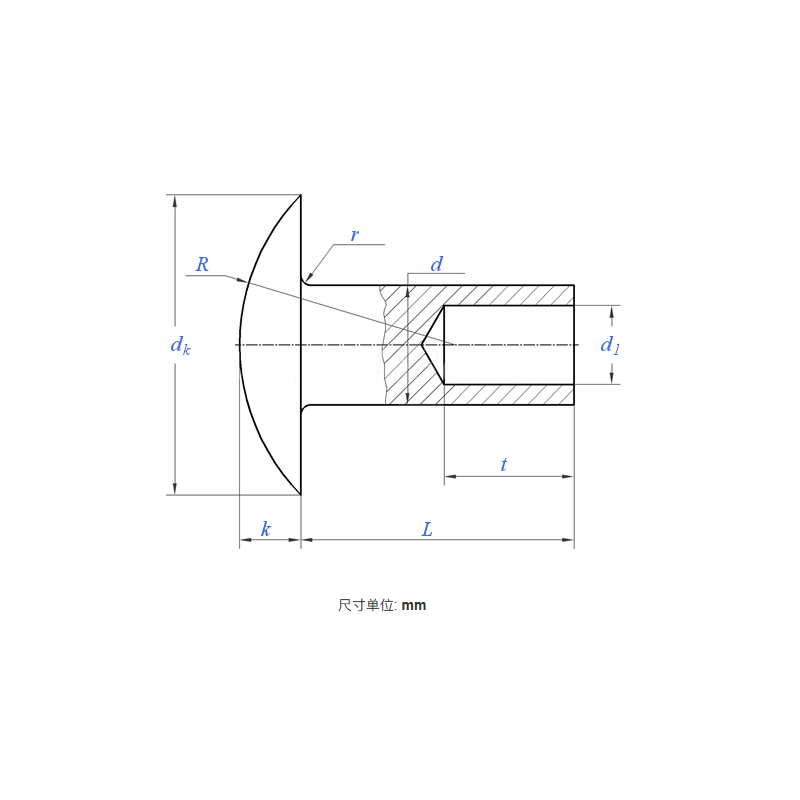
Product Specifications
| Model / Specification | M1.2 - 10 |
| Material | Carbon Steel |
| Nom. Dia. d |
(1.2) | 1.4 | (1.6) | 2 | 2.5 | 3 | (3.5) | 4 | 5 | 6 | 8 | 10 | ||
| d | Max. | 1.26 | 1.46 | 1.66 | 2.06 | 2.56 | 3.06 | 3.58 | 4.08 | 5.08 | 6.08 | 8.1 | 10.1 | |
| Min. | 1.14 | 1.34 | 1.54 | 1.94 | 2.44 | 2.94 | 3.42 | 3.92 | 4.92 | 5.92 | 7.9 | 9.9 | ||
| dk | Max. | 2.6 | 3 | 3.44 | 4.24 | 5.24 | 6.24 | 7.29 | 8.29 | 10.29 | 12.35 | 16.35 | 20.42 | |
| Min. | 2.2 | 2.6 | 2.96 | 3.76 | 4.76 | 5.76 | 6.71 | 7.71 | 9.71 | 11.65 | 15.65 | 19.58 | ||
| k | Max. | 0.6 | 0.7 | 0.8 | 0.9 | 0.9 | 1.2 | 1.4 | 1.5 | 1.9 | 2.4 | 3.2 | 4.24 | |
| Min. | 0.4 | 0.5 | 0.6 | 0.7 | 0.7 | 0.8 | 1 | 1.1 | 1.5 | 2 | 2.8 | 3.76 | ||
| d1 | Ferrous Metal | Max. | 0.66 | 0.77 | 0.87 | 1.12 | 1.62 | 2.12 | 2.32 | 2.62 | 3.66 | 4.66 | 6.16 | 7.7 |
| Min. | 0.56 | 0.65 | 0.75 | 0.94 | 1.44 | 1.94 | 2.14 | 2.44 | 3.42 | 4.42 | 5.92 | 7.4 | ||
| Non-ferrous Metal | Max. | 0.66 | 0.77 | 0.87 | 1.12 | 1.62 | 2.12 | 2.32 | 2.52 | 3.46 | 4.16 | 4.66 | 7.7 | |
| Min. | 0.56 | 0.65 | 0.75 | 0.94 | 1.44 | 1.94 | 2.14 | 2.34 | 3.22 | 3.92 | 4.42 | 7.4 | ||
| t | Max. | 1.44 | 1.64 | 1.84 | 2.24 | 2.74 | 3.24 | 3.79 | 4.29 | 5.29 | 6.29 | 8.35 | 10.35 | |
| Min. | 0.96 | 1.16 | 1.36 | 1.76 | 2.26 | 2.76 | 3.21 | 3.71 | 4.71 | 5.71 | 7.65 | 9.65 | ||
| r | Max. | 0.1 | 0.1 | 0.1 | 0.1 | 0.1 | 0.1 | 0.3 | 0.3 | 0.3 | 0.3 | 0.3 | 0.3 | |
| R | ≈ | 1.7 | 1.9 | 2.2 | 2.9 | 4.3 | 5 | 5.7 | 6.8 | 8.7 | 9.3 | 12.2 | 14.5 | |
| Steel Wt. ≈ kg/1000 pcs | - | - | - | - | - | - | - | - | - | - | - | - | ||
Round Flat Head Semi-Hollow Rivet - Product Introduction
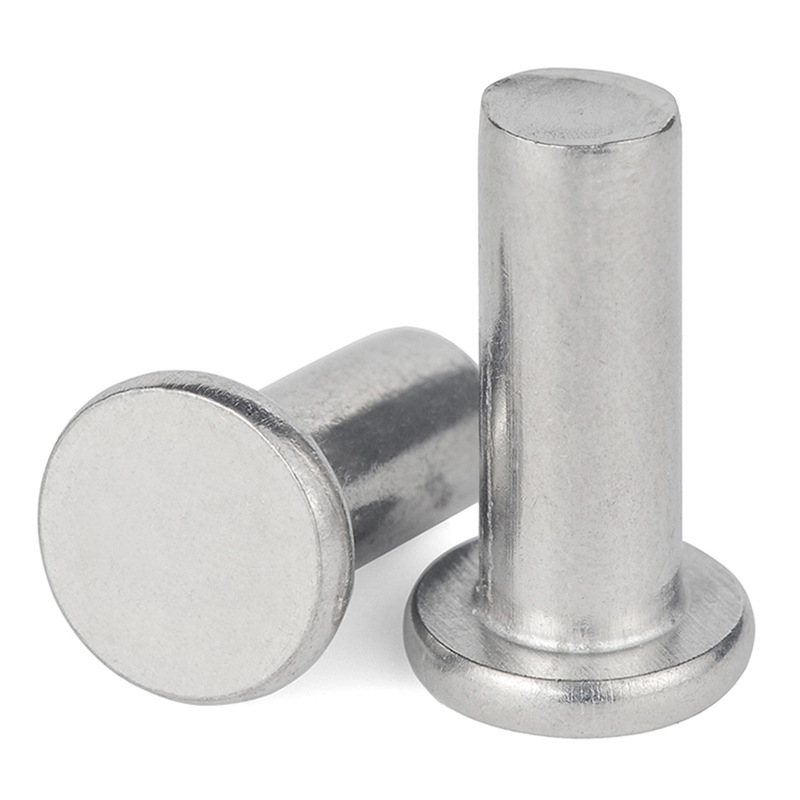
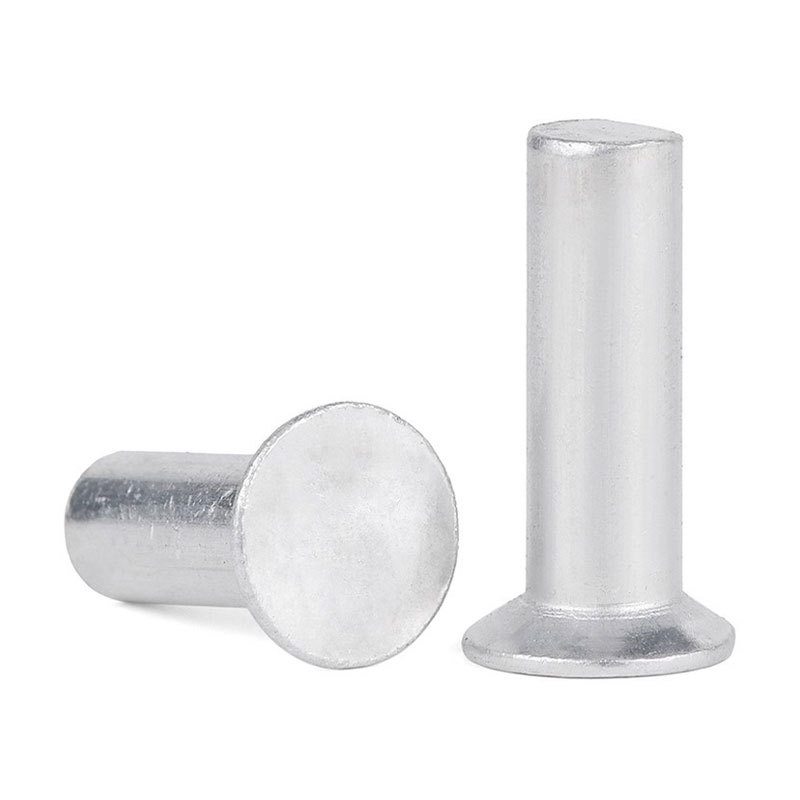
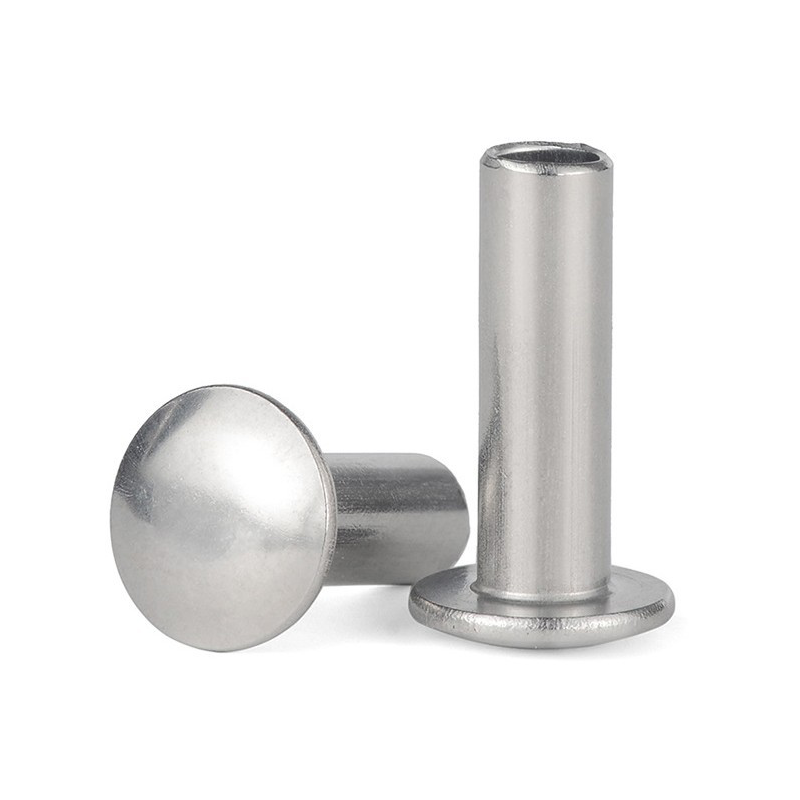
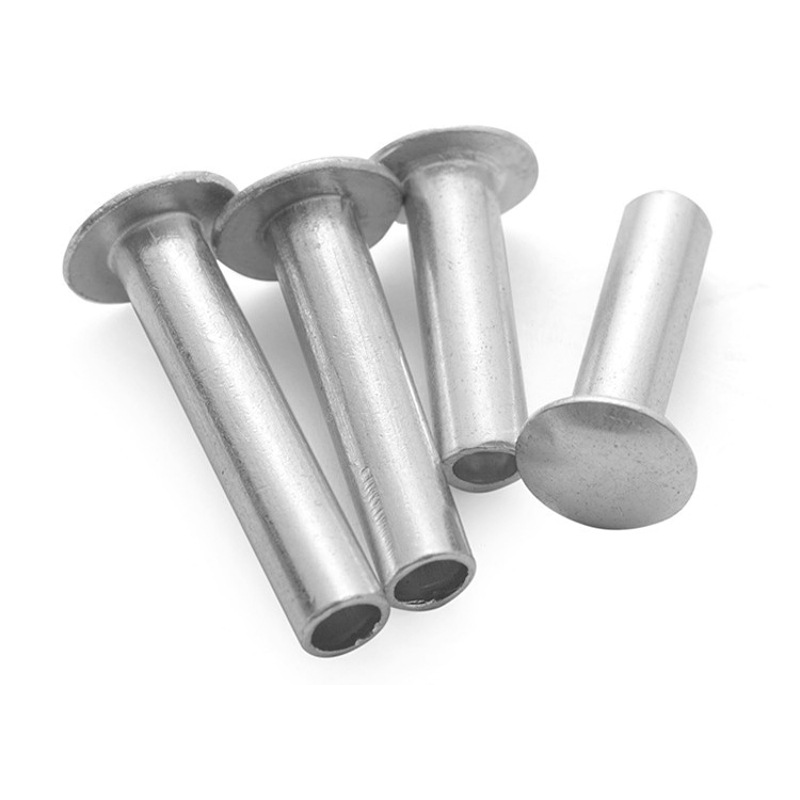
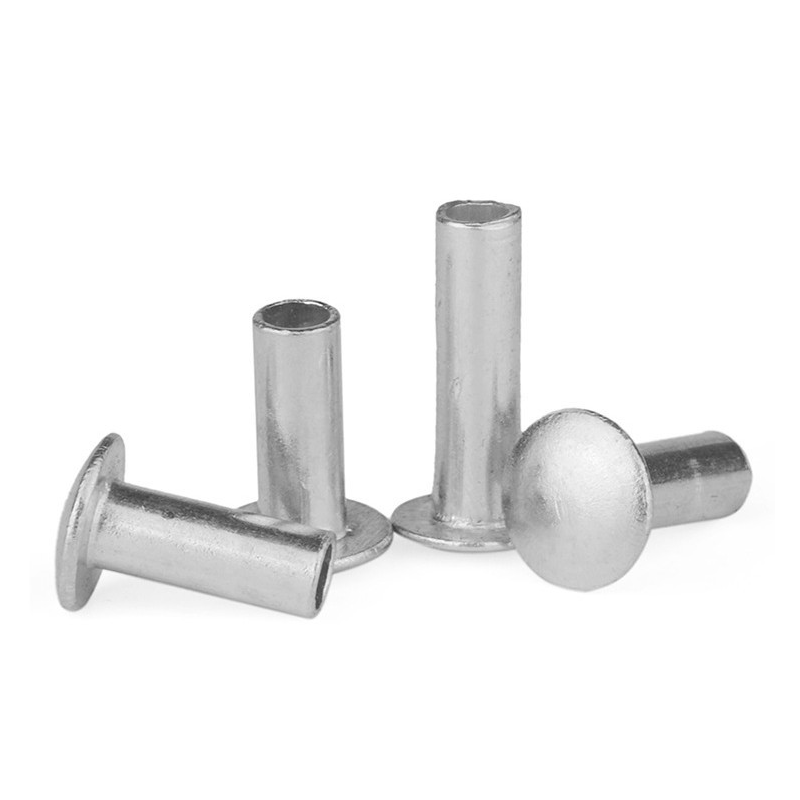
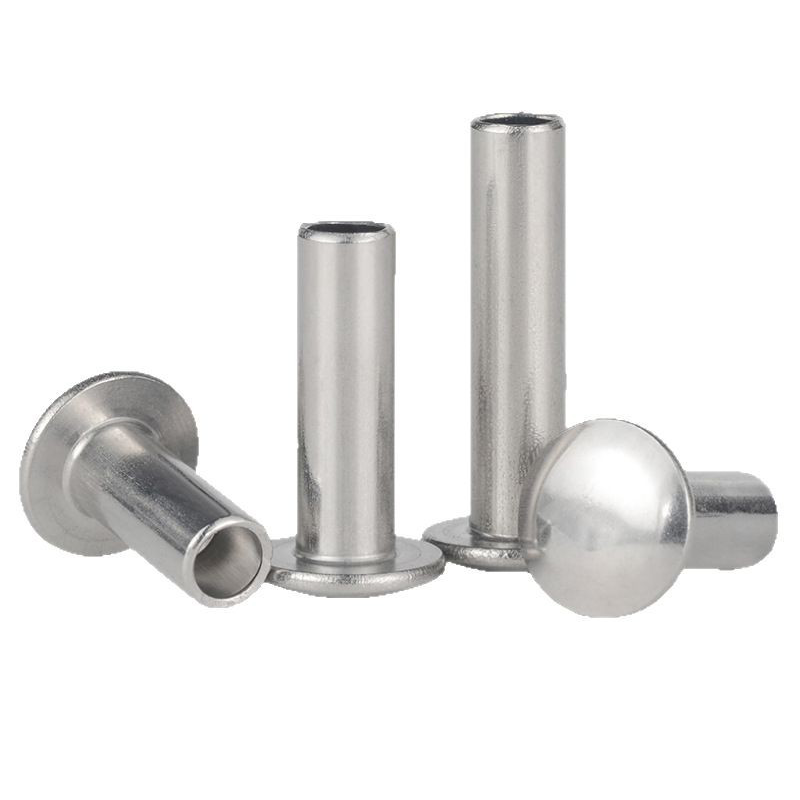
The round flat head semi-hollow rivet is a specialized rivet fastening component featuring a low flat-round head shape and a partially hollowed body at the front end of the shank. It conforms to standards such as GB/T 873 and DIN 6798. Formed by cold heading, the semi-hollow shank structure requires less flaring force during installation, making it particularly suitable for single-sided riveting and joining thin plates, brittle, or soft materials. Available in aluminum alloy, low-carbon steel, copper, and stainless steel, this rivet is widely used in electronics, hardware, automotive interiors, and lightweight structural assembly, offering both strong joining capability and a smooth, flush appearance.
I. Product Features
Low round flat head design: The head profile is low and features a smooth, curved contour. After installation, it does not catch on hands or snag objects, providing a clean and tidy appearance that meets aerodynamic and aesthetic requirements.
Semi-hollow shank structure: The shank end has a blind hole of a certain depth with moderate wall thickness. During riveting, the hollow section deforms outward to form a neat clinched head without requiring excessive pressure.
Excellent cold-heading materials: Common materials include 1035 aluminum alloy, 10 steel, H62 brass, and others, offering good plasticity. They are not prone to cracking during flaring, ensuring a complete and intact clinched head.
Standardized size series: Produced according to standards, nominal diameters typically range from 1.2 mm to 10 mm, with a complete range of length specifications and high consistency with standard rivet holes.
II. Product Advantages
Single-sided operation, suitable for enclosed spaces: The rivet is inserted from one side and clinched with pressure, making it ideal for applications where the back side is inaccessible, such as tubes and enclosures.
Low riveting force, protects thin sheets: The required clinching force is far less than that of solid rivets. It can reliably join metal or non-metal sheets thinner than 0.5 mm without causing deformation or surface damage.
Simple process, high assembly efficiency: Applicable with manual, pneumatic, or automatic riveting equipment. Fast operation and easy integration into assembly line workflows.
Strong compatibility: Can be used with washers or for joining dissimilar materials, such as metal to plastic or fiberboard.
Cost-effective: High material utilization and low die wear result in lower overall cost compared to solid rivets or screw fastening of equivalent size.
III. Applications
Electronics and appliance manufacturing: Circuit board brackets, small relay springs, connector housings, and heatsink mounting.
Hardware and architectural decoration: Door and window hinges, drawer slides, aluminum alloy louvers, and ceiling panel connections.
Automotive and motorcycle accessories: Brake shoe friction pads, motorcycle chain covers, interior panel clips, and nameplate/badge fastening.
Consumer goods and luggage: Leather bag handles, luggage wheel frames, belt buckles, stationery clips, and knife handles.
Precision instruments and toys: Clock dials, measuring tool handles, toy car axles, and safety fastener riveting.
Furniture and office equipment: Office chair bases, partition brackets, filing cabinet locks, and hinges.