
Why Red Sea route uncertainty matters to fastener sourcing
In July 2026, the Red Sea, Bab el-Mandeb and Suez corridor returned to the center of global logistics risk. For fastener buyers, this is not only a shipping headline. It can affect RFQ timing, production scheduling, packing level, freight budget and delivery promises.
AP reported on 22 July that Bab el-Mandeb normally carries around 12% of world trade and a quarter of global container traffic. Drewry’s 16 July World Container Index was still at $4,547 per 40ft container, down 2% week on week but supported by geopolitical disruption and capacity management. Maersk’s 22 July Middle East update also noted reduced or withdrawn insurance coverage by some insurers for the Red Sea, Gulf of Oman and Persian Gulf regions.
This article does not predict any single sailing. It is a practical checklist for buyers sourcing bolts, nuts, washers, screws and custom fastener products when ocean freight routes are uncertain.
Put lead time buffers into the RFQ
A fastener delivery date is not only factory production time. Buyers should separate production, inspection, packing, booking, port cut-off, ocean transit and destination customs clearance. When Red Sea or Suez routing is unstable, some services may use the Cape of Good Hope, adding one or two weeks to the voyage.
At RFQ stage, specify the target arrival date and acceptable buffer. If the project is time-critical, separate critical items from standard items. Urgent repair bolts, connection kits or small high-value items may need an alternative shipment plan, while standard hardware can move by planned ocean freight.
Moisture protection becomes more important on longer voyages
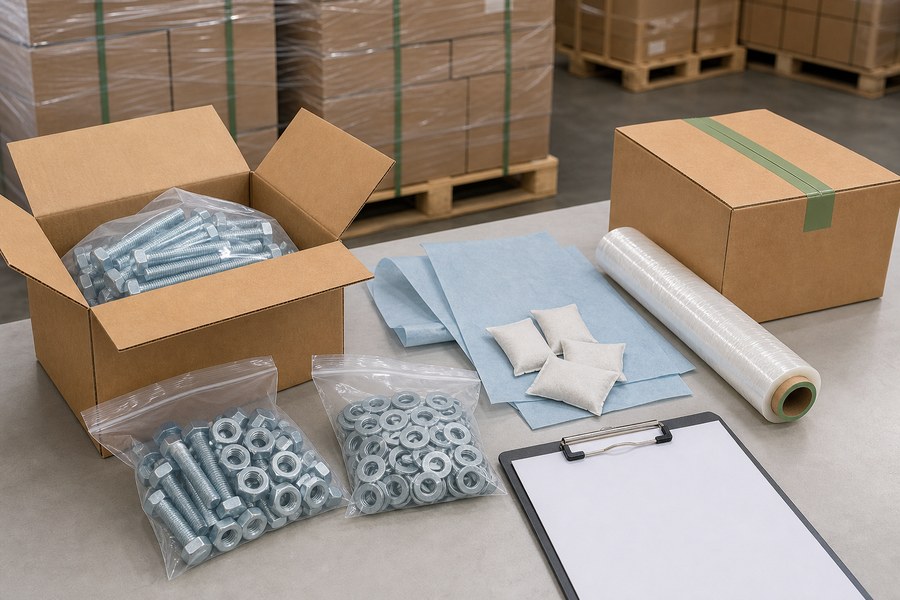
Fasteners are heavy, compact goods. Longer ocean transit increases exposure to humidity, salt-air environments, temperature changes and carton damage. Zinc plated fasteners, black oxide parts, plain carbon steel and mixed shipments need especially clear packing instructions.
Ask the supplier to state the packing structure in the quotation: inner bags, VCI anti-rust paper, desiccants, reinforced cartons, pallets, stretch film and edge protection. For heavy bolts and nuts, smaller cartons may be safer than overfilled boxes. If destination warehousing may be long, stronger moisture protection should be discussed before production.
Clarify Incoterms and freight cost boundaries
When route risk rises, FOB, CIF, CFR, DAP and DDP terms become more sensitive. Buyers need to know who books the vessel, who bears rerouting or emergency surcharges, what cargo insurance covers, and how detention or demurrage will be handled.
For FOB orders, the buyer’s forwarder should provide booking windows and port cut-off dates early. For CIF or CFR, the supplier should state the loading port, quotation validity and whether emergency or peak-season surcharges are included. For long-term orders, a freight adjustment clause is usually safer than holding one fixed rate for too long.

Choose FCL, LCL and safety stock by SKU
Fasteners are dense and often suitable for FCL or LCL shipments. Under route uncertainty, FCL normally gives better control over loading, pallet integrity and batch consistency. LCL is flexible, but transshipment, deconsolidation and waiting time may add risk.
For recurring purchases, build safety stock for common hex bolts, nuts, washers and standard screws. Schedule custom parts, special coatings and project-specific fasteners earlier. This prevents a whole project from waiting on a small number of critical fasteners.
Check labels before container loading
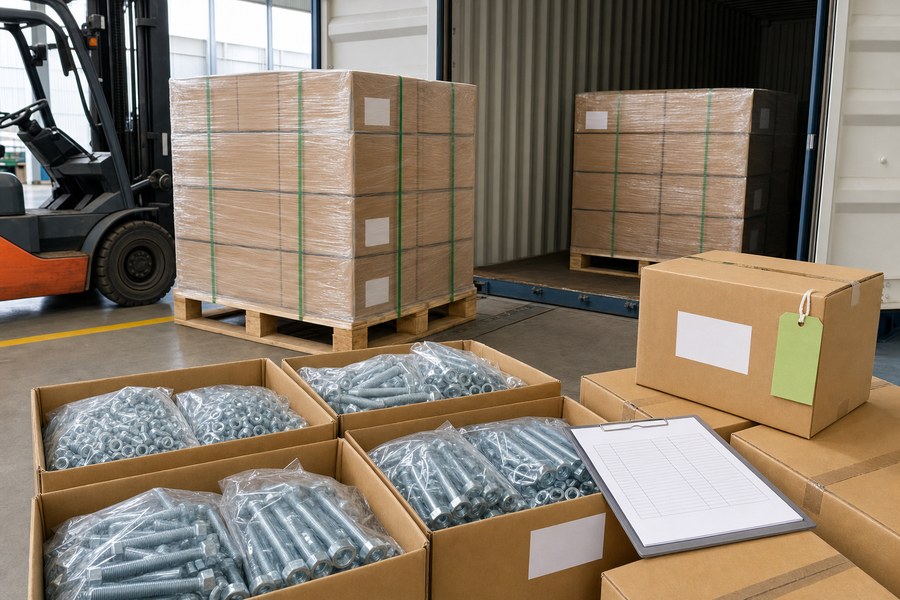
When shipping windows are tight, mistakes often happen at the packing stage. Before loading, check each carton against size, quantity, batch number, gross and net weight, and pallet reference. Mixed shipments should separate different materials, coatings and sizes clearly.
If the buyer needs a custom label template, confirm it before production. Clear batch labels make destination receiving, project distribution and after-sales traceability much easier.
Buyer action checklist
- State destination port, target arrival date and acceptable buffer in the RFQ.
- Confirm loading port, Incoterms, booking responsibility and cargo insurance scope.
- Specify VCI paper, desiccants, inner bags, pallets and stretch film for long ocean routes.
- Separate critical SKUs from standard stock items and plan safety stock where needed.
- Check carton marks, batch references, packing list and invoice descriptions before loading.
Wohe Fastener can support drawing review, production scheduling, export packing, batch labels and container loading plans for steel fastener orders. Send your purchase list, destination port, required arrival date and Incoterms, and our team will recommend a practical delivery plan.