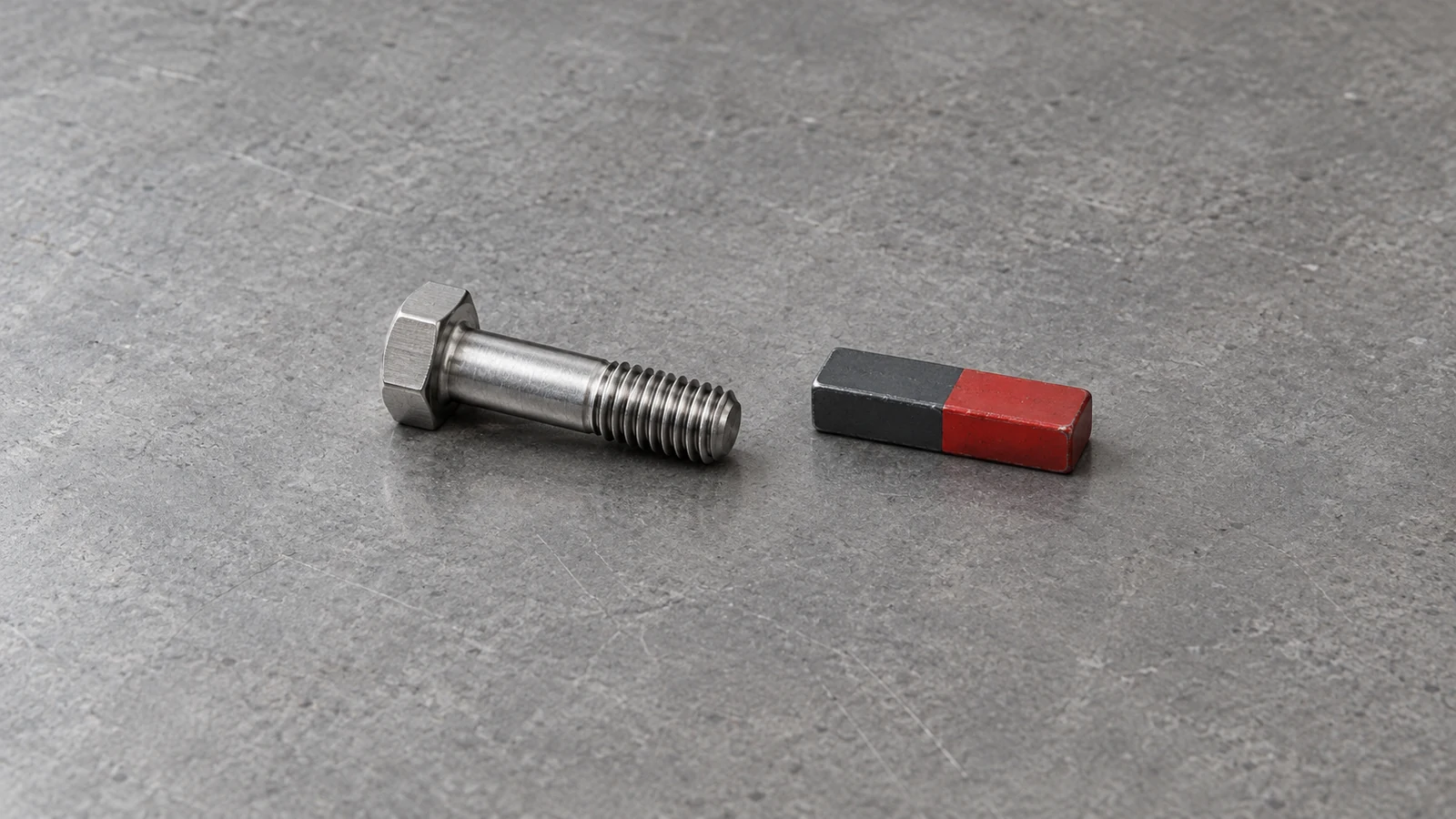
Why CBAM matters for steel fastener sourcing in 2026
The EU Carbon Border Adjustment Mechanism moved into its definitive period on 1 January 2026. For buyers importing carbon-intensive goods into the European Union, the topic is no longer only a policy headline. It is becoming a purchasing-data issue.
Steel fasteners can look simple on a drawing, but a shipment may involve several risk points: carbon steel or stainless steel material, coating process, country of origin, CN or HS code, batch traceability, packing labels and supplier documents. If the exact product falls under a CBAM-covered iron and steel scope, the EU importer will need reliable information before the goods arrive.
This article is a practical checklist for procurement teams. It is not legal advice; buyers should confirm final CBAM scope, declarations and certificate obligations with their importer, customs broker or compliance adviser. From the supplier side, the goal is to prepare clear, consistent data for bolts, nuts, washers, screws and custom fastener products.
Start with the exact CN or HS code
The first step is classification. Many steel fasteners are traded under HS or CN headings used for screws, bolts, nuts, washers and related threaded articles, but the exact code depends on product form, material and local customs interpretation. Buyers should not rely only on a broad product name such as “steel bolt” or “fastener kit”.
For every RFQ, ask the supplier to state the proposed HS code, product description, material standard, coating and use case. Then compare it with the EU importer’s CN classification. If there is a mismatch, solve it before production and packing, not after customs clearance begins.
What buyers should ask suppliers to provide
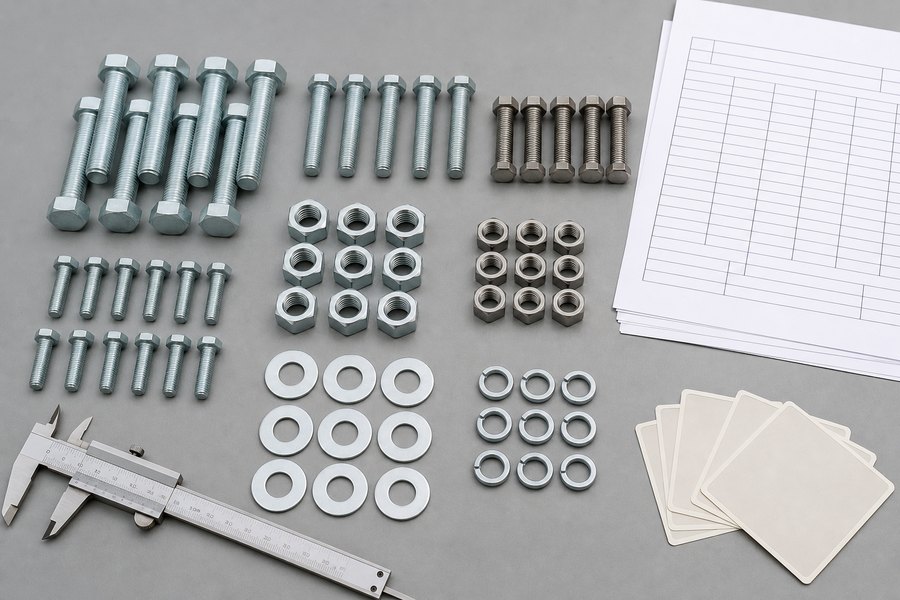
A useful CBAM-oriented fastener data pack should be simple enough for purchasing teams to collect and detailed enough for compliance teams to review. The following items are a good starting point:
- Product name, drawing number, size, thread, grade and standard.
- Material: carbon steel, alloy steel, stainless steel or other grade.
- Surface treatment: zinc plated, hot dip galvanized, black oxide, plain, passivated or other coating.
- Suggested HS code and buyer-confirmed CN code.
- Country of origin and production site information.
- Mill certificate, coating certificate or inspection report where applicable.
- Batch number, carton mark and packing list connection.
- Available emissions-related data or supplier declaration format required by the EU importer.
Material and coating data must be consistent
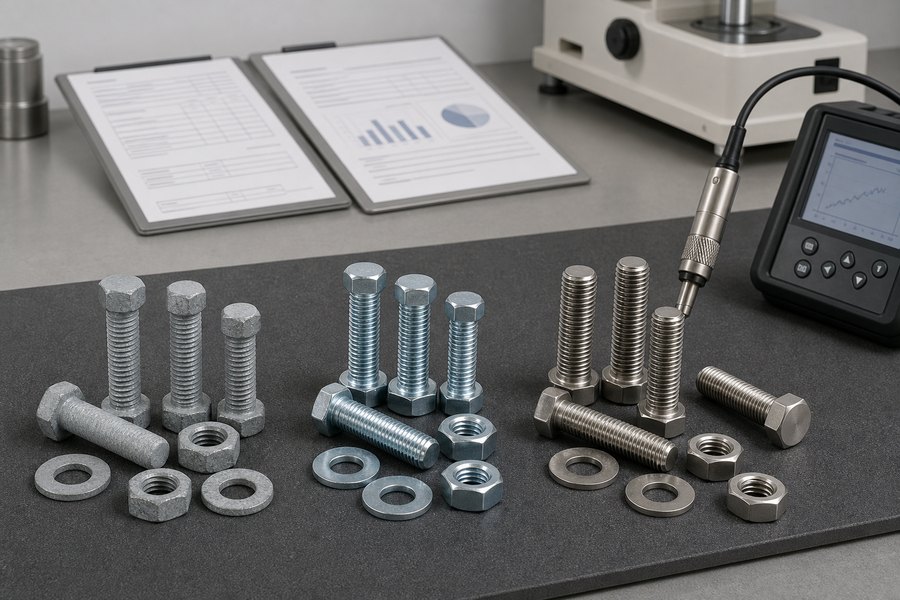
For fasteners, material and coating affect both technical performance and documentation. Carbon steel bolts with hot dip galvanizing are different from zinc plated screws, and both are different from stainless steel fasteners. If the quotation, drawing, packing list and invoice use different material names, the importer may face extra questions.
Buyers should request material grade, coating method, thickness requirement, applicable standards and test records. For example, a structural bolt order may require strength grade and nut compatibility; an outdoor order may require hot dip galvanized coating; a stainless steel order may need 304 or 316 confirmation.
Emissions data: what can a fastener supplier prepare
CBAM reporting is handled by the EU importer, but the importer may ask the overseas supplier for supporting information. A fastener manufacturer should be ready to explain what it can provide: production route, material source, purchased steel information, coating process, electricity or fuel data if available, and any standard supplier declaration requested by the buyer.
Not every small fastener order will have a full verified emissions dataset at the quotation stage. Still, procurement teams can reduce confusion by defining a document format early. A repeat buyer may also create a standard supplier questionnaire, so each order collects comparable data.
Batch traceability and export packing matter more
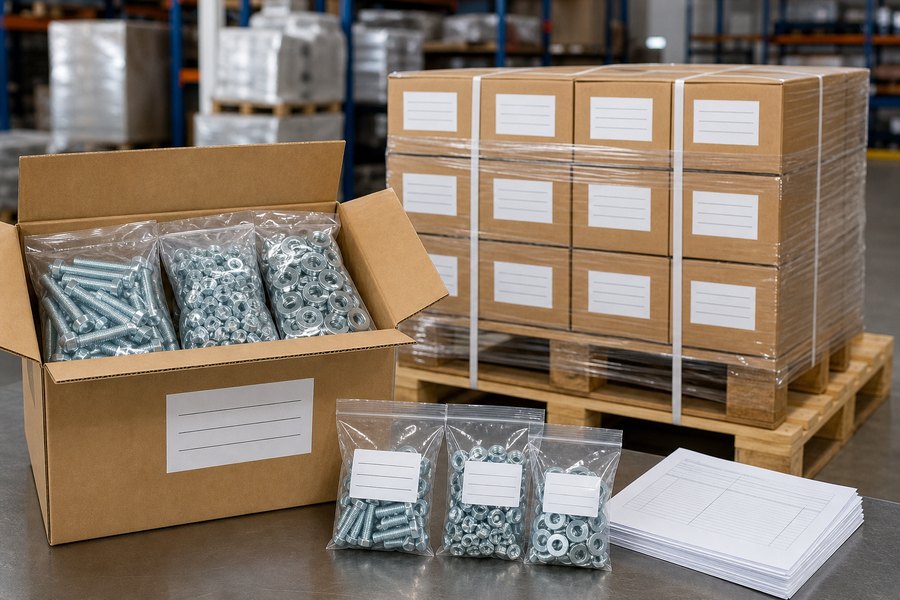
Once documentation becomes part of the buying process, packing quality becomes more important. Carton labels, batch numbers, item descriptions and packing lists should match the invoice and the technical file. Mixed fastener kits should be especially clear because one shipment may include several bolt sizes, nuts, washers and brackets.
For EU projects, Wohe Fastener can pack by size, material, surface treatment, installation position or bill of materials. Clear labels and batch records help the buyer connect warehouse receiving, customs documents and project installation records.
RFQ checklist for EU buyers
When sending an RFQ for steel fasteners in 2026, include the drawing, standard, grade, coating, target market, estimated order volume and packing requirement. If CBAM information is needed, say so at the quotation stage and attach your importer’s template.
Wohe Fastener can support buyers with drawings, samples, material and coating confirmation, batch packing, carton labels and export documents for fastening kits, construction fasteners, solar hardware and custom parts. Send your drawing or bill of materials through the contact page if you need a specification review before ordering.