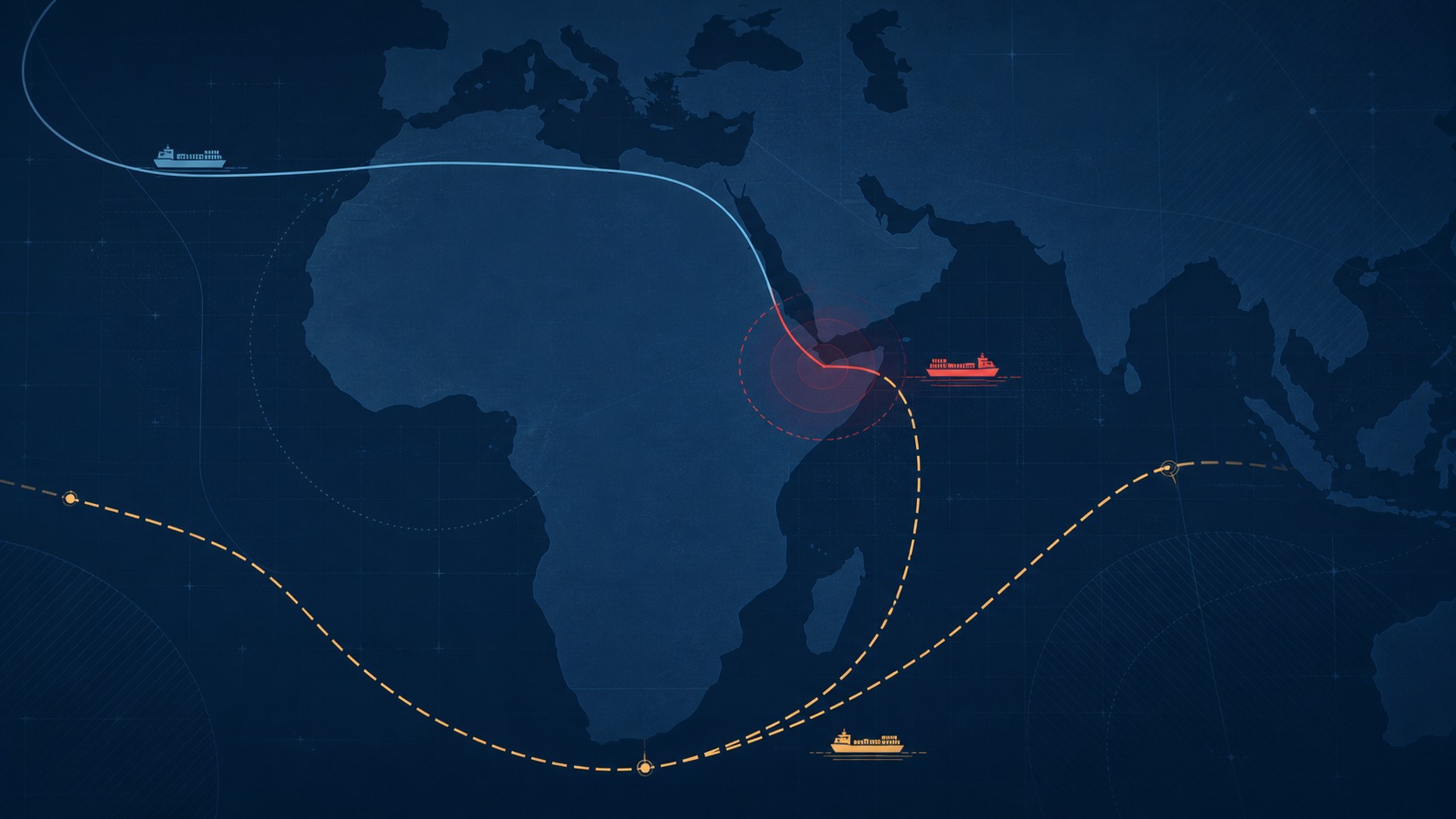
On August 11, a merchant-vessel attack signal appeared again near Al Mokha in the Bab el-Mandeb area of the Red Sea. For fastener buyers and suppliers, this kind of update is no longer just about whether a route may be diverted. It means some delivery assumptions that were treated as stable now need to be reconfirmed.
Wohe follows public shipping-risk updates like this not to amplify market noise, but because fastener orders often involve many SKUs, multiple batches and a fixed delivery window. When route-security risk rises, buyers need to review production timing, packing, booking, buffer time and arrival commitments as one plan.
How is this different from the logistics volatility seen in recent weeks?
In recent weeks, most discussion focused on diversions, freight volatility, surcharges and schedule changes. Those issues were already affecting Europe-bound and Middle East-related shipments, but many purchasing decisions could still be handled mainly as a cost-versus-transit-time question.
The difference in the August 11 reports is the stronger safety signal: a merchant vessel in the Bab el-Mandeb area was reported attacked, with crew deaths reported in the initial coverage. The first reports did not use exactly the same casualty figure, so this article does not lock in a number. For buyers, that means the ocean-freight quote alone is no longer enough; the uncertainty inside the delivery commitment needs closer review.
Which parts of a fastener export order are most exposed?
The first is delivery commitment. Fasteners may be compact parts, but many orders combine multiple specifications, mixed packing, batch production and container coordination. Once the routing plan changes, the buffer between production completion and shipment may no longer be sufficient.
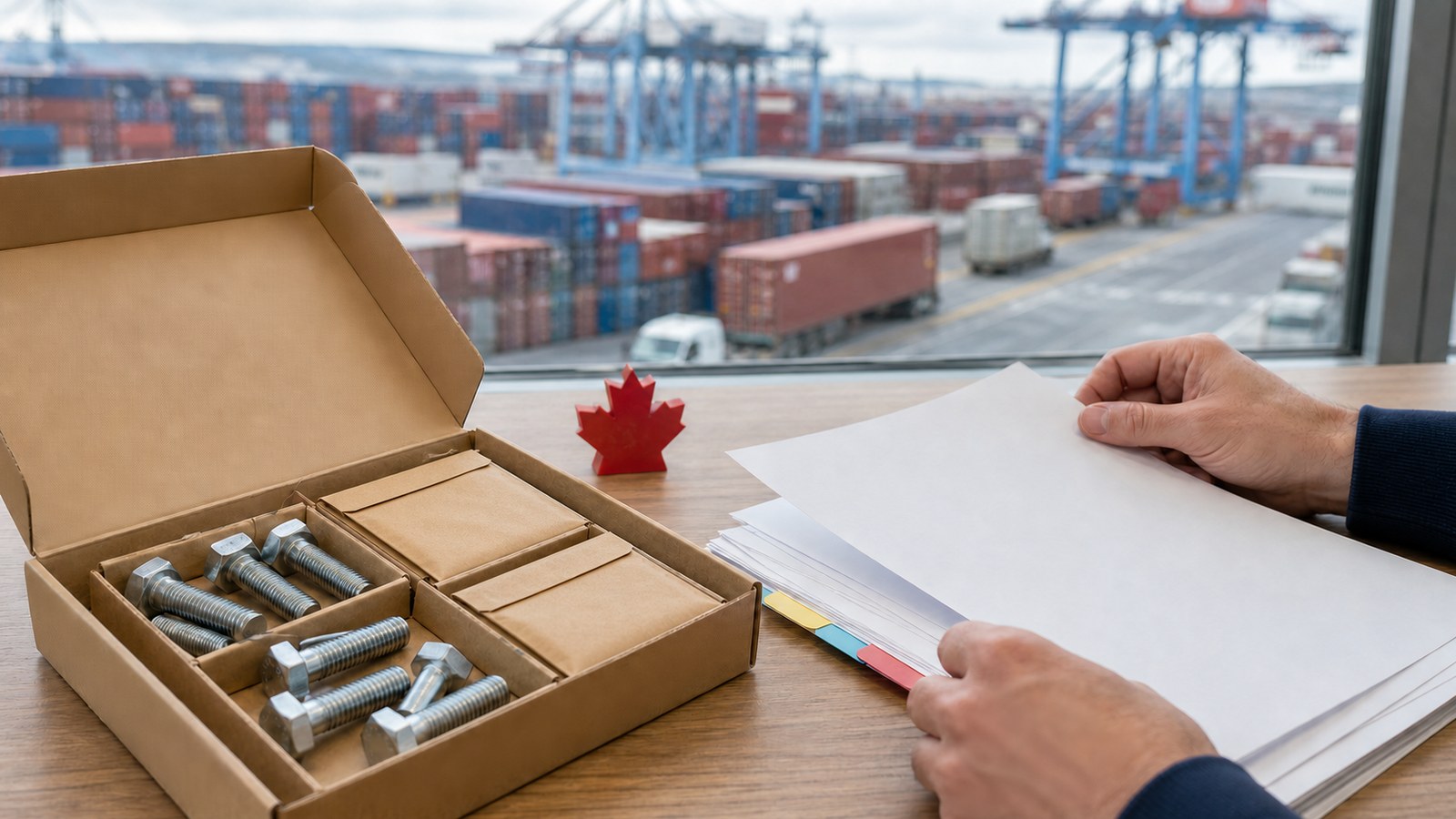
The second is packing and loading. For hot-dip galvanized items, long bolts, heavy cartons and mixed-batch orders, a longer or less predictable transit cycle makes carton strength, moisture protection, shipping marks and loading sequence more important. The point is not that cargo damage is certain, but that a packing approach that was adequate before may need to be reviewed again.
The third is document and communication timing. Schedule changes, extra transshipment or surcharge updates often require earlier confirmation of shipping windows, destination arrangements, document timing and site receiving plans. If those steps are still managed as if conditions were stable, controllable issues may surface too late.
What should buyers reconfirm now?
- The latest acceptable arrival date. Do not rely on a general “ship as soon as possible.” Match the order to the project schedule, installation window or replenishment point and work backward to define the real shipping window.
- Whether split shipment is acceptable. For multi-SKU orders, shipping part of the cargo earlier may be more reliable than waiting for every item to be ready together.
- Whether the packing boundary needs adjustment. This includes carton strength, moisture protection, pallet rules, package marking and handling suitability for a longer transit path.
- Whether the original routing and transit assumptions still hold. The route or port logic used when the first quote was discussed may no longer be the most stable option.
- Who owns exception communication and review points. If schedules change or destination arrangements shift, the responsible reviewer and response path should already be clear before shipment.
What can Wohe do during a higher-risk shipping period?
Wohe is not a carrier, and we do not present ourselves as an insurer or a guarantee that a route will remain unaffected. But a fastener supplier can still move a lot of execution work forward and reduce last-minute disruption for the buyer.
- Confirm destination, target arrival time, FCL/LCL preference and split-shipment flexibility at the quotation and ordering stage.
- Review packing logic earlier based on the actual order structure instead of waiting until all production is finished.
- Keep batch, carton marking, pallet and shipment-list details clear so delivery remains traceable if the plan changes.
- Reserve a more realistic shipping buffer instead of compressing time under the assumption that the route will operate normally.
- When external risk rises, reconfirm the delivery boundary and fallback options with the customer before an exception occurs.
Why is this meaningful for overseas buyers?
Many buyers do not expect a supplier to solve the global shipping environment, but they do care whether the supplier understands how external risk flows into order execution. For fasteners, where standard parts and custom parts can be mixed and batch structures change quickly, the useful value is not a vague promise to “follow the shipment.” It is the ability to clarify delivery timing, packing, batching and exception planning early.
When Red Sea security risk escalates again, buyers naturally recheck every assumption inside the delivery chain. The supplier that helps confirm those assumptions earlier is more likely to keep delivery planning stable under uncertainty.
View fastener products or send an RFQ so Wohe can review a more suitable export coordination plan based on your destination, batch structure and delivery timing.