Why steel quotas now matter to fastener buyers
From July 2026, both the European Union and the United Kingdom have made steel import quotas, out-of-quota duties and supply chain transparency a higher priority. For fastener buyers, this does not mean every bolt, nut or screw is automatically treated under the same steel measure. It does mean that raw material evidence, supplier documents and shipment consistency are becoming more important in daily sourcing.
Steel fasteners are often produced from wire rod, bar, wire, stainless steel material and different coating processes. The new EU steel framework covers several steel product categories and sets a 50% out-of-quota duty. The UK steel trade measure from 1 July 2026 also applies a 50% tariff on out-of-quota steel imports. The EU is also moving forward with country of melt-and-pour evidence, where mill test certificates and related records become central.
This article is not legal advice and does not replace the importer, customs broker or compliance adviser. It is a sourcing checklist for buyers who want cleaner RFQs for bolts, nuts, washers, screws and custom fastener products.
What changed in 2026
Regulation (EU) 2026/1384 applies from 1 July 2026. It opens annual tariff-rate quotas by product category; once a quota is exhausted, or where the relevant products do not benefit from a quota, covered imports are subject to a 50% ad valorem out-of-quota duty. Article 4 also introduces an evidence requirement for the country of melt and pour for products listed in Annex I, with that import evidence requirement applying from 1 October 2026.
On the UK side, the government stated that from 1 July 2026 it is limiting tariff-free steel imports, reducing overall quota volumes by 51% compared with the previous steel safeguard measure, with a 50% tariff on imports above those levels.
The practical signal for fastener procurement is clear: buyers should ask not only for price, weight and lead time, but also for material certificates, heat number traceability, origin information and packing records early in the RFQ process.
What to request at RFQ stage
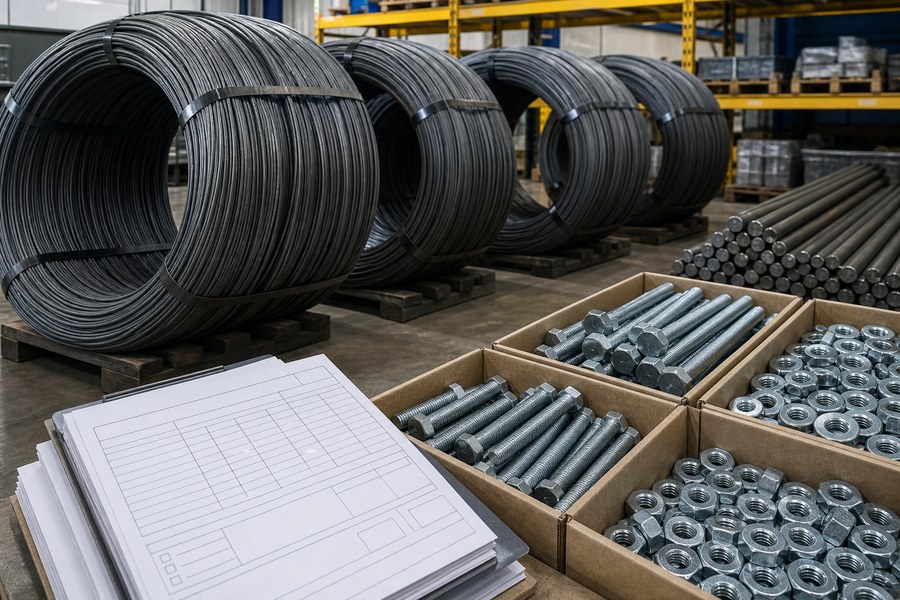
A fastener RFQ for the EU or UK market should be specific enough for both technical review and document preparation. Buyers should consider requesting:
- Product name, drawing number, size, thread, grade and applicable standard.
- Material grade: carbon steel, alloy steel, stainless steel or special material.
- Surface treatment: zinc plated, hot dip galvanized, black oxide, passivation, Dacromet-type coating or plain finish.
- Supplier-suggested HS code and importer-confirmed local customs classification.
- Country of origin, production site and available upstream steel evidence.
- MTC, material certificate, heat number, lot number and inspection report.
- Carton marks, bag labels, pallet labels and packing list references.
How MTC, heat number and melt-and-pour connect
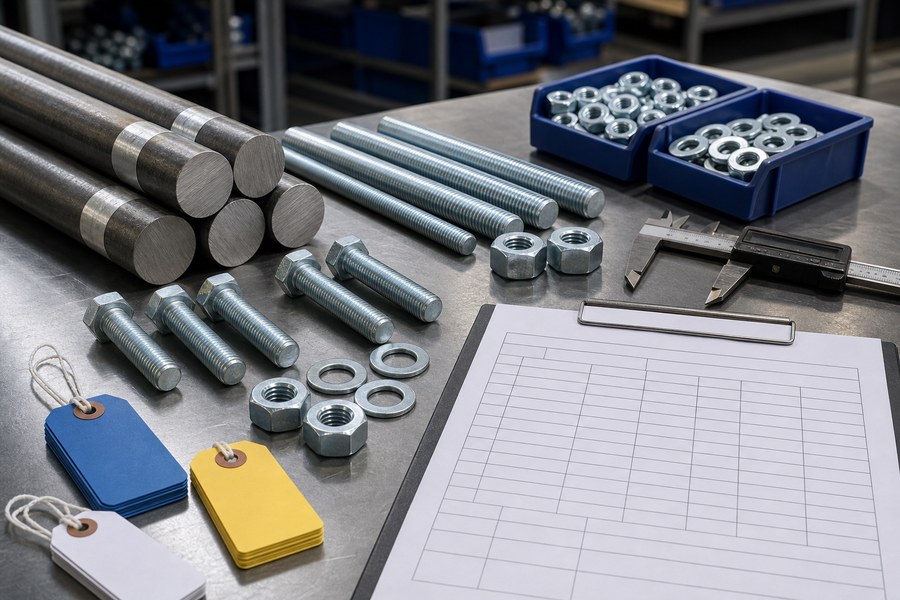
A mill test certificate is not just a file for archive. It links material grade, chemical composition, mechanical properties, heat number and production batch. For steel fastener orders, buyers can ask the supplier which wire rod or bar batch was used, which fastener sizes came from that batch, and whether the finished packing labels can be connected back to the lot record.
The melt-and-pour concept focuses on the country where raw steel or iron was first produced in liquid form and cast into its first solid state. For finished fasteners, the final level of evidence depends on classification and importer requirements. Still, keeping a clean chain from MTC to heat number to finished packing makes the later compliance conversation much easier.
Packing consistency is part of traceability
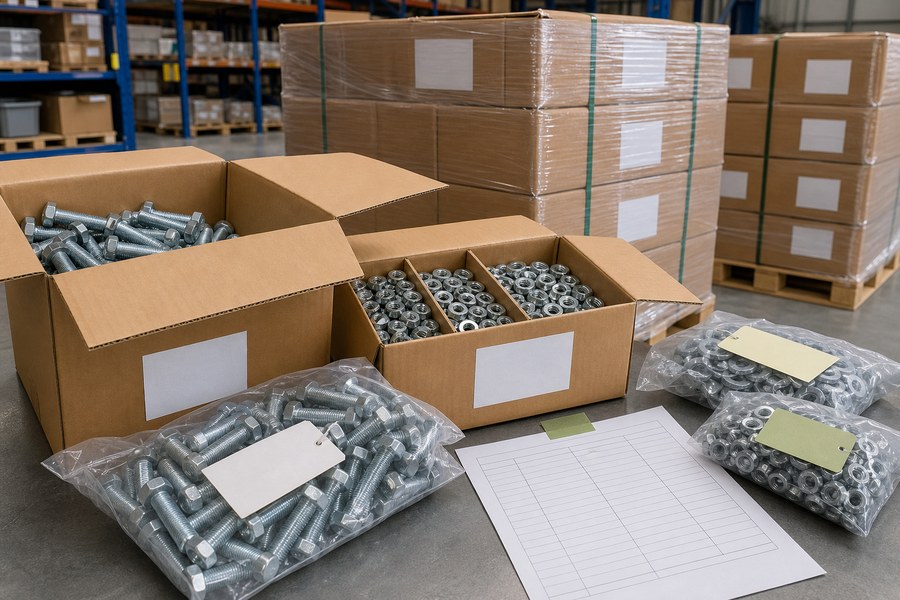
Many documentation problems happen after production, during packing and shipment. If the quotation, invoice, packing list, carton label and goods do not describe the same product, the importer may have to spend time correcting records during customs clearance or internal audit.
Before shipment, check whether each carton can be matched to product size, quantity, batch number, gross and net weight, and pallet number. For mixed shipments, separate material grades and coating types clearly. If the buyer needs a special label template, confirm it before mass packing starts.
How Wohe can support buyers
For EU, UK and other export markets, buyers should include the destination market, expected import country, application, material standard, coating, packing method and required document list in the RFQ. This allows the supplier to quote with the correct document workload in mind.
Wohe Fastener can support steel fastener sourcing with drawing review, material and coating suggestions, batch traceability, export packing and document preparation. For market-specific compliance duties, buyers should confirm the final document format with their importer or customs adviser.
Send your drawing, target market and documentation requirement to our team for a practical review before production.