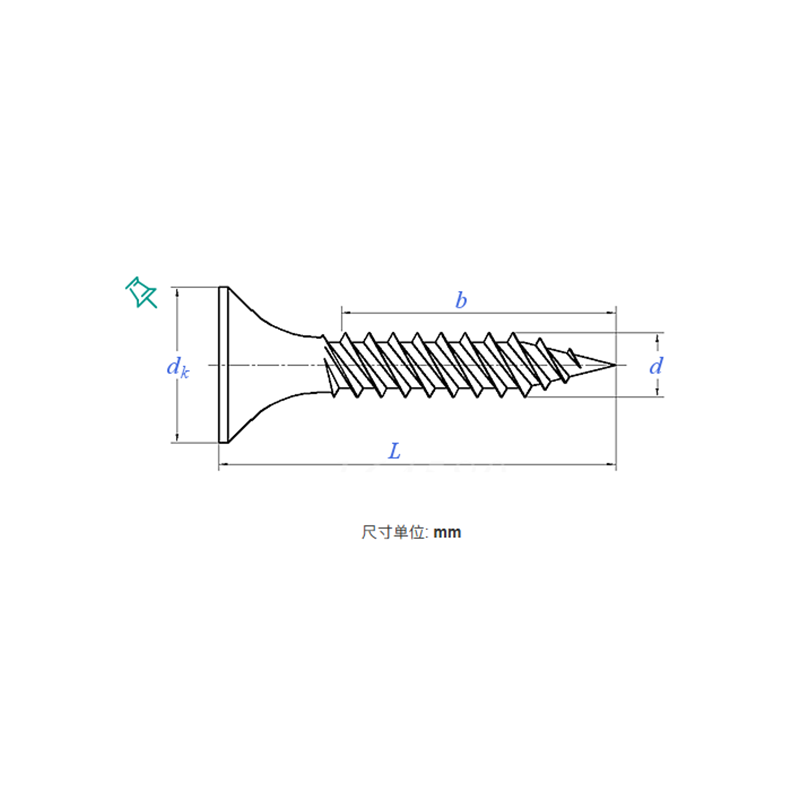
Product Specifications
| Model / Specification | M3.5–M4.3 |
| Material | Carbon Steel |
| Thread Size d |
3.5 | 4 | 4.3 | |
| d | Max. | 3.7 | 4 | 4.3 |
| Min. | 3.4 | 3.7 | 4 | |
| dk | Max. | 8.5 | 8.5 | 8.5 |
| Min. | 8.14 | 8.14 | 8.14 | |
| Thread Lgth (b) | Min. | - | - | - |
TRUMPET HEAD DOUBLE-THREAD DRYWALL SCREW — PRODUCT INTRODUCTION
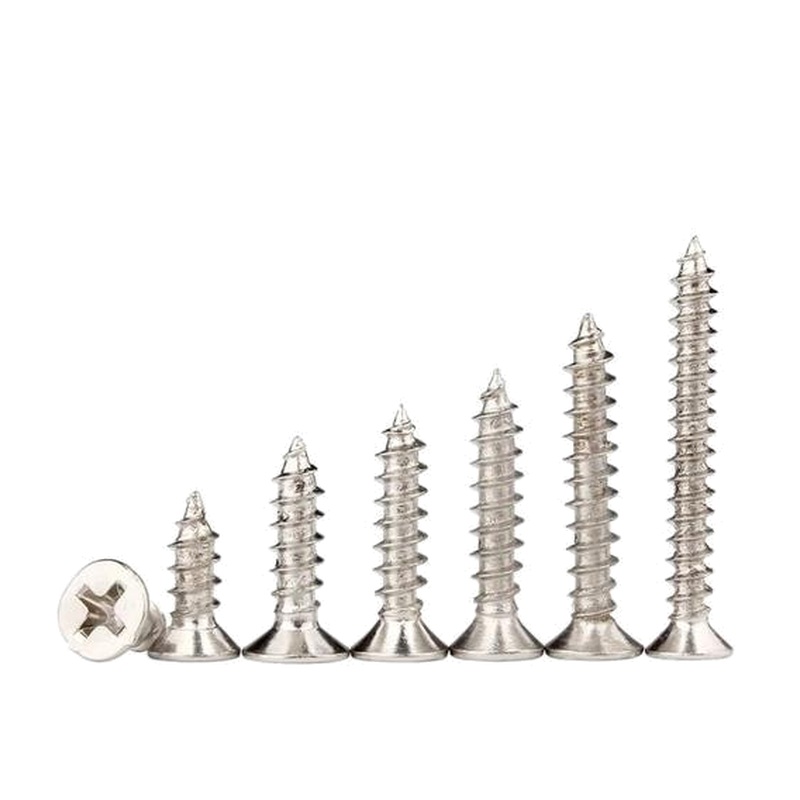
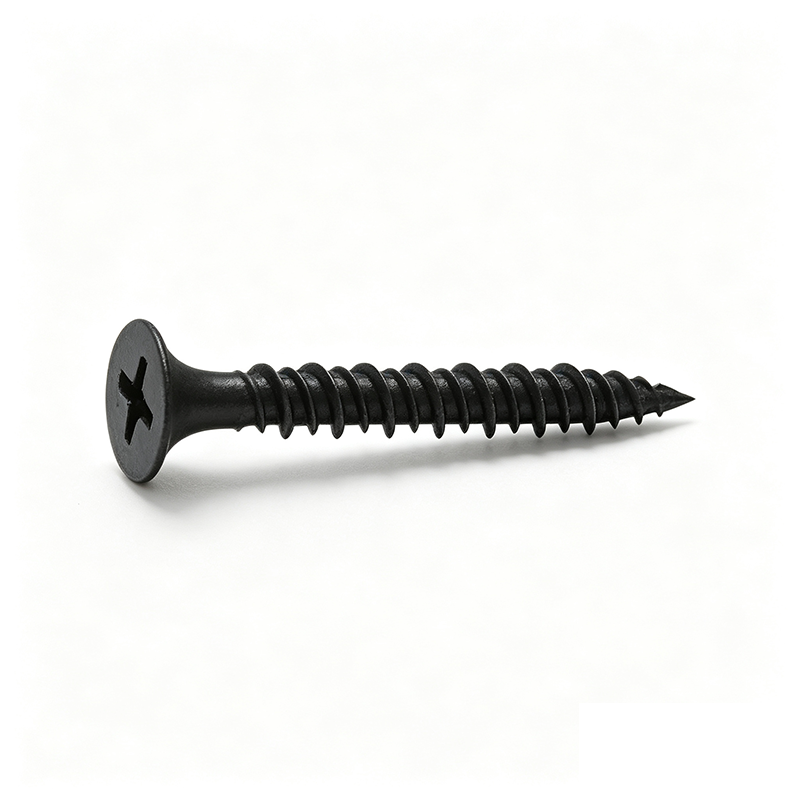
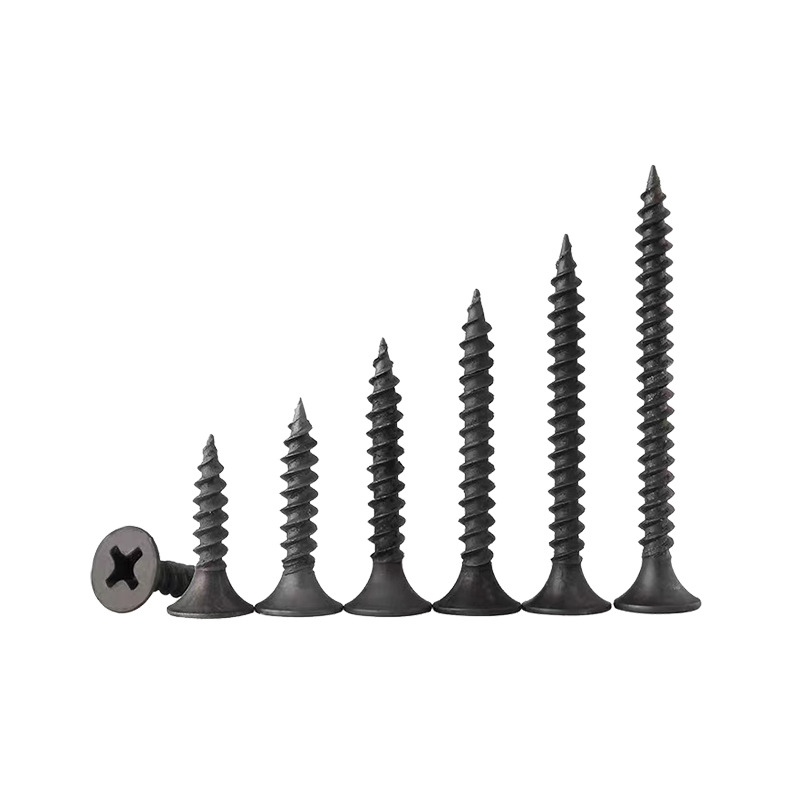
The trumpet head double-thread drywall screw, also known as a double-lead quick screw or trumpet head self-tapping screw, is a fastener specially designed for connecting gypsum board to light-gauge steel studs. The head has a trumpet shape (with a conical face), the shank features a double-thread (dual-lead) form, and the tail is a sharp point. The material is mainly carbonized (carburized) C1022A steel, with a black phosphate finish as the common surface treatment. It is manufactured with reference to standards GB/T 15856.1 (cross recess) or GB/T 15856.5 (Torx / hexalobular recess). Common specifications include 3.5 mm (#6) × 25 mm and 3.5 mm × 35 mm.
I. PRODUCT FEATURES
Trumpet Head Design: The underside of the head is a conical flare that, once driven into the gypsum board, naturally sinks flush with the board surface without damaging the paper face, facilitating skim coating and leveling.
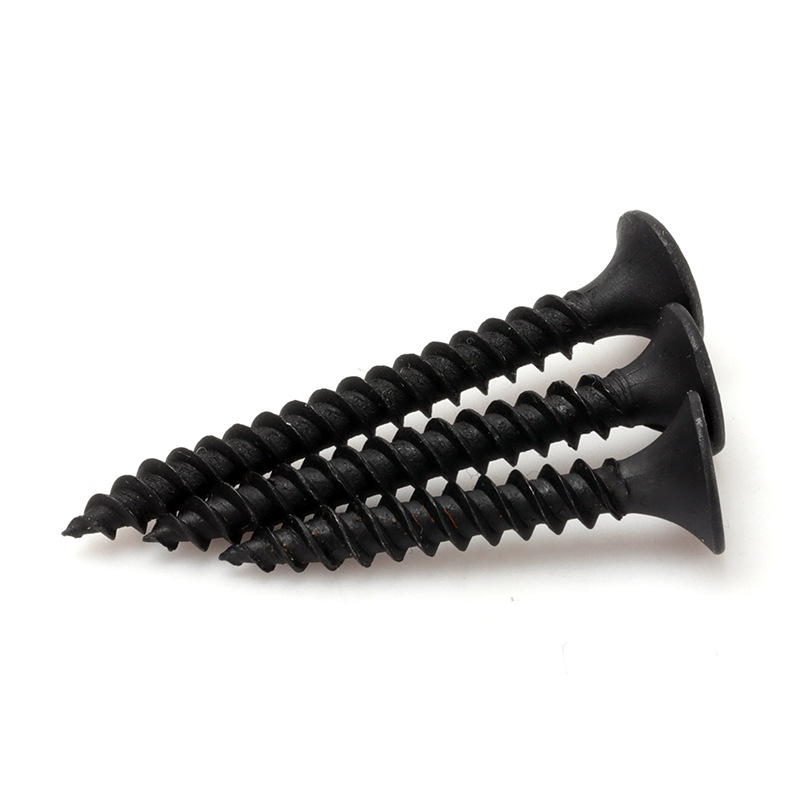
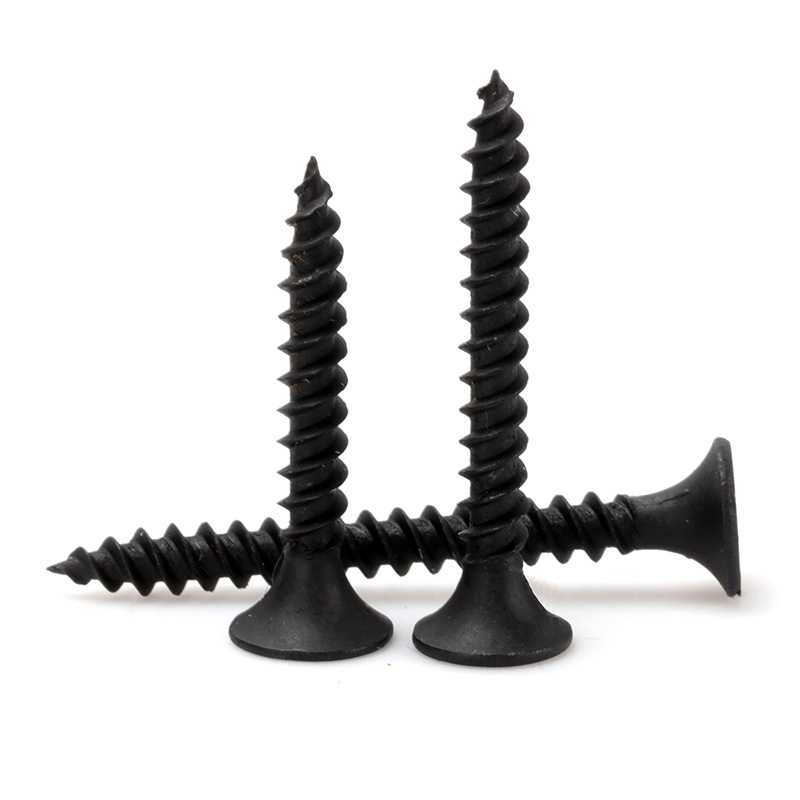
Double-Thread Form: Two threads wind parallel along the shank with a large lead, giving a fast driving speed; a single turn advances twice the depth of a single-thread screw.
Sharp Self-Tapping Tail: The tail is a sharp needle point that requires no pre-drilling and can directly penetrate the gypsum board and tap into the light-gauge steel stud wall.
High Surface Hardness: The surface is carburized and quenched, with surface hardness ≥ HV 560, while the core retains toughness, so it does not chip at the tip or twist off when driving into steel.
Black Phosphate Film: The grey-black phosphate layer on the surface provides basic rust resistance and increases roughness, enhancing the grip with both the stud and the filler (joint compound).
II. PRODUCT ADVANTAGES
High Construction Efficiency: The double-thread drive speed is twice that of ordinary self-tapping screws; paired with an electric screwdriver, installation is fast and labor-saving.
Good Connection Strength: The trumpet head fits tightly against the gypsum board surface, and the phosphate film helps the filler adhere; it is not prone to loosening or pulling out over long-term use.
Flat and Attractive Board Surface: The countersunk head sits flush inside the board without protruding; after skim coating the surface is smooth and seamless, meeting fine-decoration requirements.
Strong Adaptability: Can penetrate common gypsum boards of 9.5 mm, 12 mm, 15 mm, etc., and directly tap into light-gauge steel studs of 0.6 mm–1.2 mm thickness.
High Cost Performance: Carburized carbon steel with phosphate process costs far less than stainless steel while meeting the rust-resistance and service needs of indoor dry environments.
III. APPLICATION SCOPE
Light-Gauge Steel Stud Drywall Partitions: Fixing of paper-faced gypsum board and fire-resistant gypsum board to floor/ceiling tracks and vertical studs.
Light-Gauge Steel Stud Drywall Ceilings: Connecting and fixing ceiling plane boards to carrying channels.
Rock Wool Board & Cement Fiber Board Fixing: Connection of some lightweight decorative interior boards to steel studs.
Wood Frame Reinforcement: Also commonly used for internal reinforcement of furniture and wood structures; the double thread provides extra pull-out resistance.