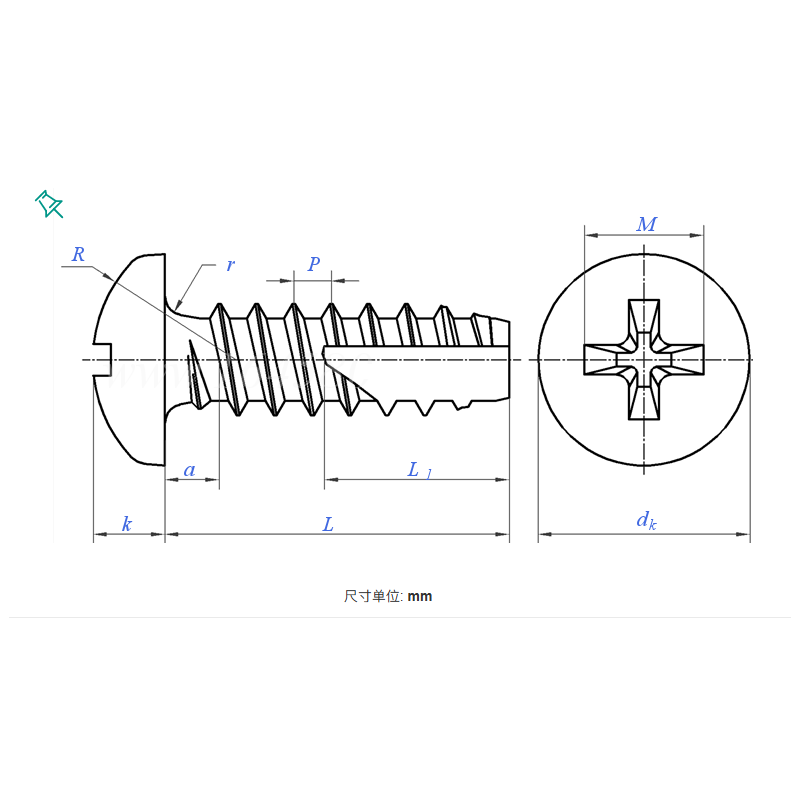
Product Specifications
| Model / Specification | ST1.5–ST4.2 |
| Material | Carbon Steel |
| Thread Spec. | ST1.5 | (ST1.9) | ST2.2 | (ST2.6) | ST2.9 | ST3.5 | ST4.2 | |
| P | Pitch | 0.5 | 0.6 | 0.8 | 0.9 | 1.1 | 1.3 | 1.4 |
| a | Max. | 0.5 | 0.6 | 0.8 | 0.9 | 1.1 | 1.3 | 1.4 |
| dk | Max. | 2.8 | 3.5 | 4 | 4.3 | 5.6 | 7 | 8 |
| Min. | 2.66 | 3.3 | 3.7 | 4.1 | 5.3 | 6.64 | 7.64 | |
| k | Max. | 0.9 | 1.1 | 1.6 | 2 | 2.4 | 2.6 | 3.1 |
| Min. | 0.8 | 1 | 1.4 | 1.8 | 2.15 | 2.35 | 2.8 | |
| L1 | Max. | 0.7 | 0.9 | 1.6 | 1.6 | 2.1 | 2.5 | 2.8 |
| R | ≈ | 2 | 2.6 | 3.2 | 4 | 5 | 6 | 6.5 |
| r | Min. | 0.05 | 0.05 | 0.1 | 0.1 | 0.1 | 0.1 | 0.2 |
| Recess No. | Max. | 0 | 0 | 0 | 1 | 1 | 2 | 2 |
| M | Ref. Value | 1.5 | 1.7 | 1.9 | 2.7 | 3 | 3.9 | 4.4 |
| Depth | Min. | 0.5 | 0.7 | 0.85 | 1.1 | 1.4 | 1.4 | 1.95 |
| Max. | 0.7 | 0.9 | 1.2 | 1.5 | 1.8 | 1.9 | 2.35 | |
| Wt/1000 Pcs (Steel) ≈ kg | - | - | - | - | - | - | - | |
CROSS RECESSED PAN HEAD SELF-TAPPING SCREW WITH SLASH POINT — PRODUCT INTRODUCTION
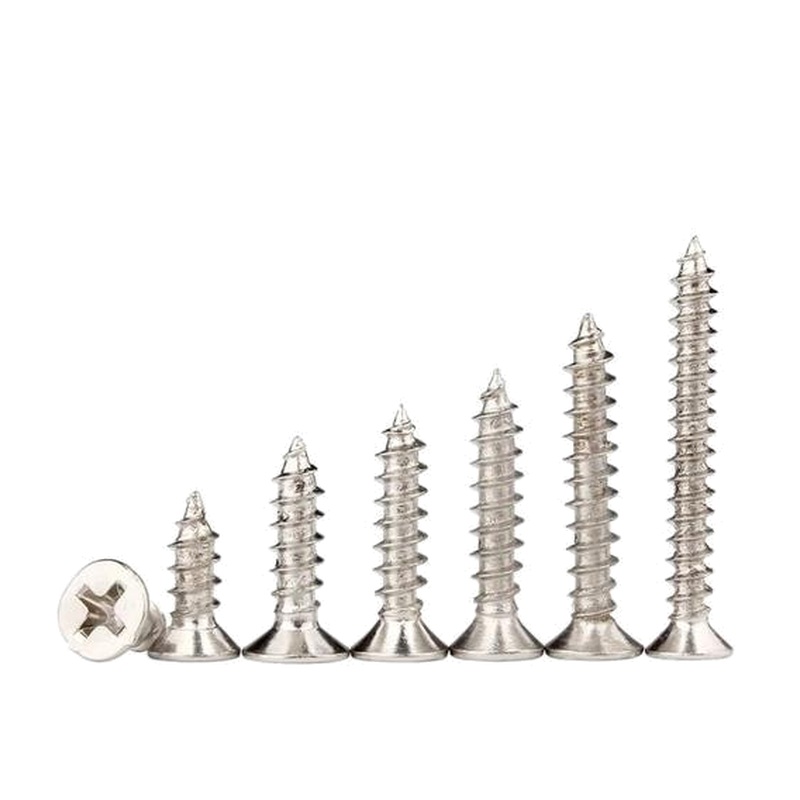
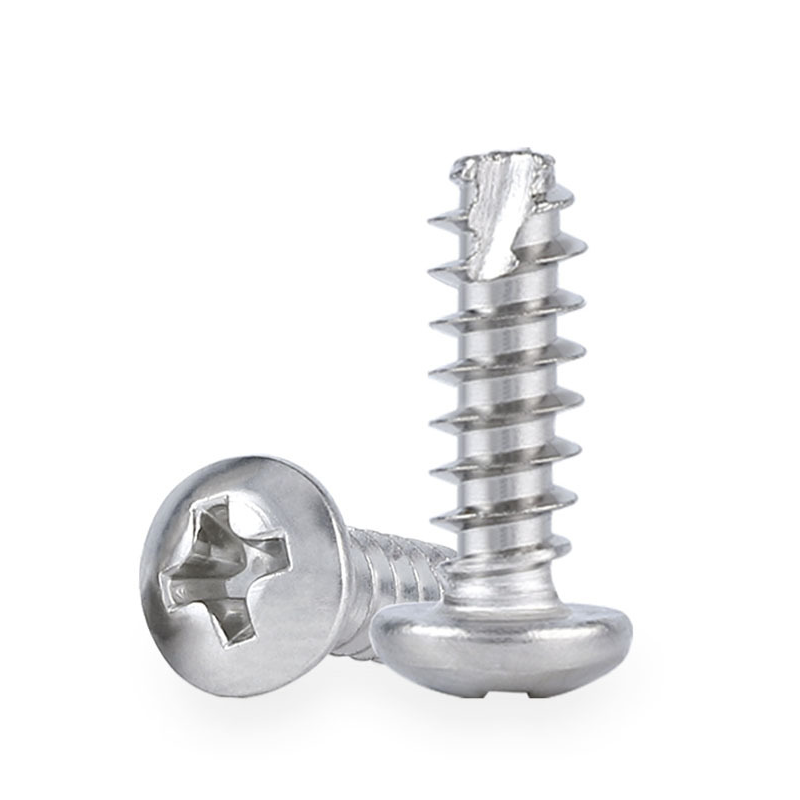
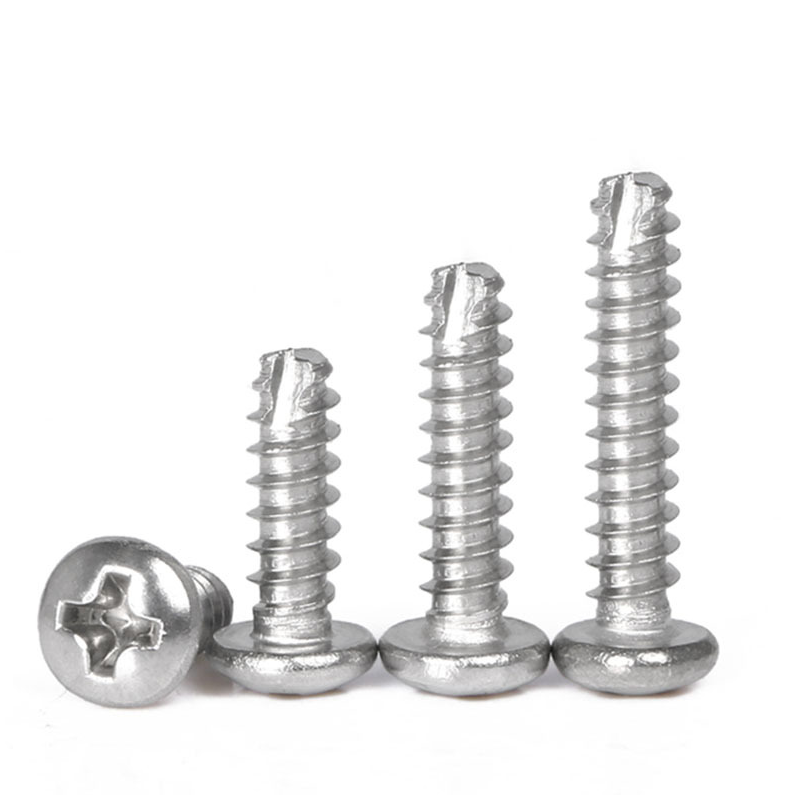
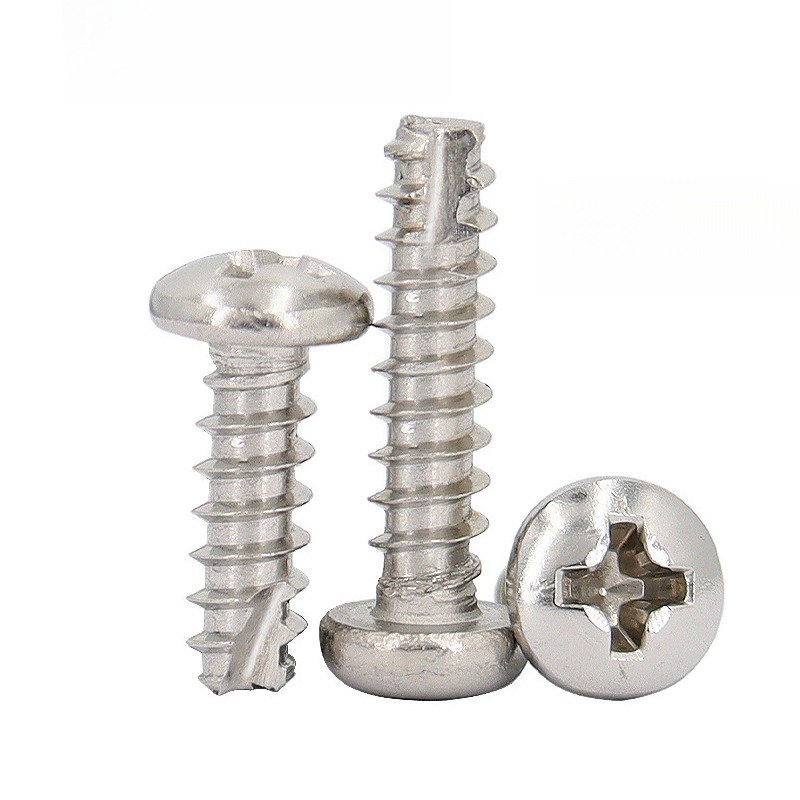
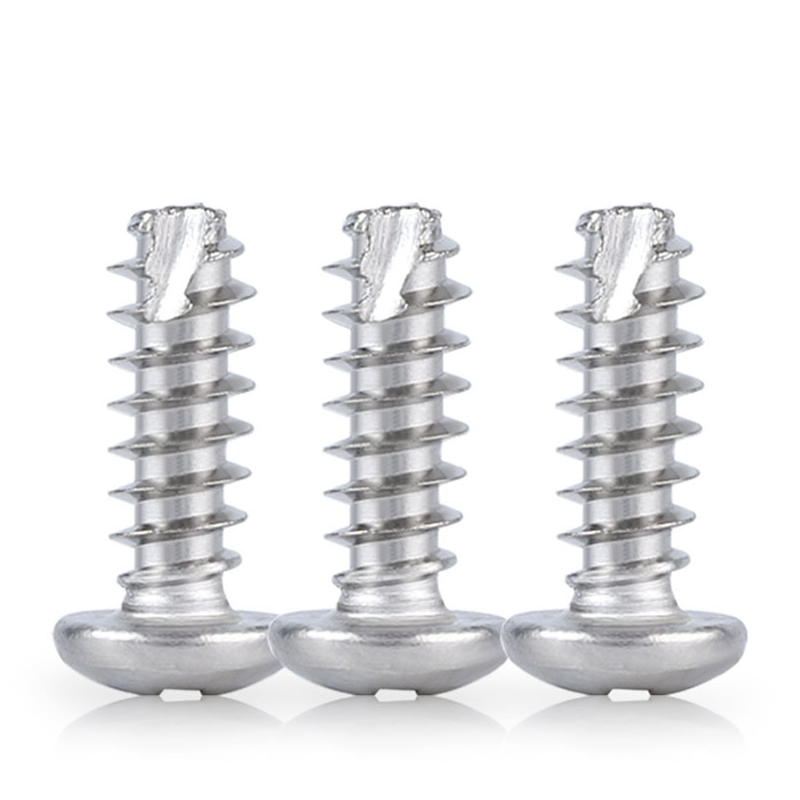
The Cross Recessed Pan Head Self-Tapping Screw with Slash Point is a high-performance fastener specifically designed for precision machinery, instruments, and electronic products. It features a flat-bottomed disc head (pan head), a cross recess drive, and a precision-machined slash cutting point at the tip. When driven in, the slash point acts like a tap, cutting internal threads directly into the base material, thereby effectively preventing cracking in plastic components. The primary applicable standard is GB/T 13806.2-2008. Slash point types are divided into Type F (short slot, formerly Type A) and Type G (long slot, formerly Types B/C). Primary materials include carburizing carbon steel C1022A and stainless steel SUS304, with a size range of M1.2–M10.
I. PRODUCT FEATURES
Slash Point Structure: The tip features a precision-machined cutting flute, available in short slot (Type F / Type A) and long slot (Type G / Types B, C) configurations. During driving, it actively cuts into the base material to form internal threads rather than merely extruding them.
Cross Recessed Pan Head: The head is a low-profile disc with a flat bearing surface underneath. The recess uses a standard Type H cross drive, which engages precisely with screwdrivers and bits, minimizing cam-out during driving.
Fine Precision Specifications: Primarily available in miniature sizes, with common sizes including M1.4, M2, M2.5, and M3. Lengths range from 3 mm to 25 mm, with fine thread pitches, making them ideal for precision assembly applications.
High Strength and Toughness: Carbon steel versions undergo carburizing and quenching, achieving surface hardness of HV 450–560 while maintaining core toughness. Stainless steel versions offer excellent corrosion resistance.
II. PRODUCT ADVANTAGES
Prevents Workpiece Cracking: The slash cutting flute ejects chips during driving, significantly reducing radial stress during installation and solving the common problem of splitting or cracking in plastic, nylon, and other thin-walled workpieces associated with ordinary self-tapping screws.
High Connection Reliability: Threads cut by the slash point mate closely with the base material, providing excellent vibration resistance and anti-loosening performance. The pan head bearing surface can withstand high preloading forces.
High Assembly Efficiency and Precision: The cross recess offers excellent self-centering, making it well-suited for rapid power tool driving. After countersinking, the head sits flush with the surface, meeting the appearance and internal clearance requirements of precision equipment.
Strong Adaptability: A single screw can accommodate blind holes of varying thicknesses and different materials. Short slot types are advantageous for deep driving in blind holes, while long slot types offer superior chip evacuation.
III. APPLICATION AREAS
Precision Instruments and Gauges: Fastening thin-walled plastic or light-alloy components in optical instruments, measuring equipment, and sensor housings.
Consumer Electronics: Structural fastening of miniature plastic components and metal inserts in smartphones, cameras, laptops, smartwatches, and similar devices.
Automotive Electronics and Interiors: Precision plastic component assembly for sensor modules, ECU control unit housings, and interior dashboard brackets.
Medical Devices: Plastic housings in handheld diagnostic equipment and monitoring instruments with high cleanliness and reliability requirements.
Small Motors and Models: Self-tapping fastening of casings in aeromodels, remote-control models, and small servo motors.