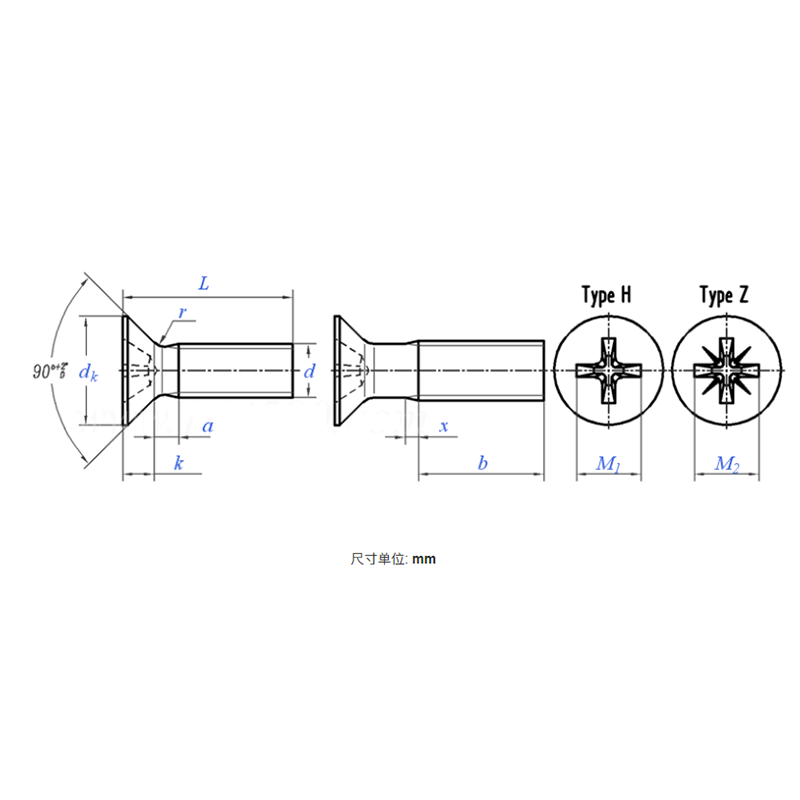
Product Specifications
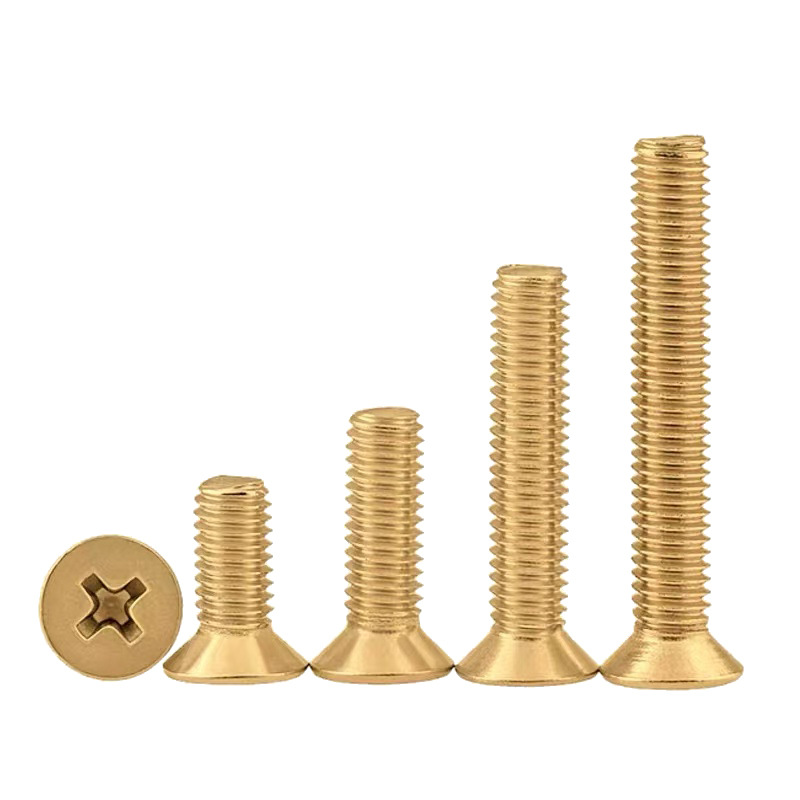
| Model / Specification | M1.6 – M10 |
| Material | Brass |
| Thread Spec d |
M1.6 | M2 | M2.5 | M3 | M3.5 | M4 | M5 | M6 | M8 | M10 | ||
| P | Pitch | 0.35 | 0.4 | 0.45 | 0.5 | 0.6 | 0.7 | 0.8 | 1 | 1.25 | 1.5 | |
| a | Max | 0.7 | 0.8 | 0.9 | 1 | 1.2 | 1.4 | 1.6 | 2 | 2.5 | 3 | |
| dk | Theoretical | Max | 3.6 | 4.4 | 5.5 | 6.3 | 8.2 | 9.4 | 10.4 | 12.6 | 17.3 | 20 |
| Actual | Max = Nominal | 3.0 | 3.8 | 4.7 | 5.5 | 7.30 | 8.40 | 9.30 | 11.30 | 15.80 | 18.30 | |
| Min | 2.7 | 3.5 | 4.4 | 5.2 | 6.94 | 8.04 | 8.94 | 10.87 | 15.37 | 17.78 | ||
| k | Max = Nominal | 1 | 1.2 | 1.5 | 1.65 | 2.35 | 2.7 | 2.7 | 3.3 | 4.65 | 5 | |
| r | Max | 0.4 | 0.5 | 0.6 | 0.8 | 0.9 | 1 | 1.3 | 1.5 | 2 | 2.5 | |
| x | Max | 0.9 | 1 | 1.1 | 1.25 | 1.5 | 1.75 | 2 | 2.5 | 3.2 | 3.8 | |
| Drive | 0 | 0 | 1 | 1 | 2 | 2 | 2 | 3 | 4 | 4 | ||
| M1 | Reference | 1.6 | 1.9 | 2.9 | 3.2 | 4.4 | 4.6 | 5.2 | 6.8 | 8.9 | 10 | |
| M2 |
Reference |
1.6 | 1.9 | 2.8 | 3 | 4.1 | 4.4 | 4.9 | 6.6 | 8.8 | 9.8 | |
| Depth | H-Type | Max | 0.9 | 1.2 | 1.8 | 2.1 | 2.4 | 2.6 | 3.2 | 3.5 | 4.6 | 5.7 |
| Min | 0.6 | 0.9 | 1.4 | 1.7 | 1.9 | 2.1 | 2.7 | 3.0 | 4.0 | 5.1 | ||
| Z-Type | Max | 0.95 | 1.2 | 1.73 | 2.01 | 2.2 | 2.51 | 3.05 | 3.45 | 4.6 | 5.64 | |
| Min | 0.7 | 0.95 | 1.48 | 1.76 | 1.75 | 2.06 | 2.6 | 3 | 4.15 | 5.19 | ||
| Weight per 1000 pcs (Steel) ≈ kg | - | - | - | - | - | - | - | - | - | - | ||
| Thread Length b | Min | - | - | - | - | - | - | - | - | - | - | |
Copper Screw — Product Introduction
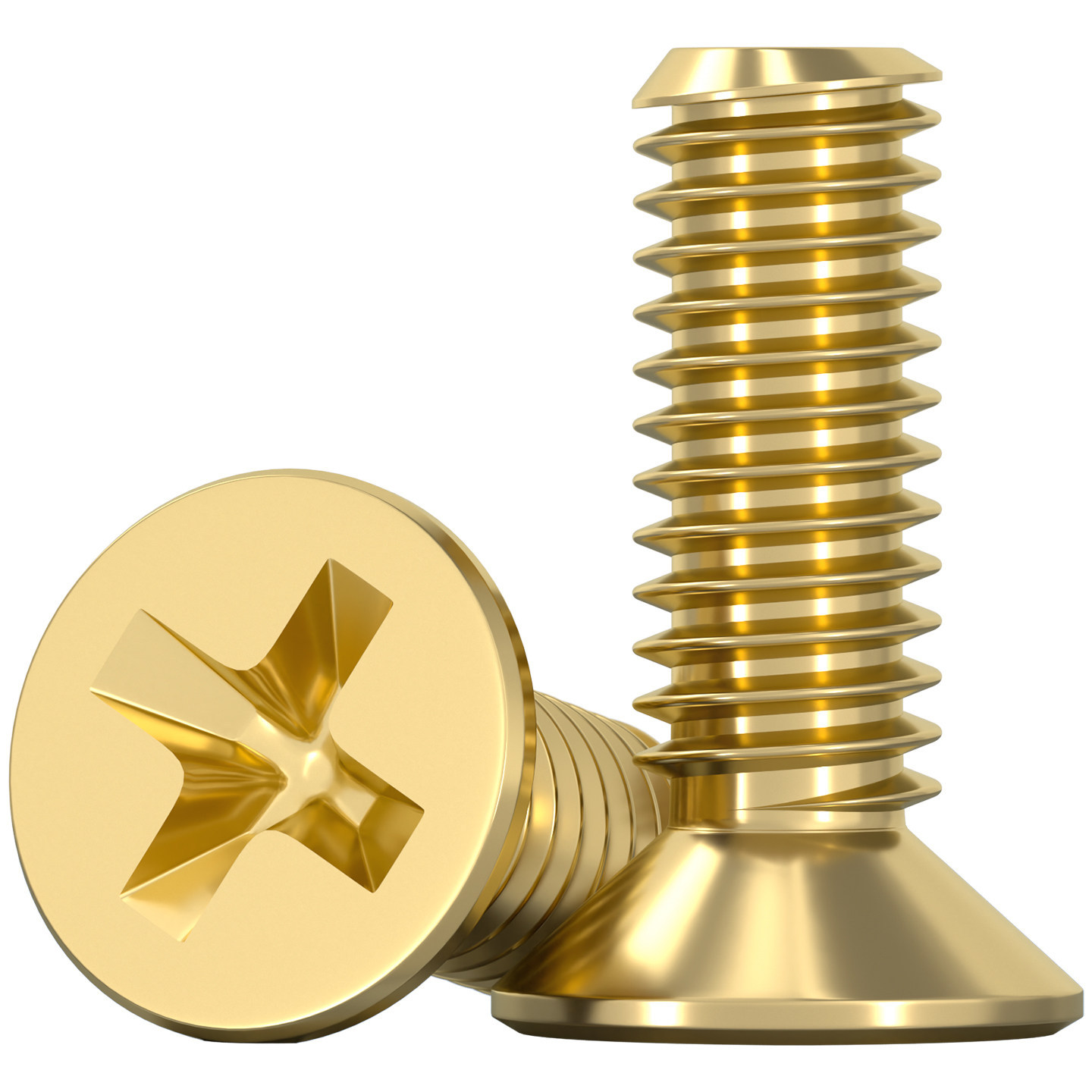
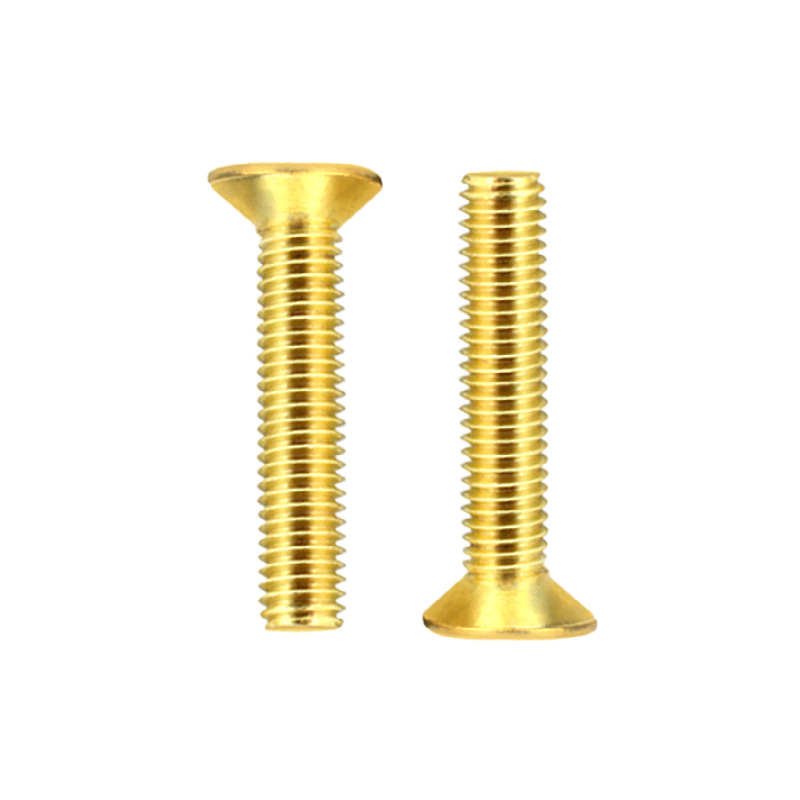
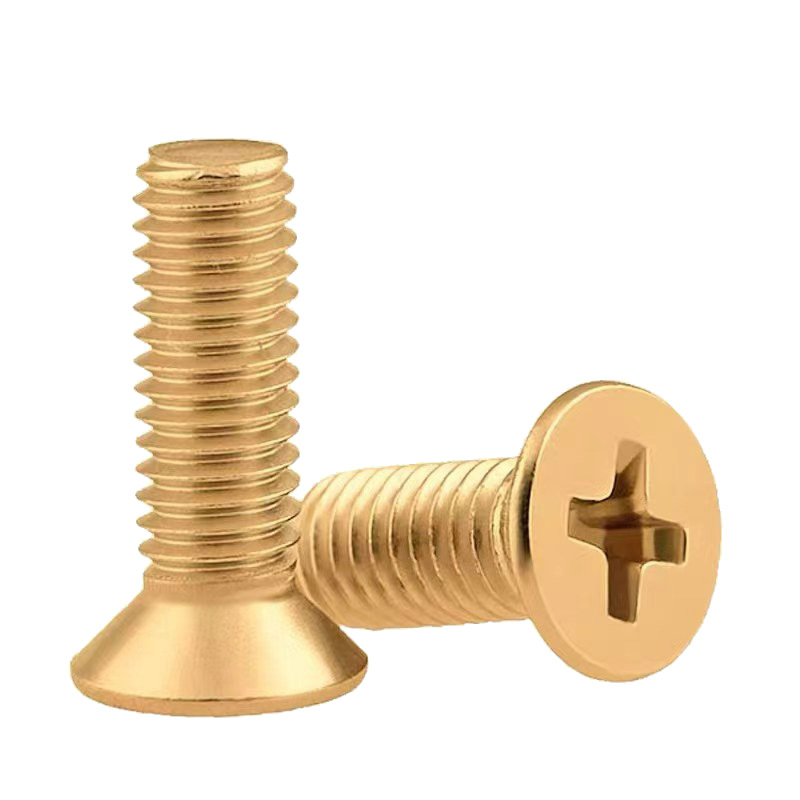
Copper screws are threaded fasteners manufactured from copper or copper alloys, belonging to an important category of non-ferrous metal fasteners. According to the copper material composition, they can be divided into four main categories: pure copper (deoxidized copper/purple copper), brass, cupronickel, and bronze. Among them, brass (such as H59, H62, etc.) is the most commonly used material in the fastener industry.
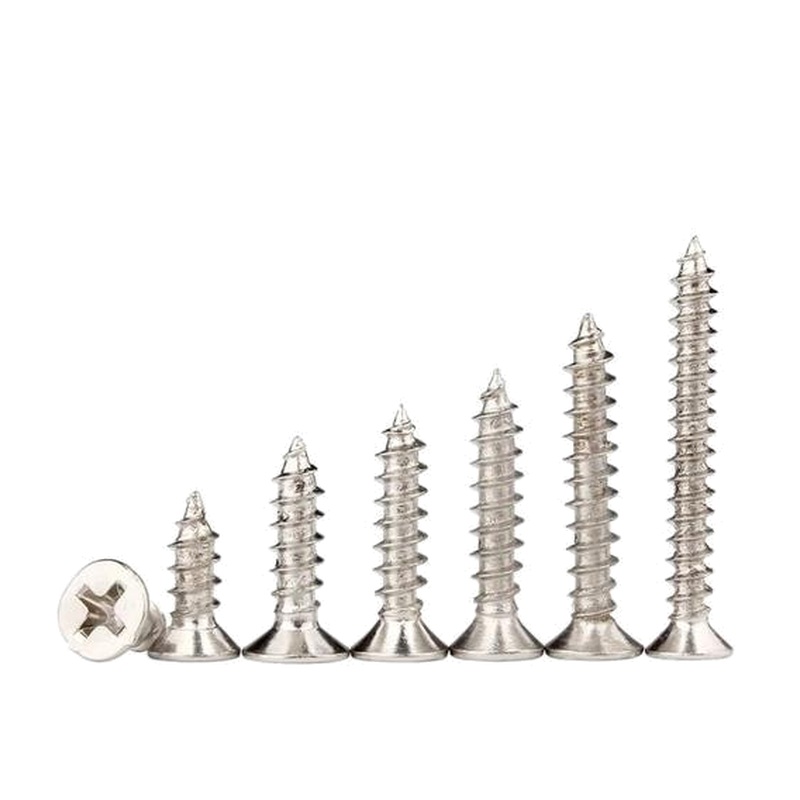
Relying on the excellent electrical conductivity, thermal conductivity, corrosion resistance, and non-magnetic characteristics of copper materials, copper screws are distinctly different from ordinary iron or steel screws. Their product forms are diverse: in addition to standard hexagon head copper bolts and Phillips flat/countersunk head copper screws conforming to national standards (such as GB/T 5782, GB/T 5783), there are also a large number of non-standard custom parts produced according to customer drawings. Copper screws are widely used in electrical equipment, electronic instruments, plumbing and bathroom facilities, chemical engineering, precision machinery, and other fields. They are specialized fasteners that combine both fastening and electrical conduction as well as corrosion protection functions.
I. Product Features
Diverse Materials with Varied Performance Characteristics: Copper screws can be categorized by material into pure copper (deoxidized copper/purple copper, with the best electrical conductivity), brass (copper-zinc alloy, high strength, relatively low cost), cupronickel (copper-nickel alloy, excellent corrosion resistance), and bronze (with elements such as tin, aluminum, and beryllium added, featuring good elasticity). The most commonly used brass H62 contains 62% copper and 38% zinc, balancing plasticity and strength.
Outstanding Electrical and Thermal Conductivity: Copper is an excellent electrical conductor second only to silver. Copper screws not only serve a fastening function but can also stably conduct electricity and assist in heat dissipation, making them suitable for applications in electrical equipment, power distribution devices, and wire terminal connections. They help reduce circuit losses and localized high temperatures.
Corrosion and Oxidation Resistance: Copper materials possess excellent corrosion resistance. In humid environments, weak acid and weak alkali environments, and outdoor working conditions, copper screws are not prone to rusting or aging. After surface treatments such as cleaning and passivation, they can pass neutral salt spray tests for more than 500 hours.
Non-Magnetic: Copper screws are not magnetizable and do not generate magnetic field interference, making them suitable for precision instruments, medical equipment, testing instruments, and other special scenarios with anti-magnetic requirements.
Good Toughness, Not Prone to Brittle Fracture: Copper materials have good ductility, can buffer slight vibrations, prevent loosening or detachment of connected parts, and are not easily damaged during repeated disassembly and assembly, even in working conditions involving frequent fastening and unfastening.
II. Product Advantages
Combines Both Fastening and Electrical Conduction Functions: Copper screws simultaneously meet the needs of mechanical fixation and electrical connection. Particularly in the electrical and electromechanical industries, a single copper screw can both tighten components and serve as an electrical conduction medium, simplifying the assembly process.
Corrosion Service Life Far Exceeding Ordinary Steel Screws: Ordinary iron or carbon steel screws are prone to rusting and corrosion in humid environments, whereas copper screws inherently possess oxidation resistance and can be used for long periods in humid, outdoor, and other environments without additional plating.
Flexible Options for Standard Parts and Non-Standard Customization: Copper screws include clearly defined national standard products (such as GB/T 5782 hexagon head copper bolts and GB/T 818 Phillips pan head copper screws), while also offering non-standard custom products with special dimensions, head types, and drive types according to customer drawings, meeting diverse requirements.
Mechanical Performance Standards Available: The mechanical performance of copper fasteners is governed by the national standard GB/T 3098.10, which classifies them into seven performance grades from CU1 to CU7, clearly specifying tensile strength, yield strength, guaranteed load, and other indicators, providing authoritative references for product selection.
Rich Selection of Surface Treatments: Various electroplating treatments can be selected according to needs, including nickel plating, silver plating, tin plating, and gold plating. Nickel plating improves wear resistance and corrosion resistance; silver plating further enhances electrical conductivity.
III. Scope of Application
Electrical and Power Equipment: Used for conductive fastening connections in power distribution boxes, control cabinets, wire terminal connections, transformers, and other components.
Electronics and Precision Instruments: Suitable for miniature screw applications in cameras, eyeglasses, watches, communication equipment, and PCB board fixation.
Plumbing, Bathroom, and Pipeline Valves: The corrosion resistance and golden appearance of copper make it widely used in bathroom hardware, water pipe fittings, and valve manufacturing.
Chemical Engineering and Outdoor Environments: Suitable for acidic and humid environments such as chemical plants, sewage treatment facilities, and marine facilities, replacing ordinary steel fasteners that are prone to rusting.
Precision Machinery and Medical Equipment: The non-magnetic characteristic makes it suitable for assembly scenarios in medical testing instruments, instrument devices, and other applications sensitive to magnetic fields.
New Energy and Special Industries: Copper screws also play important roles in new energy vehicles, photovoltaic equipment, and other fields with high requirements for electrical conductivity and corrosion resistance.