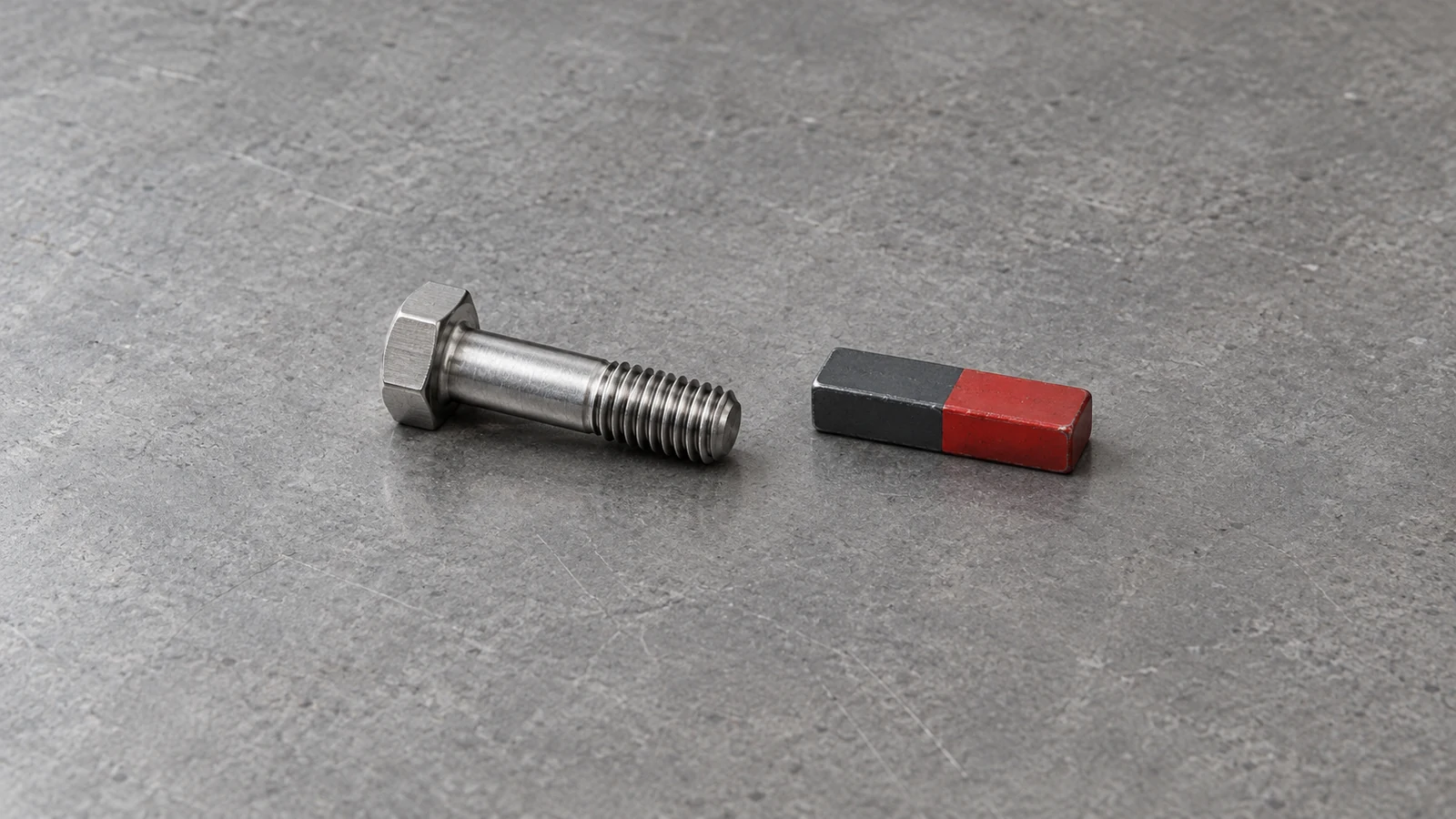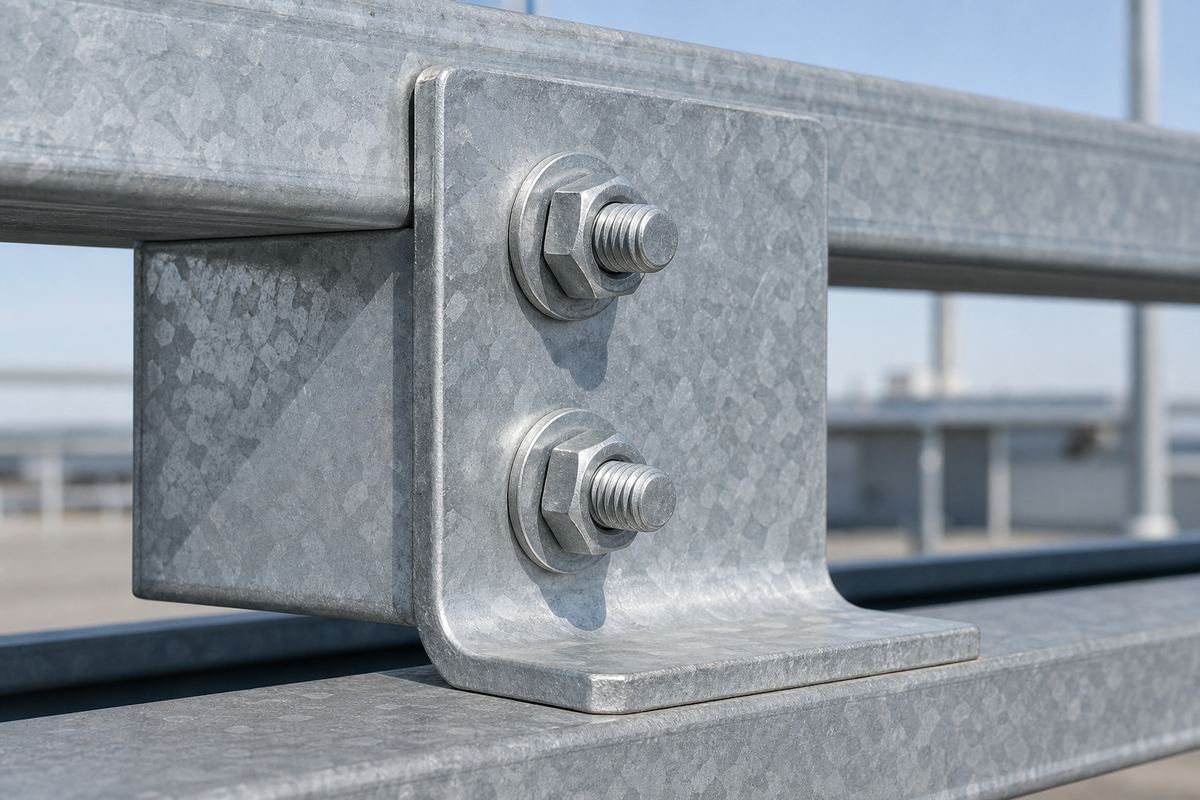
Outdoor fastener projects are exposed to rain, humidity, temperature changes, industrial air, soil contact and sometimes coastal salt. For buyers, the choice between hot dip galvanized fasteners and stainless steel fasteners is not only a price question. It affects corrosion resistance, strength, service life, installation efficiency and long-term maintenance cost.
This guide explains when to choose hot dip galvanized bolts, nuts and washers, when stainless steel is a better option, and what information should be included in an RFQ for outdoor projects.
1. Start with the real working environment
The first question is not “Which fastener is better?” but “Where will the fastener be used?” A dry inland steel structure, a solar mounting system, a coastal fence and an outdoor machine base may all need different corrosion protection. Buyers should consider humidity, salt exposure, industrial pollution, contact with soil or treated timber, drainage conditions and expected service life.
For standard outdoor steel structures, hot dip galvanized fasteners are widely used because they provide a thick zinc coating and good protection for carbon steel parts. For coastal, chemical, food equipment or highly humid environments, stainless steel fasteners may be more suitable.
2. When hot dip galvanized fasteners are a strong choice
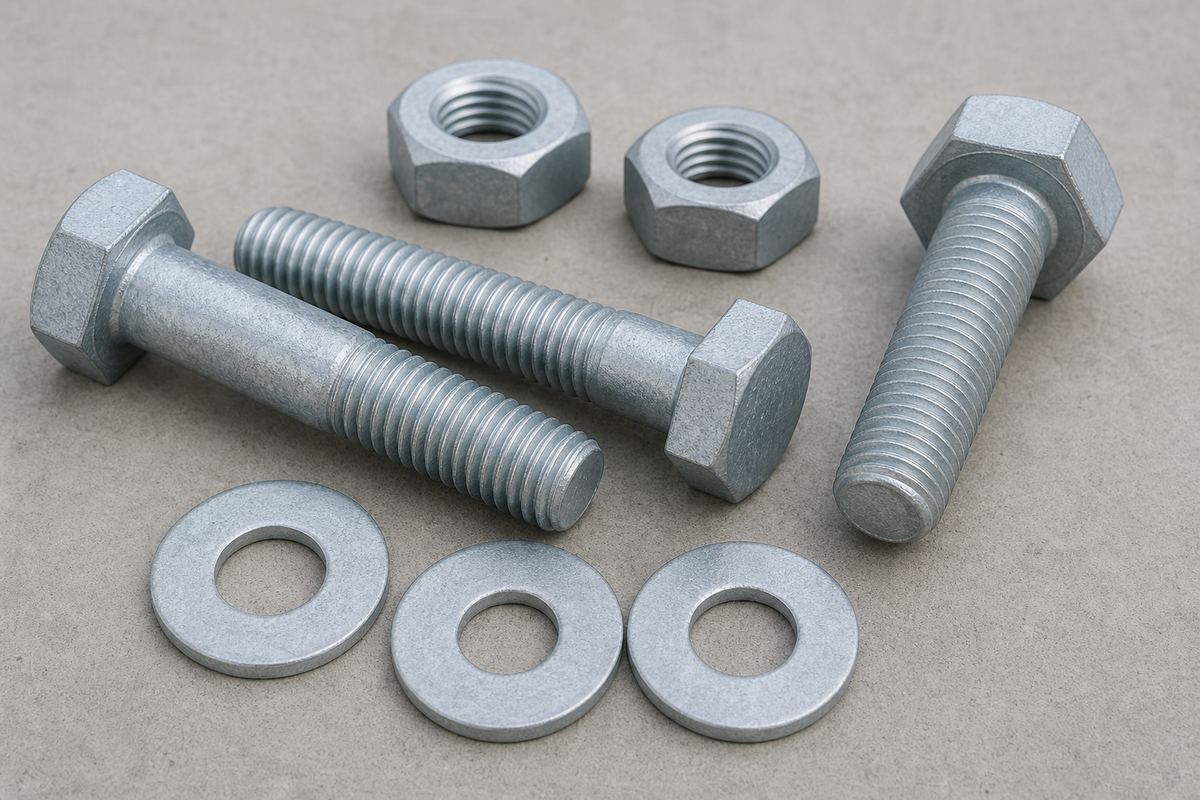
Hot dip galvanizing coats carbon steel fasteners with a zinc layer. This is useful for outdoor steel structures, construction hardware, guardrails, solar mounting supports and general infrastructure projects. Compared with ordinary zinc plating, hot dip galvanizing usually offers a thicker protective layer and better long-term outdoor performance.
Buyers often choose hot dip galvanized fasteners when they need strength, cost control and corrosion protection at the same time. They are especially practical for steel-to-steel connections where the surrounding structure is also galvanized.
3. When stainless steel fasteners are preferred
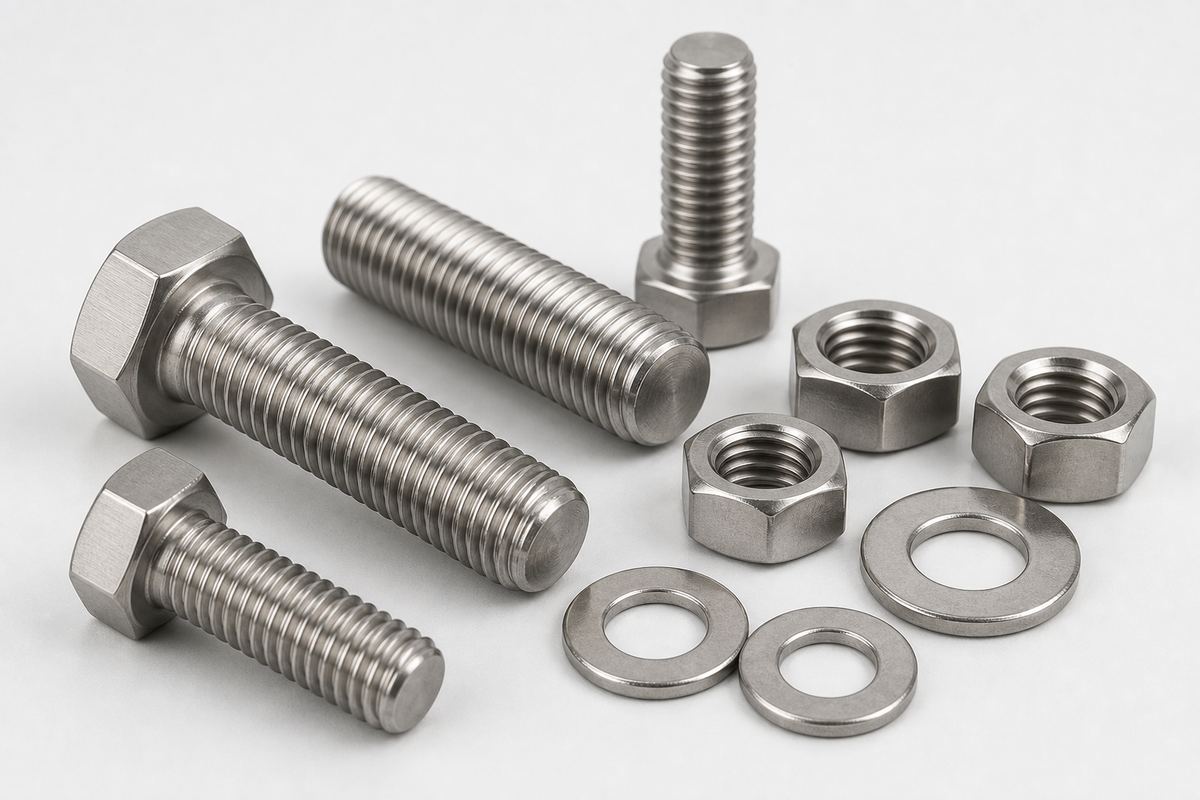
Stainless steel fasteners are often selected when corrosion risk is higher or when a cleaner appearance is required. 304 stainless steel is common for general outdoor and humid environments. 316 stainless steel provides better resistance in marine or chloride-rich conditions and is often considered for coastal projects.
However, stainless steel is not automatically the best answer for every project. Buyers should confirm strength requirements, possible galling during installation, contact with other metals and cost targets. For heavy structural connections, the required strength class and project standard must be checked carefully.
4. Compare by project requirement, not by material name
A useful comparison should include:
- Corrosion environment: inland, industrial, coastal, chemical or high humidity
- Base material: carbon steel, stainless steel, aluminum or mixed metals
- Strength requirement: bolt grade, nut grade and washer type
- Standard or drawing: DIN, ISO, ASTM, GB or custom drawing
- Installation method: torque, thread fit, anti-seize requirement and access space
- Maintenance expectation: temporary, medium-term or long service life
5. Do not forget nuts, washers and thread fit
For outdoor assemblies, the bolt alone is not enough. Nuts, flat washers, spring washers and other mating parts should match the material or coating system. Hot dip galvanized fasteners may have thicker coating on the thread, so thread fit and matching nuts should be confirmed. Stainless steel assemblies may require attention to galling, especially when installed with high torque or without lubrication.
6. Export packing matters for outdoor fastener orders
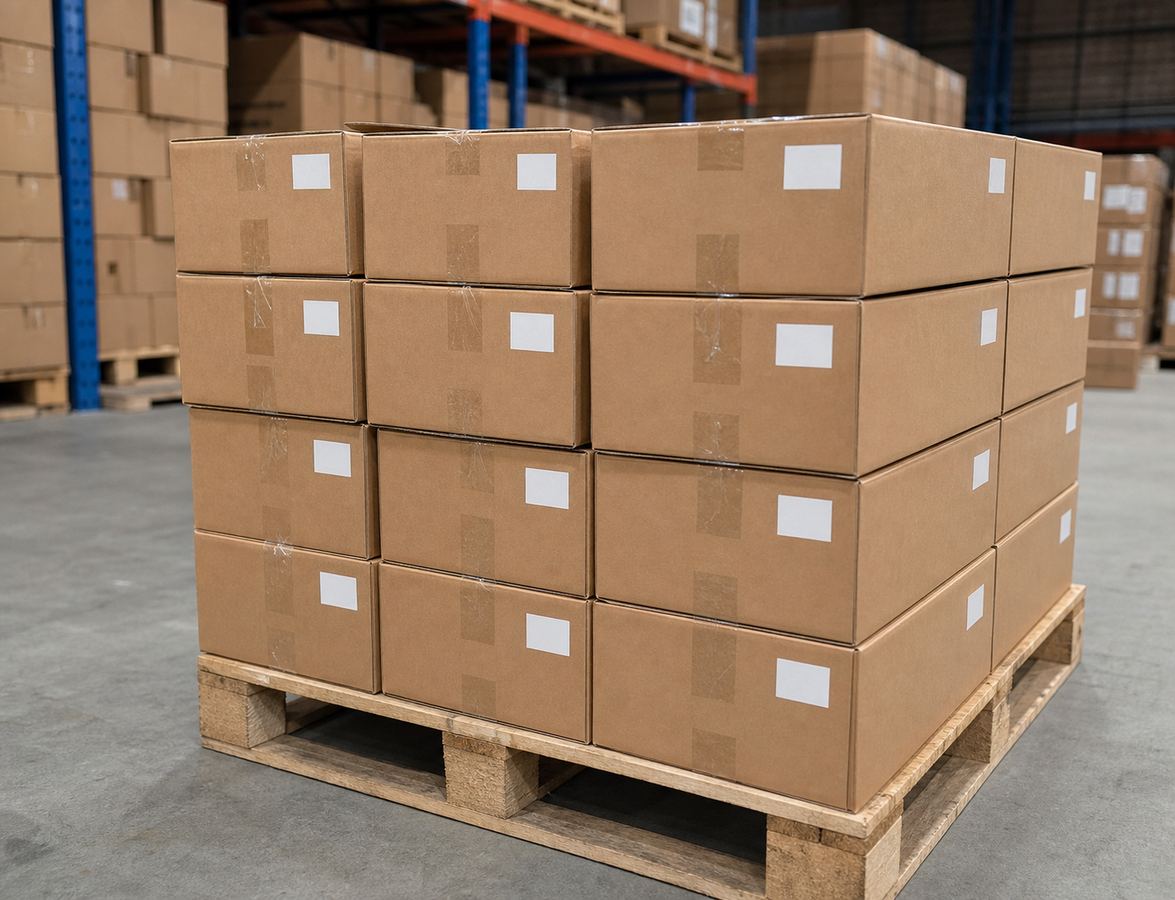
Outdoor fastener orders often involve heavy cartons, palletized packing and mixed sizes. Clear labels, batch control and moisture-resistant packing help reduce damage during shipping and confusion at the job site. Buyers can also request carton marks, pallet labels, customized bags or kit packing according to the project bill of materials.
What to send for a faster quotation
To receive a clear quotation, send the product name, standard or drawing, size, thread, length, material, strength grade, coating, quantity, packing method and destination port. If the project has a corrosion requirement or salt spray target, include it in the RFQ.
Wohe Fastener supplies fastener products for export buyers, including outdoor, construction fasteners and solar fasteners. We can support specification review, material and coating discussion, export packing and stable batch delivery.