Product Specifications
| Model / Specification | 1/4" - 3" |
| Material | Carbon Steel |
| Specification | Working Load Limit (tons) |
Dimensions |
Unit Weight (lb) | ||||||||
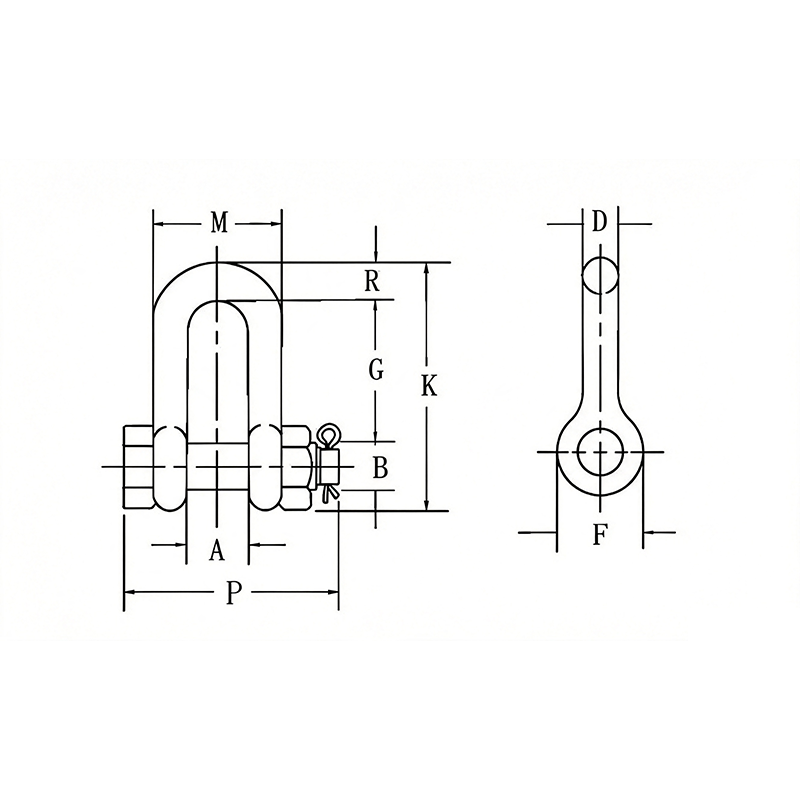
| A | B | D | F | G | K | M | P | R | G-2150 | ||
| 1/4 | 1/2 | 0.47 | 0.31 | 0.25 | 0.62 | 0.91 | 1.59 | 0.97 | 1.56 | 0.25 | 0.13 |
| 5/16 | 3/4 | 0.53 | 0.38 | 0.31 | 0.75 | 1.07 | 1.91 | 1.15 | 1.82 | 0.31 | 0.23 |
| 3/8 | 1 | 0.66 | 0.44 | 0.38 | 0.92 | 1.28 | 2.31 | 1.42 | 2.17 | 0.38 | 0.33 |
| 7/16 | 1-1/2 | 0.75 | 0.5 | 0.44 | 1.06 | 1.48 | 2.67 | 1.63 | 2.51 | 0.44 | 0.49 |
| 1/2 | 2 | 0.81 | 0.64 | 0.5 | 1.18 | 1.66 | 3.03 | 1.81 | 2.8 | 0.5 | 0.75 |
| 5/8 | 3-1/4 | 1.06 | 0.77 | 0.63 | 1.5 | 2.04 | 3.76 | 2.32 | 3.56 | 0.63 | 1.47 |
| 3/4 | 4-3/4 | 1.25 | 0.89 | 0.75 | 1.81 | 2.4 | 4.53 | 2.75 | 4.15 | 0.81 | 2.52 |
| 7/8 | 6-1/2 | 1.44 | 1.02 | 0.88 | 2.1 | 2.86 | 5.33 | 3.2 | 4.82 | 0.97 | 3.85 |
| 1 | 8-1/2 | 1.69 | 1.15 | 1 | 2.38 | 3.24 | 5.94 | 3.69 | 5.39 | 1 | 5.55 |
| 1-1/8 | 9-1/2 | 1.81 | 1.25 | 1.13 | 2.68 | 3.61 | 6.78 | 4.07 | 5.9 | 1.25 | 7.6 |
| 1-1/4 | 12 | 2.03 | 1.4 | 1.25 | 3 | 3.97 | 7.5 | 4.53 | 6.69 | 1.38 | 10.81 |
| 1-3/8 | 13-1/2 | 2.25 | 1.53 | 1.38 | 3.31 | 4.43 | 8.28 | 5.01 | 7.21 | 1.5 | 13.75 |
| 1-1/2 | 17 | 2.38 | 1.66 | 1.5 | 3.62 | 4.87 | 9.05 | 5.38 | 7.73 | 1.62 | 18.5 |
| 1-3/4 | 25 | 2.88 | 2.04 | 1.75 | 4.19 | 5.82 | 10.97 | 6.38 | 9.33 | 2.12 | 31.4 |
| 2 | 35 | 3.25 | 2.3 | 2.1 | 5 | 6.82 | 12.74 | 7.25 | 10.41 | 2.36 | 46.75 |
| 2-1/2 | 55 | 4.12 | 2.8 | 2.63 | 5.68 | 8.07 | 14.85 | 9.38 | 13.58 | 2.63 | 85 |
| 3 | 85 | 5 | 3.25 | 3 | 6.5 | 8.56 | 16.87 | 11 | 15.13 | 3.5 |
124.25 |
G2150 Shackle — Product Introduction
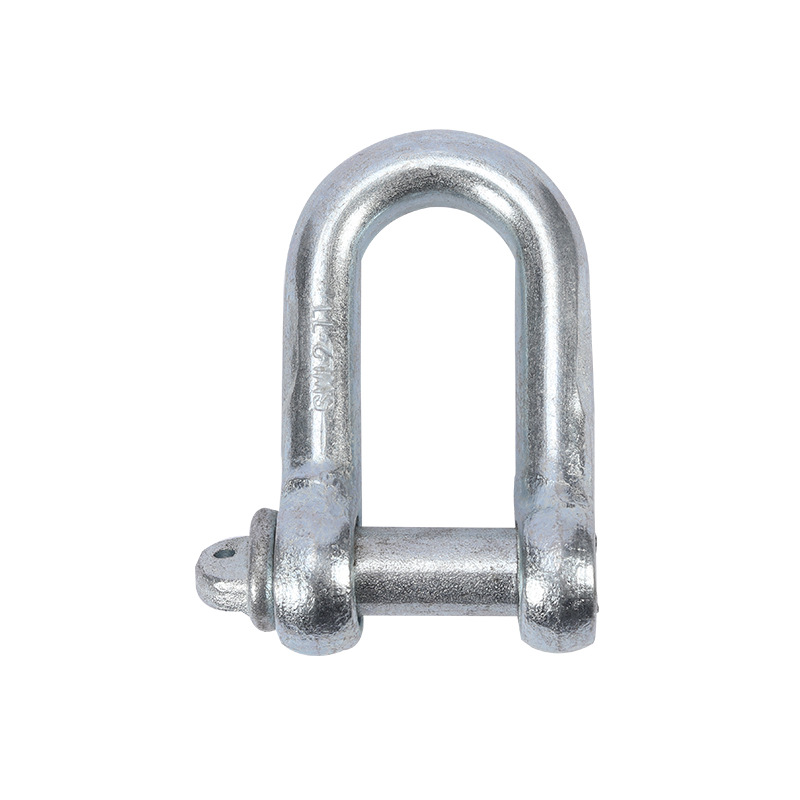
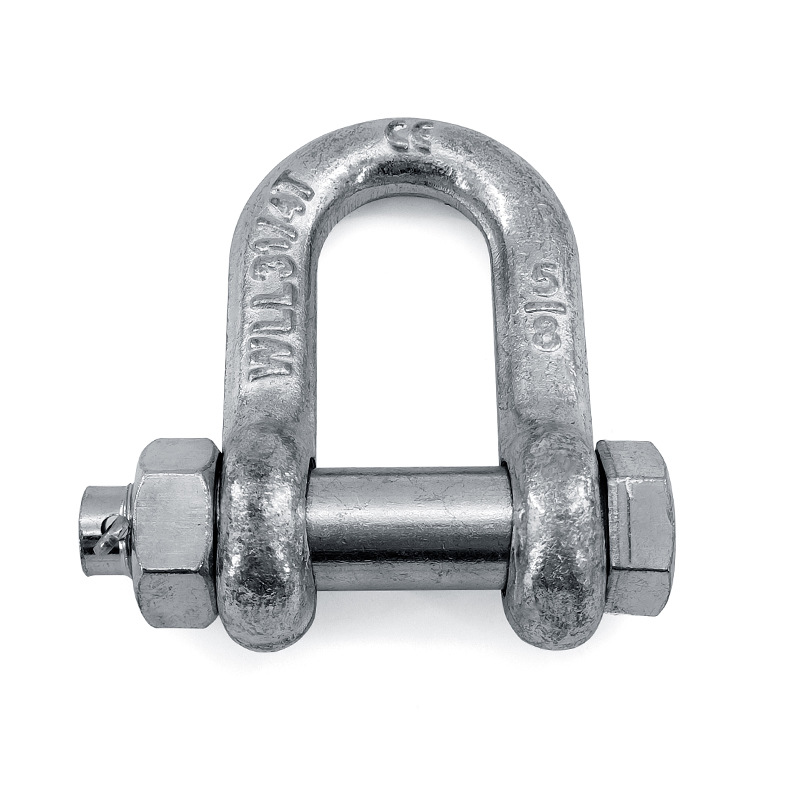
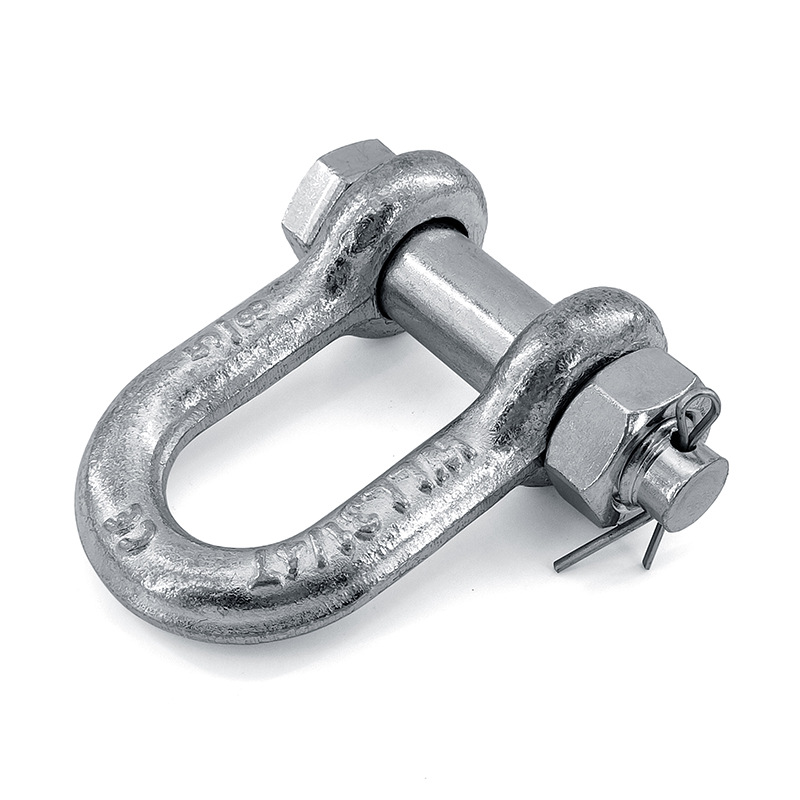
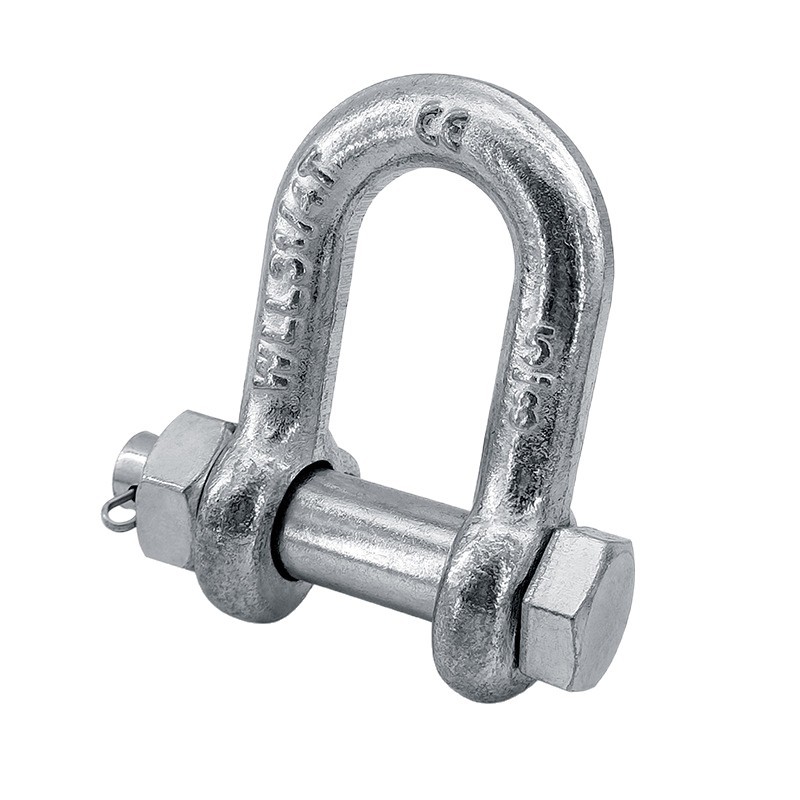
The G2150 shackle is a bow shackle designed in accordance with the American Crosby standard, corresponding to GB/T 25854 in the national standard system. It is a standard-model product and absolutely not a non-standard item requiring customization. It is produced from high-quality carbon structural steel (Steel 45) or alloy structural steel (40Cr, 35CrMo), forged as a single piece and then heat-treated. Used together with wedge sockets, lifting chains, and similar components, it is widely applied in various lifting, towing, and lashing operations.
I. Product Features
Standard bow design: The body takes an “Ω” shape, distributing the load evenly and accommodating multiple wire ropes or synthetic webbing slings at the same time, with better lateral load capacity than straight (D-type) shackles.
Integral forging process: Formed as one piece through hot forging, with the fiber structure distributed along the contour, eliminating casting defects while combining strength with toughness.
Clear material grading: Normalized Steel 45 for ordinary loads, and quenched-and-tempered 40Cr or 35CrMo for high loads, with a clearly matched performance profile.
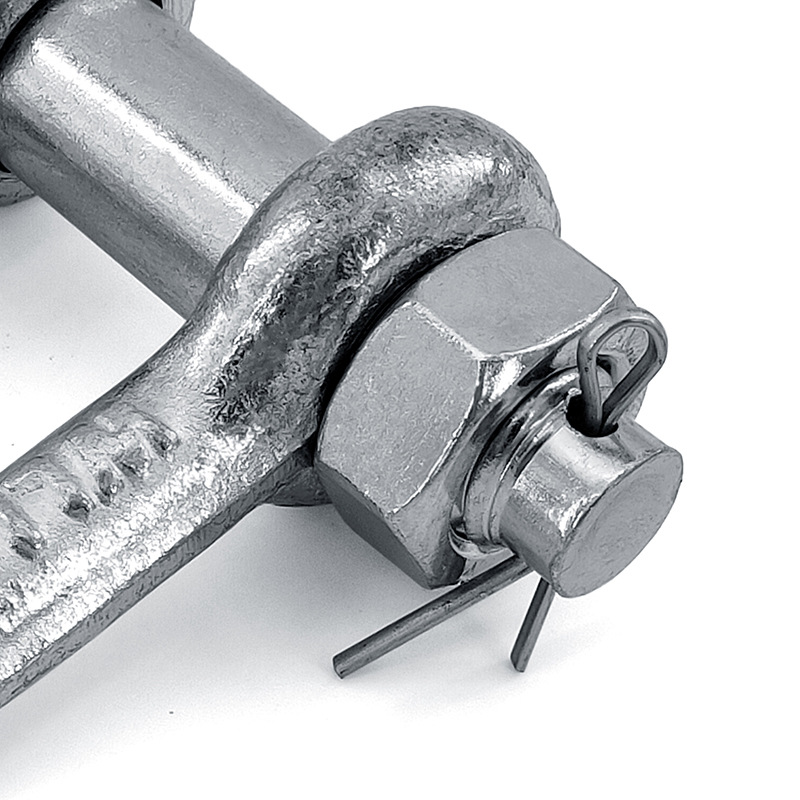
Pin permanently connected to the body: Usually fitted with a nut and split pin, the structure is simple and not prone to loosening under vibration, ensuring high safety.
II. Product Advantages
Extremely strong interchangeability of standard parts: Globally universal — simply quoting a standard model such as “G2150 3/4” enables accurate supply anywhere in the world, with no need for measuring or custom manufacturing.
High safety factor: The design safety factor typically reaches 4×, 5×, or even 6× the breaking load, meeting the lifting code requirements of various countries.
Reliable traceability: The tonnage, grade, and heat/batch number are permanently forged onto the body, complying with quality-system audit requirements and preventing mix-ups at the source.
Low whole-life cost: Wear-resistant and fatigue-resistant, it lasts almost as long as the equipment under proper use, eliminating the need for frequent replacement.
III. Scope of Application
Engineering lifting: Connection between the hook and the load on truck cranes and crawler cranes.
Ports and shipping: Container lashing, hatch cover locking, and anchor chain connection.
Mining and heavy equipment: Turning, lifting, and moving of large components.
Wind power and steel structures: Installation of heavy modules such as turbine towers and bridge segments.
Vehicle rescue: Winch towing of off-road vehicles and recovery connection points.