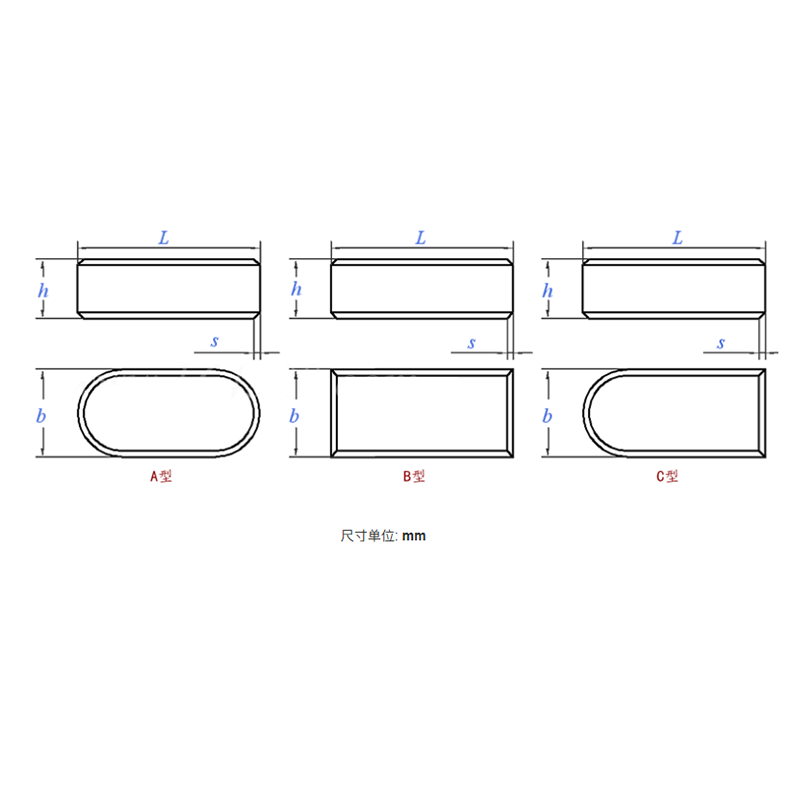
Product Specifications
| Model / Specification | M10 - 56 |
| Material | Stainless Steel |
| Basic Dim. b |
2 | 3 | 4 | 5 | 6 | 8 | 10 | 12 | 14 | 16 | 18 | 20 | 22 | ||
| b | Max. = Nom.(h8) | 2 | 3 | 4 | 5 | 6 | 8 | 10 | 12 | 14 | 16 | 18 | 20 | 22 | |
| Min. | 1.986 | 2.986 | 3.986 | 4.982 | 5.982 | 7.978 | 9.978 | 11.973 | 13.973 | 15.973 | 17.973 | 19.967 | 21.967 | ||
| h | Max. = Nom. | 2 | 3 | 4 | 5 | 6 | 7 | 8 | 8 | 9 | 10 | 11 | 12 | 14 | |
| Rect.(h11) | Min. | - | - | - | - | - | 6.91 | 7.91 | 7.91 | 8.91 | 9.91 | 10.89 | 11.89 | 13.89 | |
| Sq.(h8) | Max. | 1.986 | 2.986 | 3.986 | 4.982 | 5.982 | - | - | - | - | - | - | - | - | |
| s | Chamfer/Radius | Min. | 0.16 | 0.16 | 0.16 | 0.25 | 0.25 | 0.25 | 0.40 | 0.40 | 0.40 | 0.40 | 0.40 | 0.60 | 0.60 |
| Max. | 0.25 | 0.25 | 0.25 | 0.40 | 0.40 | 0.40 | 0.60 | 0.60 | 0.60 | 0.60 | 0.60 | 0.80 | 0.80 | ||
| Basic Dim. b |
25 | 28 | 32 | 36 | 40 | 45 | 50 | 56 | 63 | 70 | 80 | 90 | 100 | ||
| b | Max. = Nom. (h8) | 25 | 28 | 32 | 36 | 40 | 45 | 50 | 56 | 63 | 70 | 80 | 90 | 100 | |
| Min. | 24.967 | 27.961 | 31.961 | 35.961 | 39.961 | 44.961 | 49.961 | 55.954 | 62.954 | 69.954 | 79.954 | 89.946 | 99.946 | ||
| h | Max. = Nom. | 14 | 16 | 18 | 20 | 22 | 25 | 28 | 32 | 32 | 36 | 40 | 45 | 50 | |
| Rect.(h11) | Min. | 13.89 | 15.89 | 17.89 | 19.87 | 21.87 | 24.87 | 27.87 | 31.84 | 31.84 | 35.84 | 39.84 | 44.84 | 49.84 | |
| Sq.(h8) | Max. | - | - | - | - | - | - | - | - | - | - | - | - | - | |
| s | Chamfer/Radius | Min. | 0.60 | 0.60 | 0.60 | 1.00 | 1.00 | 1.00 | 1.00 | 1.60 | 1.60 | 1.60 | 2.50 | 2.50 | 2.50 |
| Max. | 0.80 | 0.80 | 0.80 | 1.20 | 1.20 | 1.20 | 1.20 | 2.00 | 2.00 | 2.00 | 3.00 | 3.00 | 3.00 | ||
Parallel Key – Product Introduction
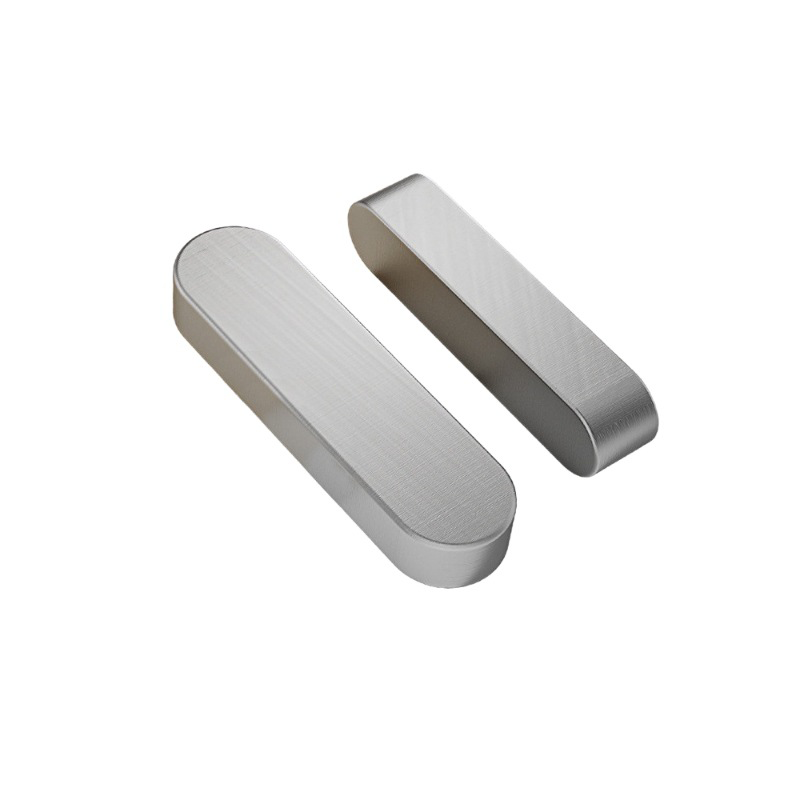
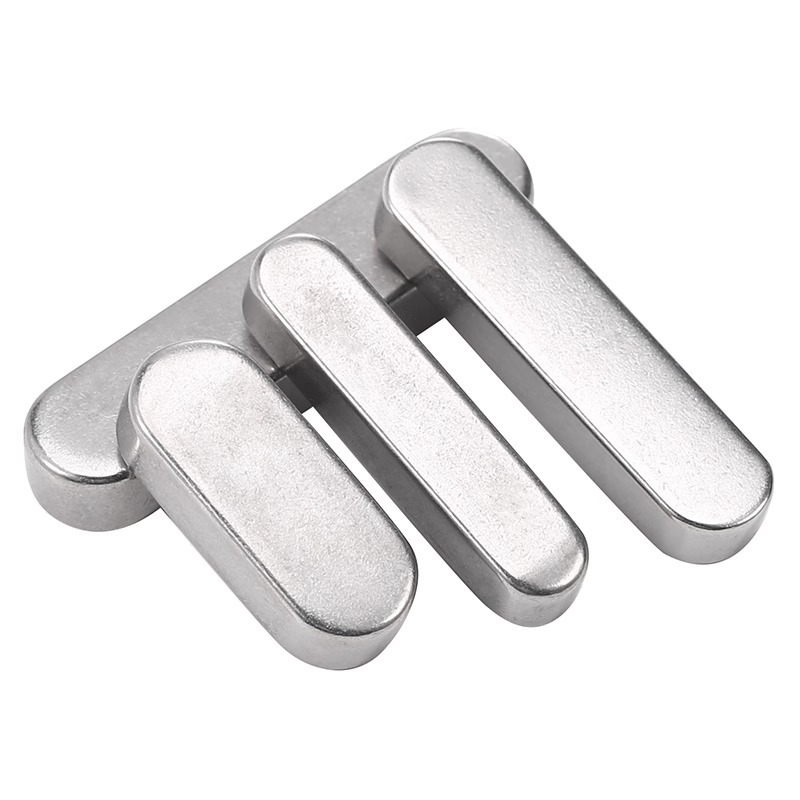
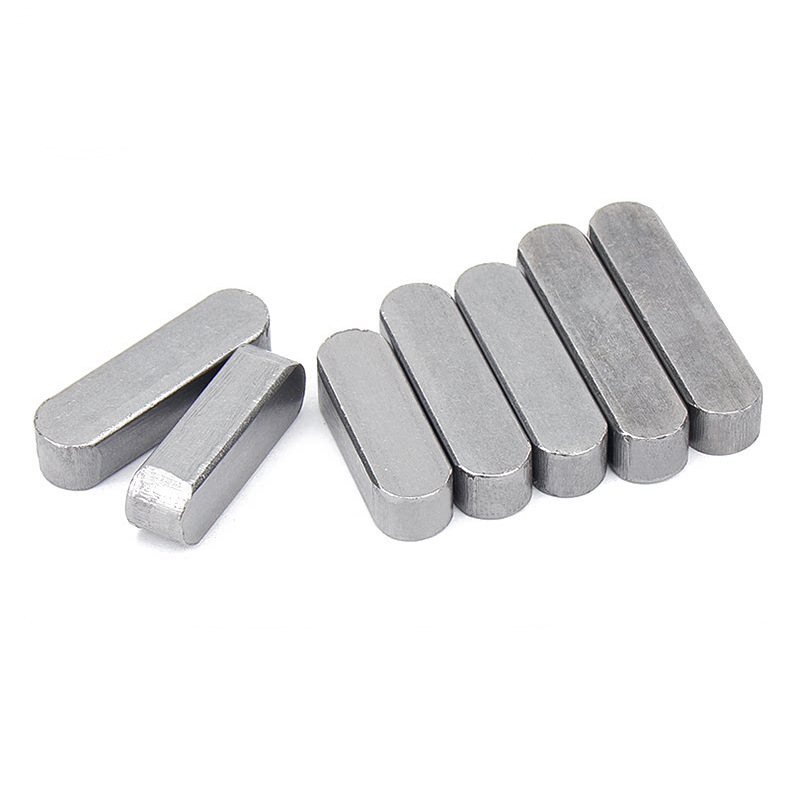
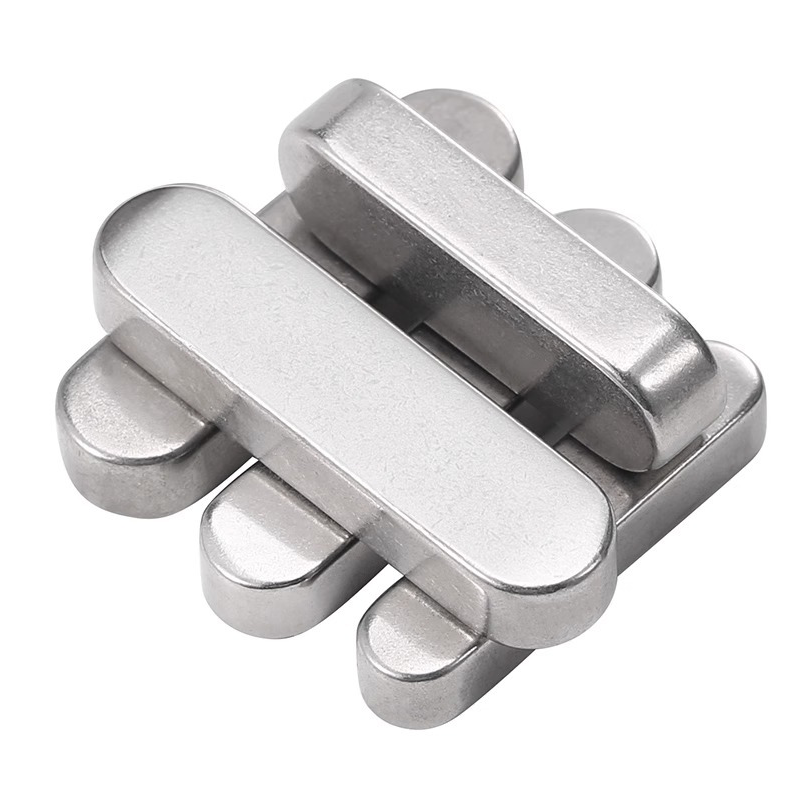
A parallel key is a standard mechanical transmission connecting element with a rectangular cross-section. During operation, it relies on the tight fit between the key’s upper and lower surfaces (working faces) and the keyways on the shaft and hub to transmit torque. It belongs to detachable connections with an extremely simple structure, making it the most common and economical method for circumferential fixation between shafts and rotating parts such as gears, pulleys, and couplings.
Our parallel keys are manufactured in strict accordance with national standards including GB/T 1096 (ordinary parallel keys), GB/T 1097 (guide parallel keys), and GB/T 1567 (thin parallel keys). Based on end shapes, they are classified into Type A (double round-end), Type B (square-end), and Type C (single round-end). Materials cover 45# steel, 40Cr alloy steel, and A2/A4 stainless steel, widely adaptable to various general-purpose and specialized mechanical equipment.
I. Product Features
Standardized Cross-Sectional Dimensions: The key width (b) and key height (h) are determined by the shaft diameter, fully conforming to GB/T 1096 standard, and perfectly match standard keyway cutters (end mills and disc cutters), ensuring extremely high interchangeability.
Three Optional End Forms:
-
Type A (Double Round-End): Most commonly used, keyways are machined with end mills, and the key is securely fixed in the slot.
-
Type B (Square-End): Lower stress concentration, keyways are machined with disc cutters, requiring screws to prevent axial movement.
-
Type C (Single Round-End): Dedicated for shaft ends, convenient for insertion from one end.
Precise Dimensional Tolerances: Key width tolerance is typically h8, with keyway fits being transition fits or clearance fits (P9/Js9/N9, etc.), ensuring installation accuracy and torque transmission.
Optional Guide/Slide Key Structure: Guide parallel keys (GB/T 1097) feature screw fixing holes, allowing the hub to slide axially on the shaft, used for sliding gears in transmissions, etc.
II. Product Advantages
Extremely Simple Structure, Lowest Cost: Transmission is achieved with just a rectangular steel bar, offering the lowest machining and procurement costs among all shaft-hub connection methods.
Easy Disassembly and Assembly, Quick Maintenance: Separation of shaft and hub requires only axial tapping or pressing out, particularly suitable for applications requiring frequent replacement of wearing parts.
Overload Protection Function: Under severe overloading, the parallel key will be sheared or crushed first, protecting expensive shafts and gears, acting as a “safety fuse.”
Extremely Strong Versatility: Standardization is globally universal, and parallel keys of any specification can be readily purchased from the market without supply interruption risks.
III. Scope of Application
General Mechanical Transmission: Connections between motors and reducers, fixation of pump and fan impellers, and conventional connections of various pulleys, sprockets, and shafts.
Automotive and Agricultural Machinery: Engine crankshaft timing gears, tractor power take-off shafts, and transmission parts of harvesting machinery.
Precision Machine Tools: Auxiliary positioning of spindle box gears and spline shafts, as well as connections for manual operating parts such as handwheels and handles.
Engineering and Mining Equipment: Torque transmission for medium and large rotating parts such as conveyor drive drums and crusher flywheels (often paired with 40Cr high-strength material).
Food and Chemical Equipment: Agitator impellers, filling machine transmission shafts, etc., using A2/A4 stainless steel parallel keys to meet corrosion resistance and hygiene requirements.