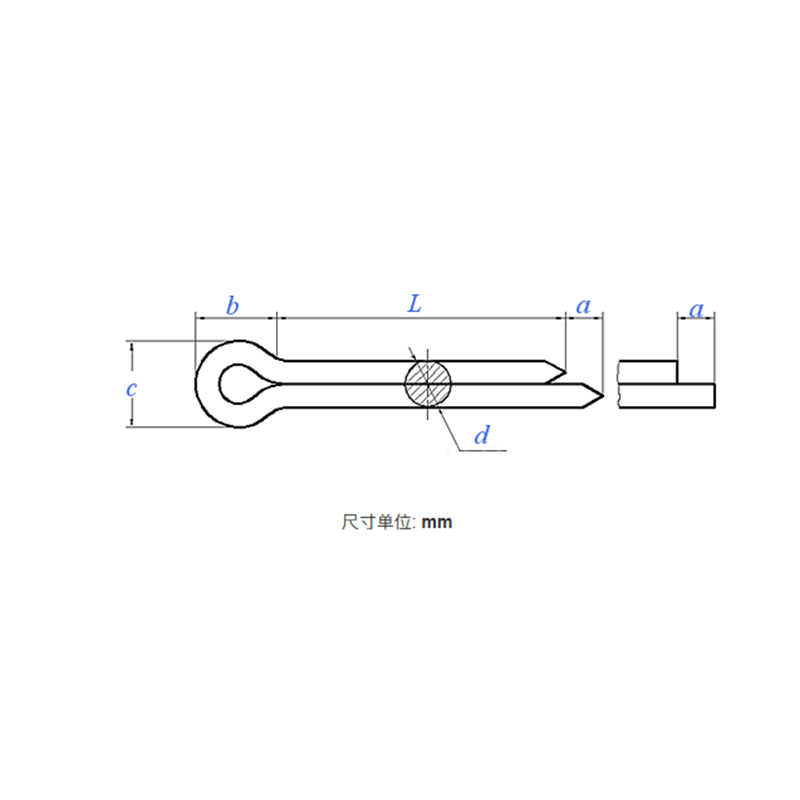
Product Specifications
| Model / Specification | M0.6 - 20 |
| Material | Stainless Steel |
| Nom. Dia. ① | 0.6 | 0.8 | 1 | 1.2 | 1.6 | 2 | 2.5 | 3.2 | 4 | 5 | 6.3 | 8 | 10 | 13 | 16 | 20 | |
| d | Max. | 0.5 | 0.7 | 0.9 | 1 | 1.4 | 1.8 | 2.3 | 2.9 | 3.7 | 4.6 | 5.9 | 7.5 | 9.5 | 12.4 | 15.4 | 19.3 |
| Min. | 0.4 | 0.6 | 0.8 | 0.9 | 1.3 | 1.7 | 2.1 | 2.7 | 3.5 | 4.4 | 5.7 | 7.3 | 9.3 | 12.1 | 15.1 | 19 | |
| a | Max. | 1.6 | 1.6 | 1.6 | 2.5 | 2.5 | 2.5 | 2.5 | 3.2 | 4 | 4 | 4 | 4 | 6.3 | 6.3 | 6.3 | 6.3 |
| Min. | 0.8 | 0.8 | 0.8 | 1.25 | 1.25 | 1.25 | 1.25 | 1.6 | 2 | 2 | 2 | 2 | 3.15 | 3.15 | 3.15 | 3.15 | |
| b | ≈ | 2 | 2.4 | 3 | 3 | 3.2 | 4 | 5 | 6.4 | 8 | 10 | 12.6 | 16 | 20 | 26 | 32 | 40 |
| c | Max. | 1 | 1.4 | 1.8 | 2 | 2.8 | 3.6 | 4.6 | 5.8 | 7.4 | 9.2 | 11.8 | 15 | 19 | 24.8 | 30.8 | 38.5 |
| Min. | 0.9 | 1.2 | 1.6 | 1.7 | 2.4 | 3.2 | 4 | 5.1 | 6.5 | 8 | 10.3 | 13.1 | 16.6 | 21.7 | 27 | 33.8 | |
| Bolt Dia. ② | ≤ 2.5 | >2.5, ≤ 3.5 | >3.5, ≤ 4.5 | >4.5, ≤ 5.5 | >5.5, ≤ 7 | >7, ≤ 9 | >9, ≤ 11 | >11, ≤ 14 | >14, ≤ 20 | >20, ≤ 27 | >27, ≤ 39 | >39, ≤ 56 | >56, ≤ 80 | >80, ≤ 120 | >120, ≤ 170 | >170 | |
| Pin Dia. ② | ≤ 2 | >2, ≤ 3 | >3, ≤ 4 | >4, ≤ 5 | >5, ≤ 6 | >6, ≤ 8 | >8, ≤ 9 | >9, ≤ 12 | >12, ≤ 17 | >17, ≤ 23 | >23, ≤ 29 | >29, ≤ 44 | >44, ≤ 69 | >69, ≤ 110 | >110, ≤ 160 | >160 | |
| Steel Wt. ≈ kg/1000 pcs | - | - | - | - | - | - | - | - | - | - | - | - | - | - | - | - | |
Cotter Pin – Product Description
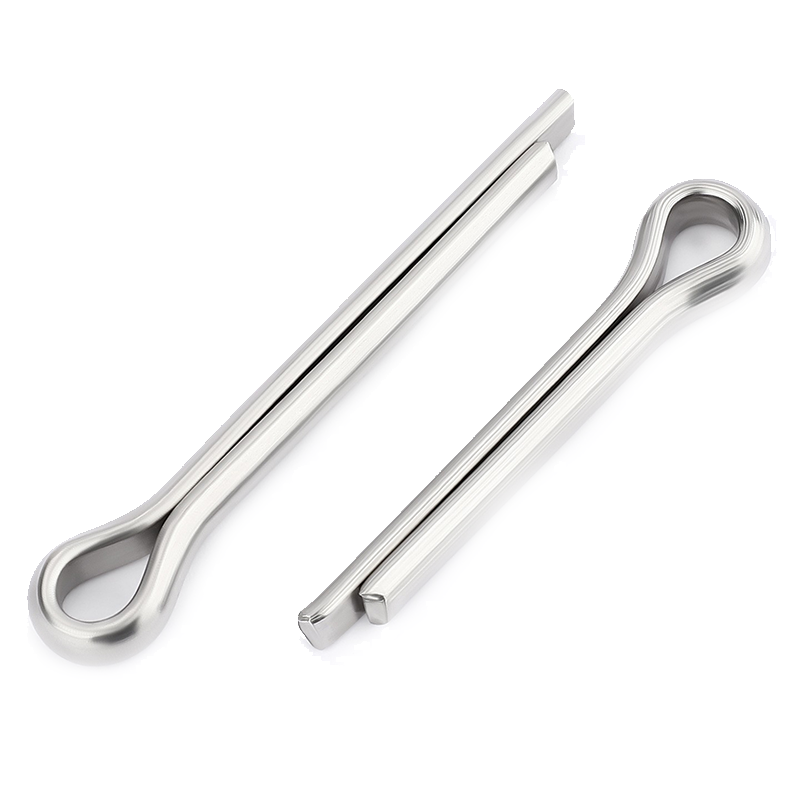
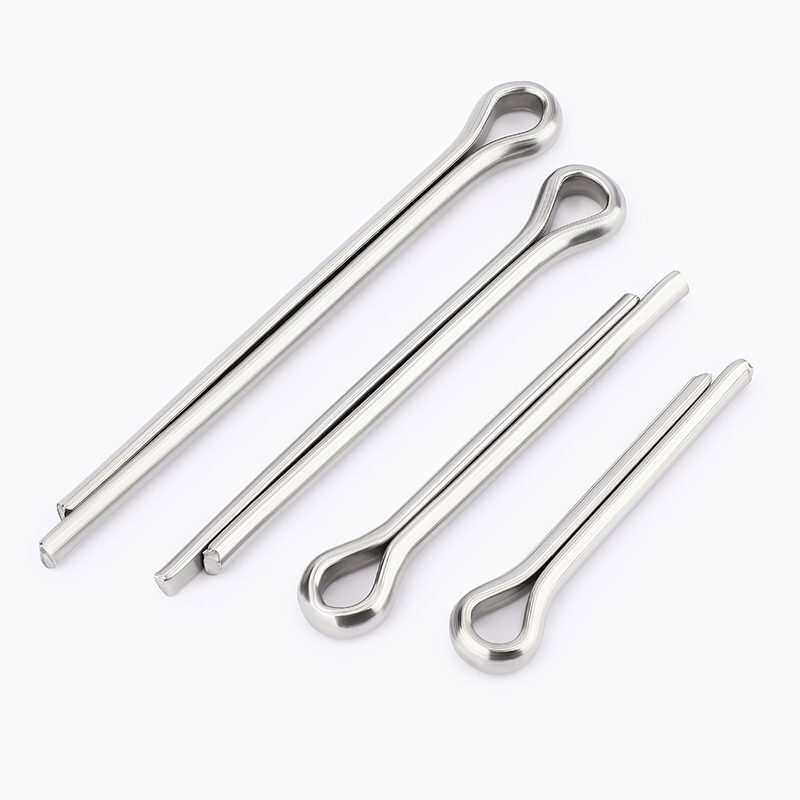
The cotter pin is a simple yet effective metal locking fastener made from a half-round steel wire bent into shape, with a ring at the head and two legs of unequal length. After being inserted through the holes in the connected parts, the two legs are bent outward on both sides to create an axial mechanical lock, effectively preventing nuts or pins from loosening and falling out.
Our cotter pins strictly comply with national standard (GB/T 91), international standard (ISO 1234), and German standard (DIN 94). Common materials include stainless steel (A2/A4), carbon steel (zinc-plated/black oxide), and copper alloy, widely used in various mechanical connections requiring lightweight anti-loosening fastening.
I. Product Features
Standard ring head: Conforms to GB/T 91 and other standards; the ring is smooth and burr-free, easy to handle by hand or with tools, and unlikely to break under load.
Unequal-length leg design: The longer leg facilitates initial insertion and guiding; the shorter leg is easy to bend outward at the end. Installation is efficient, and the locking effect is visibly obvious.
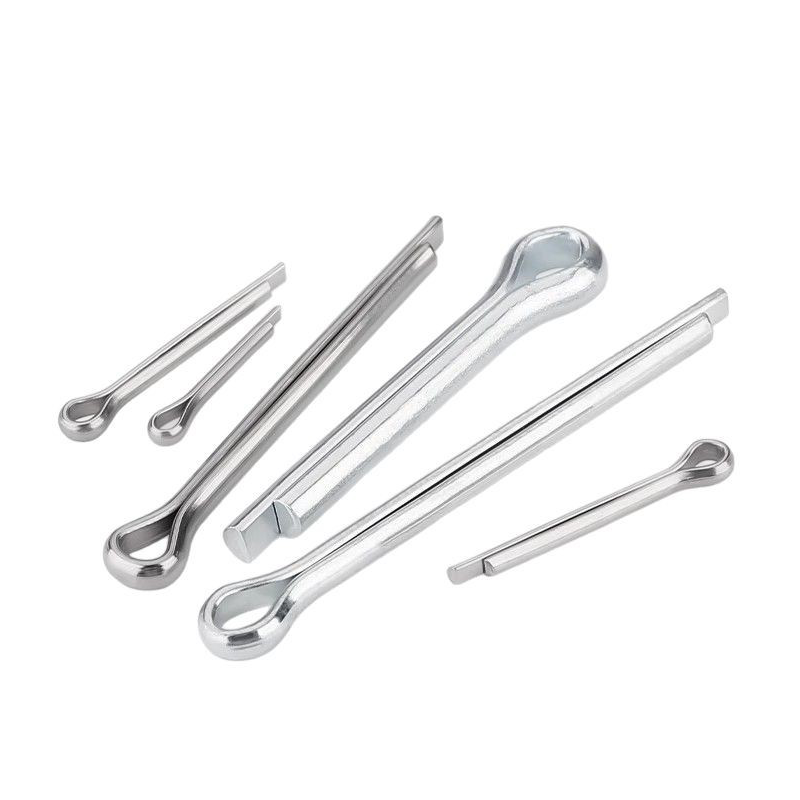
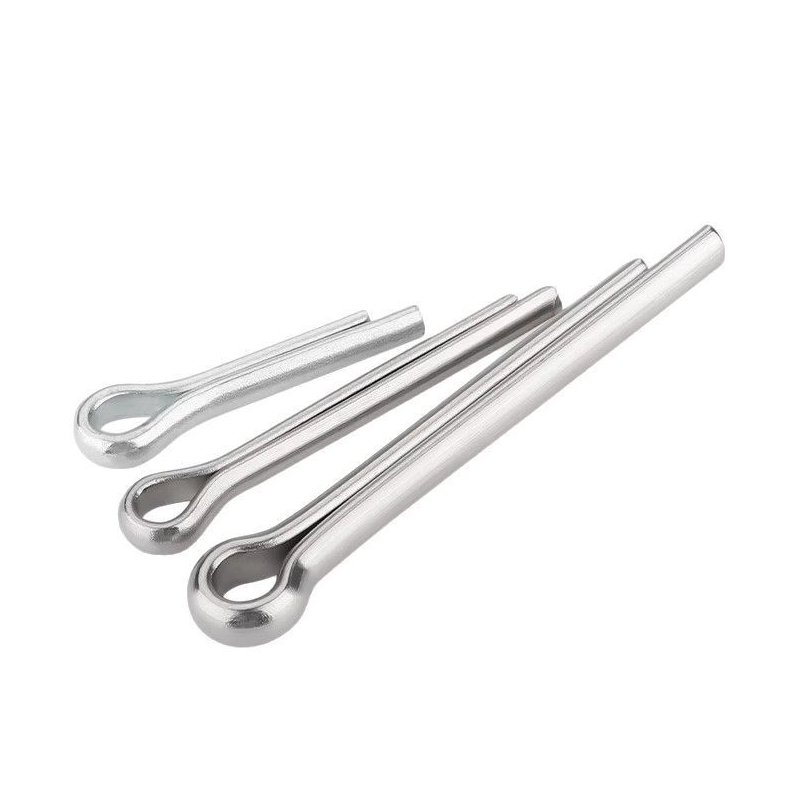
Multiple surface treatments: Carbon steel versions are available with zinc plating (blue-white/colorful/environmentally-friendly) or black oxide finish; stainless steel versions offer natural acid-pickled surface, meeting both corrosion resistance and aesthetic requirements.
Wide material selection range: From ordinary carbon steel to 304 and 316 stainless steel, and even copper materials — meeting different corrosion environments and special requirements such as electrical conductivity or non-magnetic properties.
II. Product Advantages
Extremely simple installation and removal: No special tools required; can be installed and removed with a pair of pliers or even by hand. Locking status can be visually confirmed at a glance, greatly improving inspection efficiency.
Exceptional versatility: With a high degree of dimensional standardization, a cotter pin of a given size can be universally matched with slotted nuts or pins of the same size from various brands, making replacement highly convenient.
Reusable (depending on conditions): Under static load, without severe vibration, and as long as no fatigue cracks have appeared in the legs, cotter pins can be straightened and reused multiple times.
Safe failure mode: When overloaded, the legs typically undergo plastic deformation first, acting as an overload protection mechanism — preventing sudden brittle fracture that could cause the pin or shaft to fall out.
III. Scope of Application
Slotted nut locking: The most classic use of cotter pins — for anti-loosening of slotted nuts on critical safety components such as automotive steering tie rods, suspension ball joints, and wheel hub bearings.
Pins and hinge fixing: Used for agricultural machinery hitch pins, trailer towing pins, and preventing loosening of plain shafts at moving joints of equipment.
Springs and limit stops: Serving as hook attachment points for small tension springs, or as simple retaining rings to prevent axial movement of components on shafts.
Electronics and precision instruments: Miniature cotter pins used for axial positioning of small rotating parts such as potentiometer shafts and switch levers.