Product Specifications
| Material | Aluminum Alloy |
Product Introduction
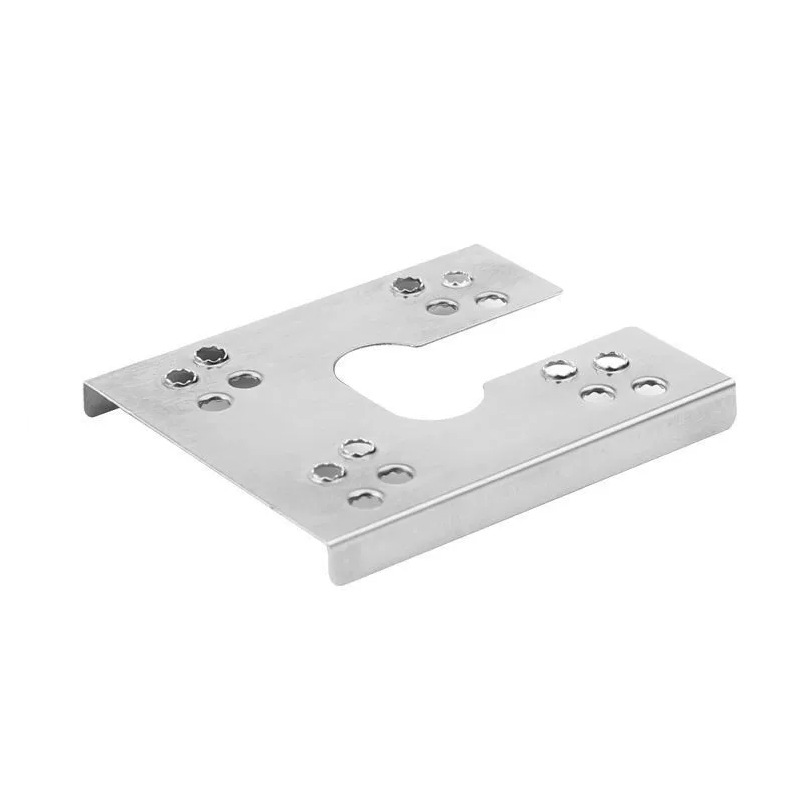
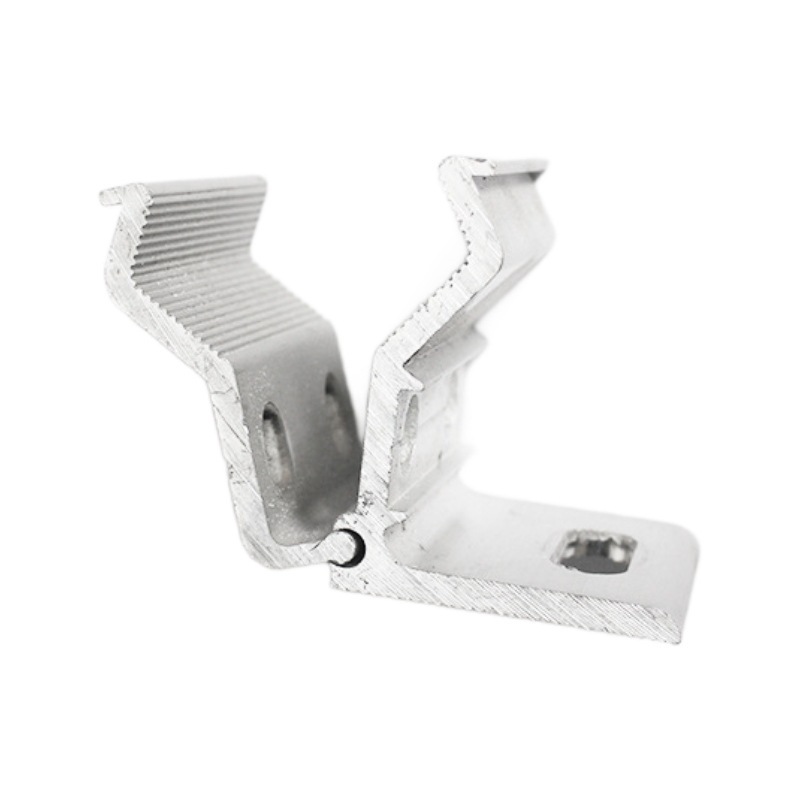
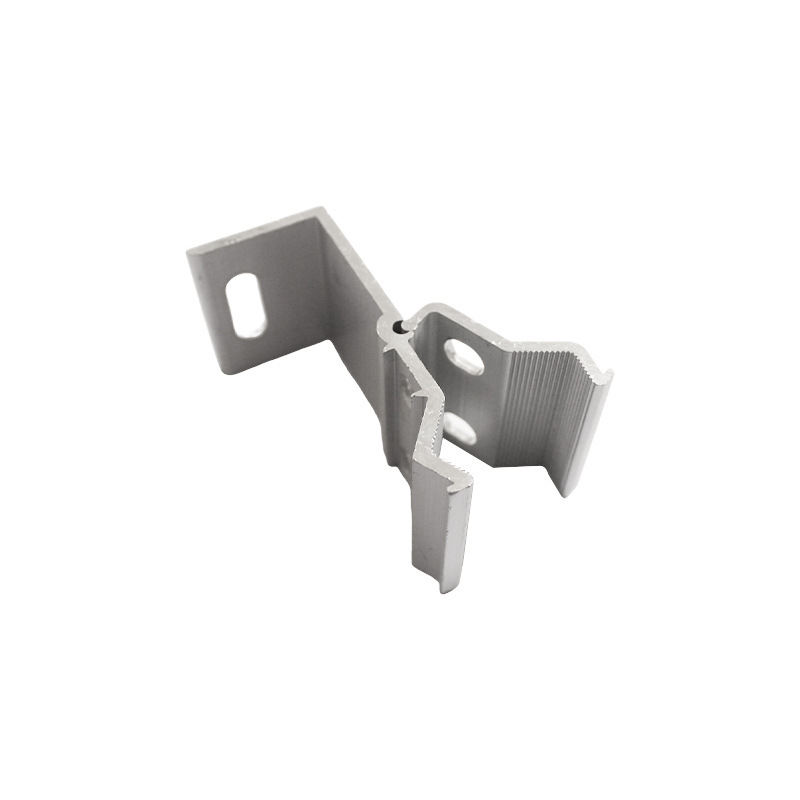
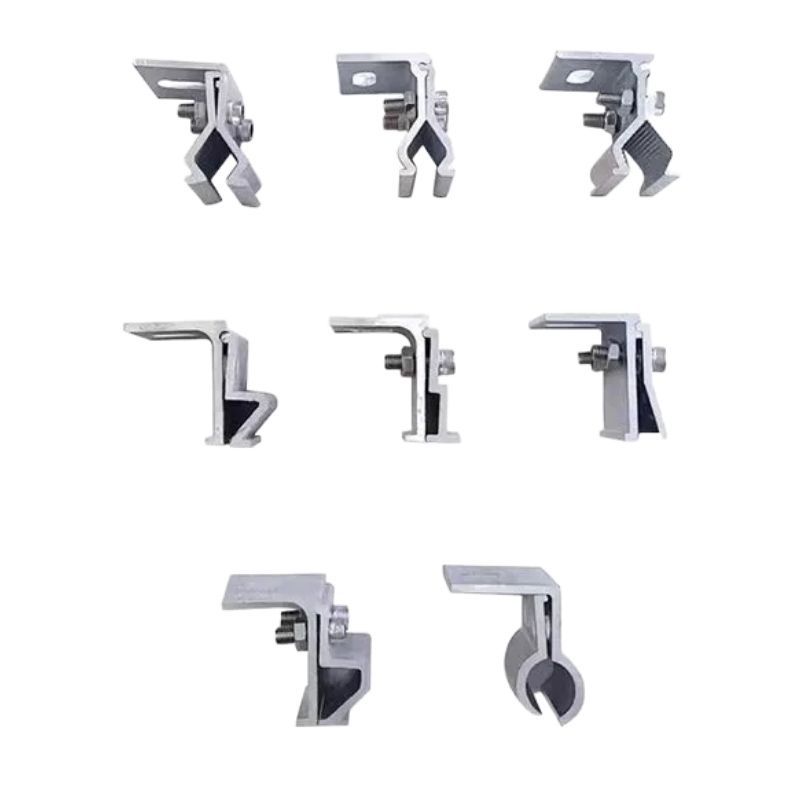
Angle-lock clamps are usually made of 6063-T5 or 6005-T5 high-strength aluminum alloy, with an anodized surface (film thickness commonly 10–15 μm), combining lightweight construction, structural strength, and outdoor weather resistance. Their core structure is an integrated or mating clamping jaw that precisely matches the crest or hem shape of the target color steel tile. After being locked with stainless steel bolts, it generates strong clamping force. The pull-out resistance of high-quality products is usually not less than 2.0 kN, and they can be designed to meet wind resistance requirements for basic wind pressure of 60 m/s and above. Their design life matches the 25-year cycle of a photovoltaic power plant.
⚙️ I. Product Features
Non-penetrating clamping for root-level waterproofing: The clamp is fixed to the rib or hem of the color steel tile by mechanical interlock and does not drill holes in the roof panel at all, avoiding the hidden leakage risk caused by traditional penetrating fixation. This is the core feature that distinguishes angle-lock clamps from other fixing methods.
Precise interlock and strong wind resistance: The jaw shape precisely matches the color steel tile profile. Once locked, it forms a tight mechanical interlock with the roof. High-quality products have a pull-out resistance of ≥2.0 kN. In areas with high wind loads, the overall wind-uplift resistance can be improved by densifying the clamp layout.
Lightweight yet strong material with corrosion resistance: The aluminum alloy body minimizes additional roof load while ensuring load-bearing strength. The anodized film provides excellent corrosion resistance and UV aging resistance, suitable for outdoor and general coastal environments.
Accommodates thermal expansion and contraction: Some angle-lock clamp designs allow the roof panel to slide within a certain range (e.g., ±40 mm), releasing stress caused by temperature changes and preventing deformation or damage of the color steel tile due to excessive restraint.
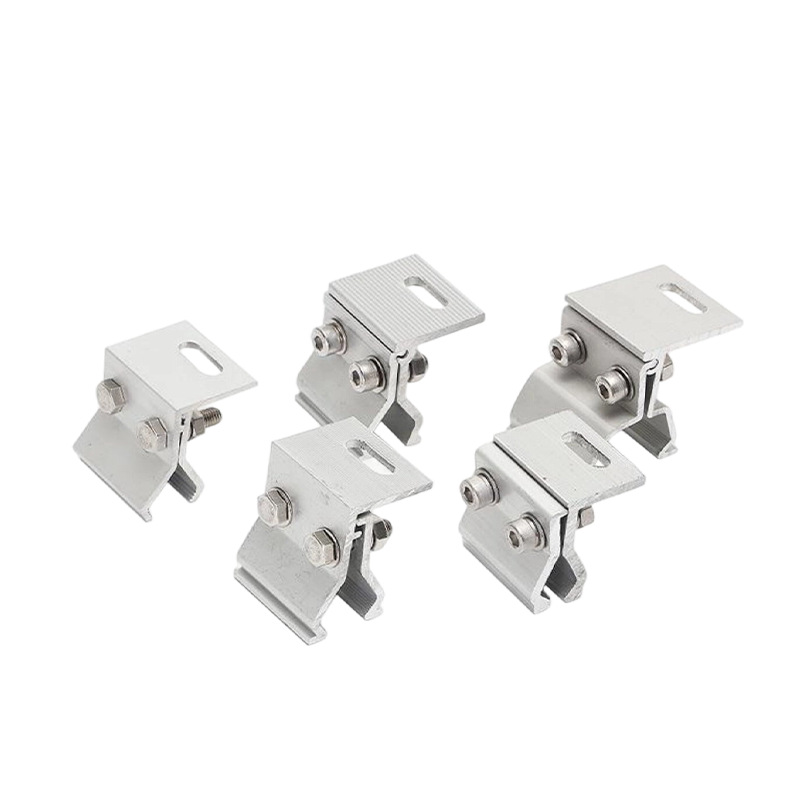
Complete matching accessories: Usually supplied with EPDM rubber gaskets (for cushioning, anti-slip, and auxiliary sealing) and A2-70 or higher-grade stainless steel bolts, forming a complete fastening unit.
✅ II. Product Advantages
Completely eliminates leakage risk: Non-penetrating installation physically cuts off the path for rainwater to seep in along nail holes. Together with the sealing rubber gasket on the contact surface, it provides dual protection for the integrity of the roof waterproofing layer. This is its irreplaceable core value in color steel tile rooftop PV projects.
Protects roof structure and extends service life: It does not damage the coating or seam structure of the color steel tile, avoiding reduced roof durability caused by local corrosion or seam damage. The lightweight design of the clamp also avoids excessive additional load on the roof.
Efficient construction without on-site processing: With a modular or integrated design, it can be directly clamped onto the rib of the color steel tile on site and locked with bolts, without drilling, welding, or complex sealing treatment, significantly shortening installation man-hours.
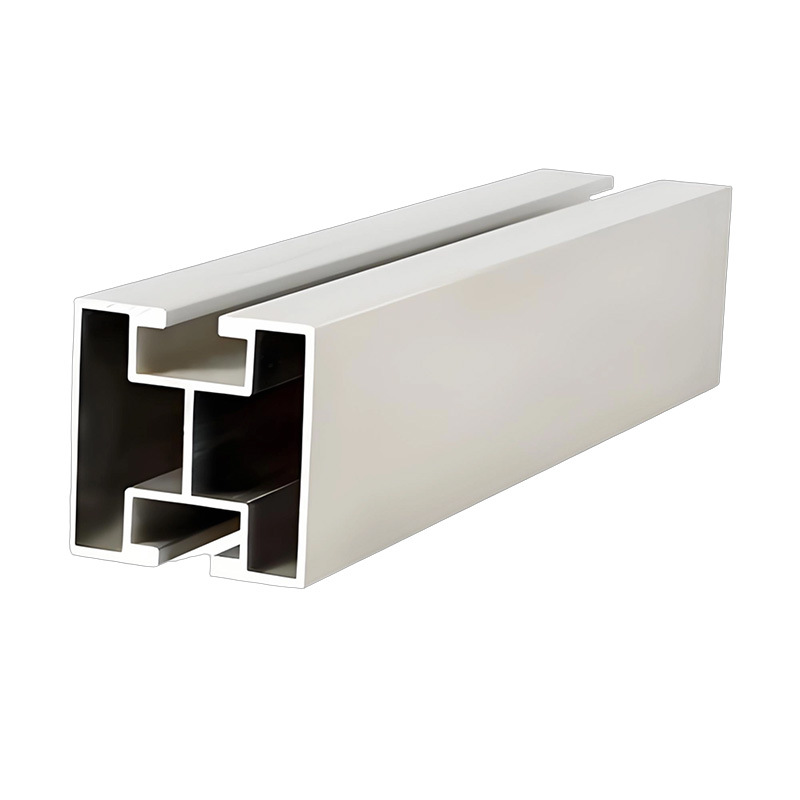
Mature compatibility with PV mounting systems: The top of the clamp usually has standard connection holes or slots, allowing convenient bolted connection with mainstream PV guide rails (such as aluminum alloy rails and C-shaped steel rails), forming a complete load transfer path from the roof to the modules.
?️ III. Scope of Application
Distributed PV on angle-lock color steel tile roofs: This is the most core application scenario of angle-lock clamps, covering distributed PV projects on industrial plants, logistics warehouses, commercial buildings, and other buildings with angle-lock (concealed-fixing) metal roofs.
Standing seam color steel tile roofs: Some angle-lock clamps (or similar seam clamps) are also suitable for PV installation on standing seam roofs, also using the non-penetrating clamping principle.
BIPV (building-integrated photovoltaics) systems: In BIPV projects that need to combine module fixation with roof waterproofing nodes, angle-lock clamps can serve as non-penetrating bases and be used together with waterproof rails and cover plate systems.
Roof renovation projects with extremely high waterproofing requirements: For existing buildings with fragile original roof waterproofing layers or high repair costs, non-penetrating angle-lock clamps are an ideal choice to avoid secondary waterproofing construction.