Product Specifications
| Material | Carbon Steel |
Product Introduction
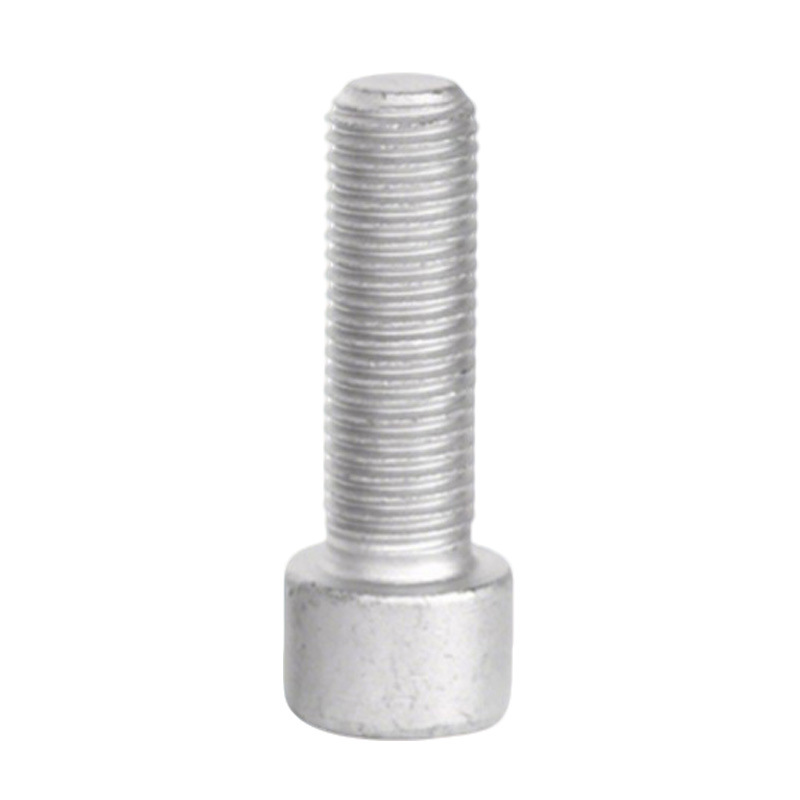
The hot-dip galvanized hex socket bolt is a fastener with a cylindrical head, a hex socket at the top, and a hot-dip galvanized finish over the entire body. It combines the advantage of hex socket drive—applying high torque in compact spaces—with the long-term heavy-duty corrosion protection of a hot-dip galvanized coating. The core standard implemented is GB/T 70.1 (hex socket head cap screws). The commonly used property class is 8.8, and materials include carbon steel and alloy steel. During manufacturing, the entire bolt is immersed in molten zinc at about 450°C, forming a zinc-iron alloy layer and a pure zinc layer on the surface. The zinc coating thickness usually reaches 45–120 μm, far thicker than electro-galvanizing, and it is designed specifically for long-term reliable connections in outdoor, humid, and corrosive atmospheric environments.
I. Product Features
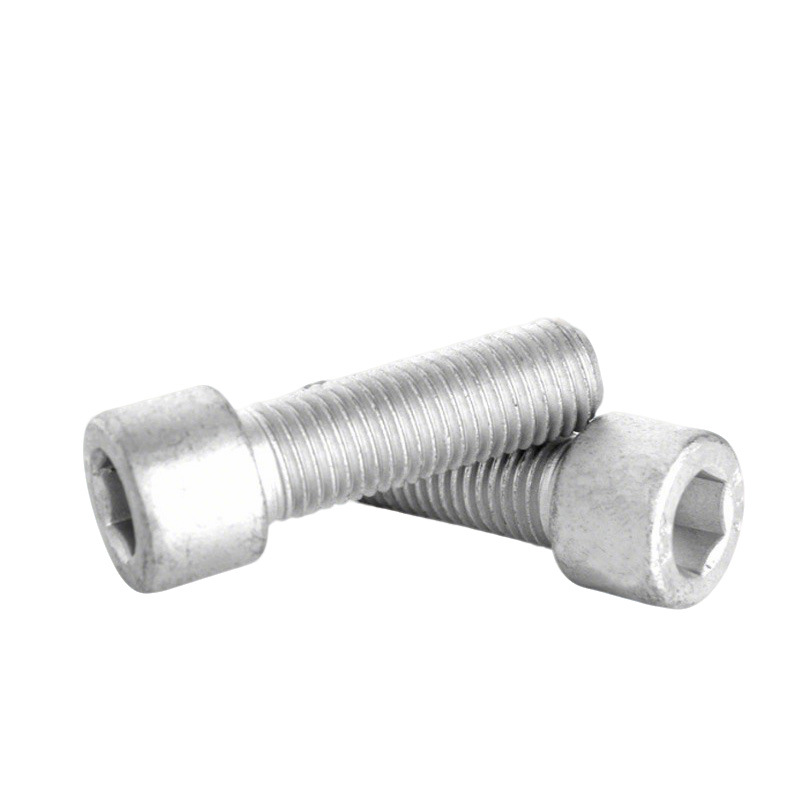
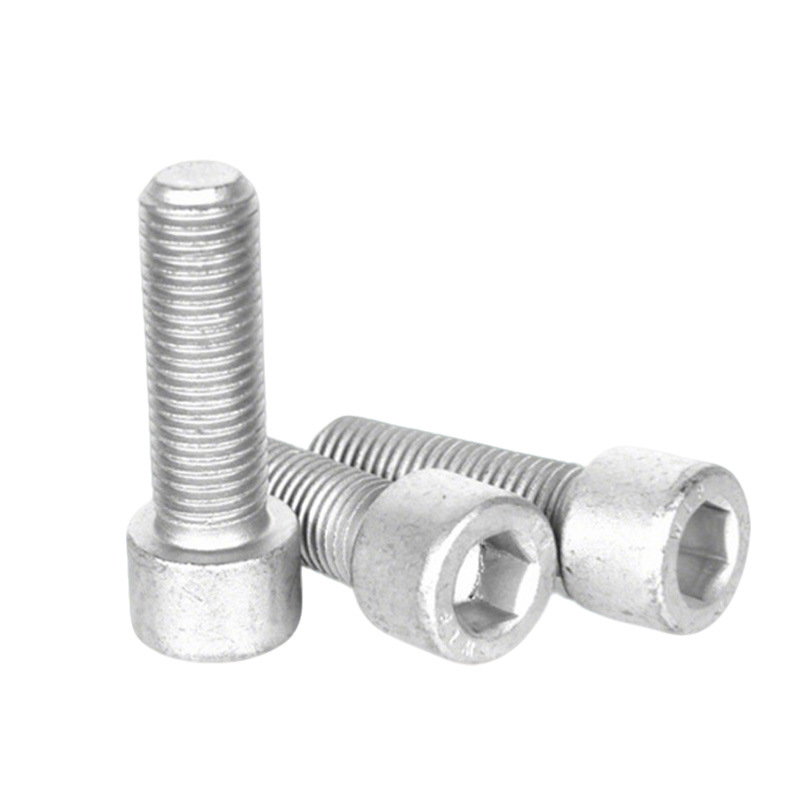
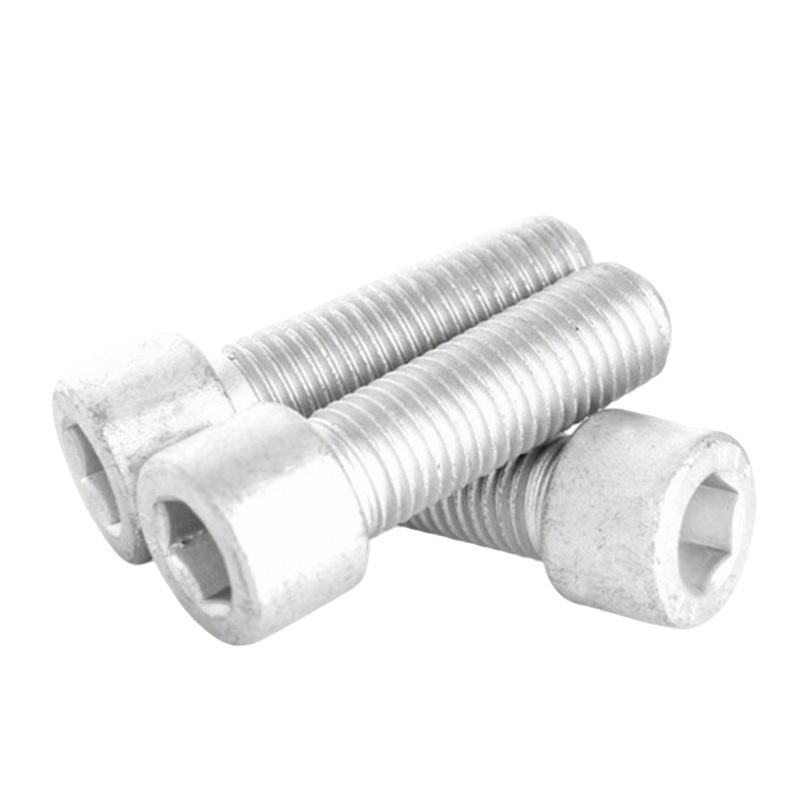
Hex socket drive and cylindrical head structure: The head is countersunk for installation, occupying little radial space, making it suitable for assembly positions with limited space or requiring a relatively flat surface. The hex socket can withstand relatively high tightening torque and is not prone to socket rounding.
Hot-dip galvanized heavy-duty anti-corrosion layer: The molten zinc reacts metallurgically with the steel substrate to form a firmly adherent alloy layer. The threads, fillets under the head, and recessed areas of the shank can all be covered by the zinc layer, with no missed coating dead corners such as those in electroplating or brush-applied processes.
Strength grade must match the process: The high temperature of hot-dip galvanizing (about 450°C) may affect the tempering stability of high-strength bolts. Class 8.8 is a common matching grade for hot-dip galvanized hex socket bolts; Class 10.9 and above require careful evaluation or alternative solutions such as Dacromet, and Class 12.9 is generally not recommended for hot-dip galvanizing.
Thread fit allowance reserved for zinc coating: Thread dimensions change after hot-dip galvanizing. Usually, external threads use the 6g limit size, and matching internal threads use enlarged tapping sizes such as 6AZ to ensure coating thickness and screw-fit accuracy.
Matte silver-gray surface: The hot-dip galvanized layer has a rougher and duller appearance than electro-galvanized zinc and is not suitable for occasions with strict requirements for appearance brightness or precision dimensional fit.
II. Product Advantages
Dual anti-corrosion mechanism: The thick zinc layer acts as a physical barrier isolating moisture and oxygen; at the same time, zinc is more active than iron and reacts preferentially in corrosive environments, providing electrochemical protection by sacrificial anode. Even if the coating is locally damaged, the surrounding zinc layer can still protect the substrate.
Long-term outdoor weather resistance: In a general atmospheric environment, the protective life of the hot-dip galvanized layer can reach more than 20 years; in industrial or coastal environments, it can also maintain effective protection for more than 10 years, significantly superior to electro-galvanizing.
Low whole-life cost: Compared with stainless steel bolts, it has a clear price advantage in large-scale outdoor projects; after installation, it is almost maintenance-free, saving the labor and material costs of subsequent anti-corrosion coating.
High torque capability of hex socket drive: High preload can be applied in compact spaces, suitable for structural connections requiring reliable clamping, and the head has no exposed edges, reducing snagging risks.
III. Scope of Application
Power and communication towers: Connections for transmission towers, communication towers, substation frameworks, and power fittings—the most core application field of hot-dip galvanized hex socket bolts.
New energy infrastructure: Photovoltaic mounting systems and auxiliary steel structures of wind turbine towers, long-term exposed outdoors, where hot-dip galvanized fasteners are almost standard configuration.
Transportation and bridge engineering: Bridge steel structures, highway guardrails, and railway auxiliary facilities, especially suitable for coastal or high-humidity, high-salt-spray environments.
Buildings and general steel structures: Connections for industrial plants, large-span steel structures, curtain wall supports, outdoor fences, and other positions requiring long-term maintenance-free corrosion protection.
Outdoor equipment with limited space: Because hex socket drive allows operation in small radial spaces, it is suitable for outdoor machinery, streetlight poles, marine components, and other scenarios requiring countersunk or compact installation.