Product Specifications
| Material | Stainless Steel |
Product Introduction
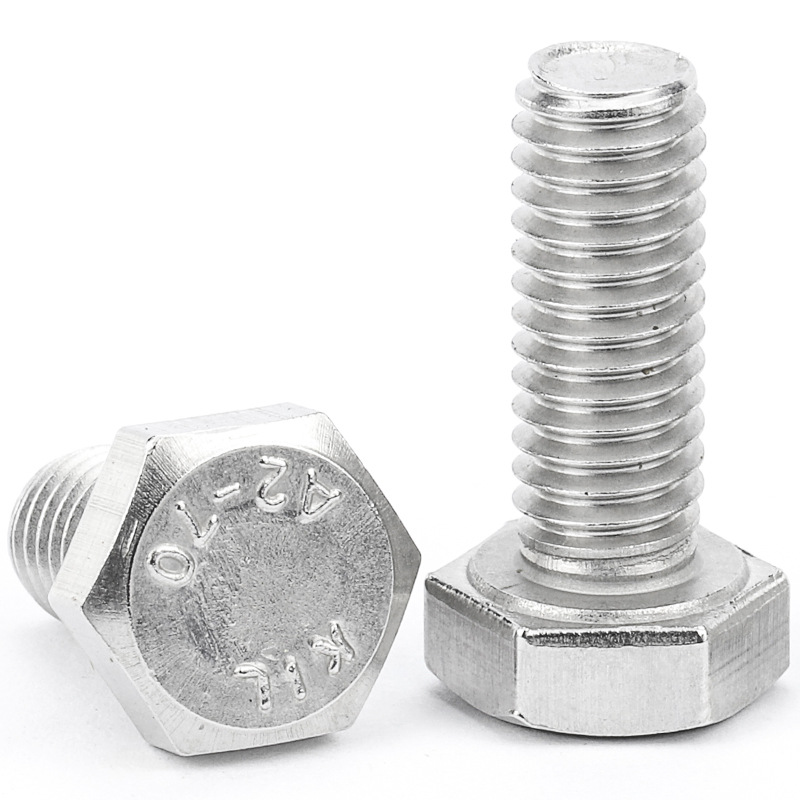
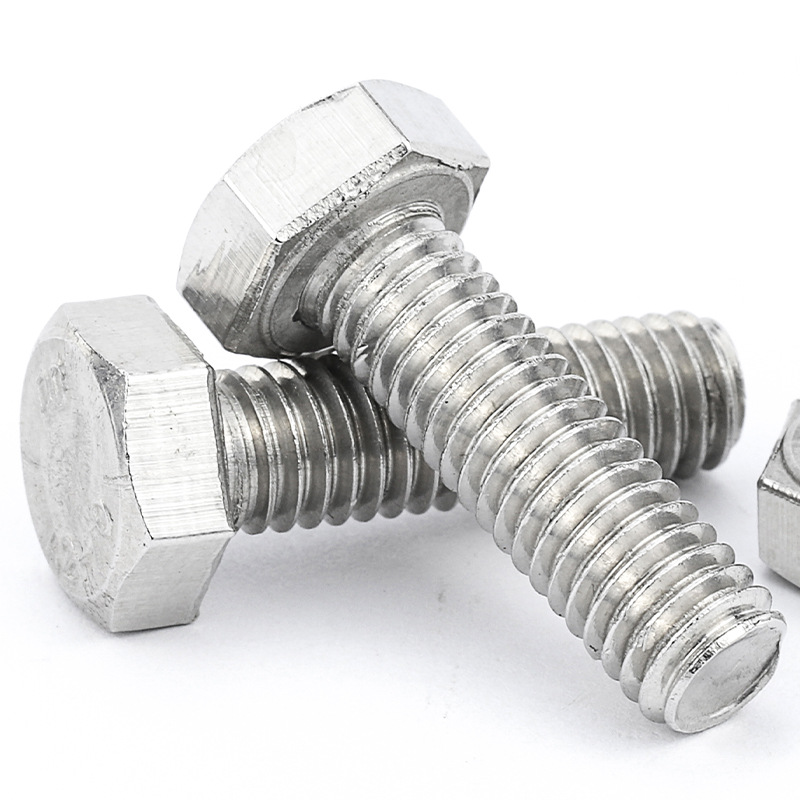
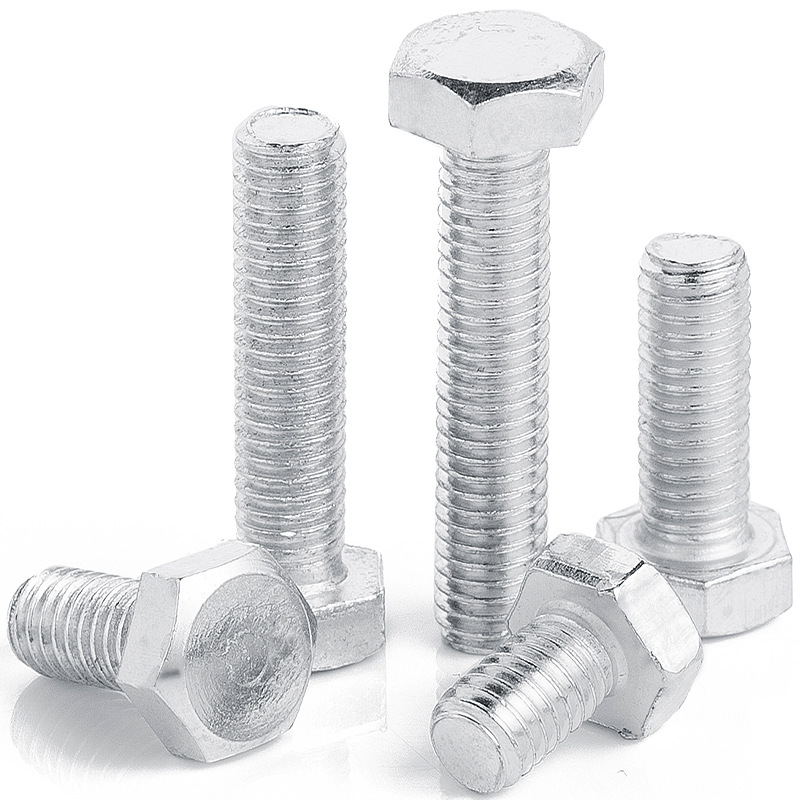
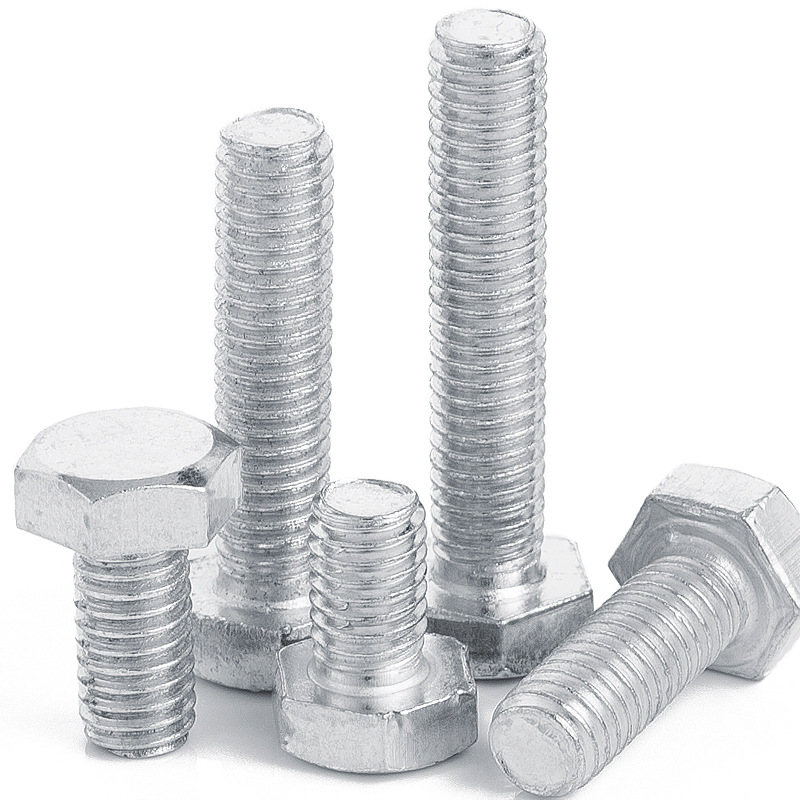
Stainless steel bolts refer to bolt-type fasteners made from stainless steel materials, most commonly austenitic stainless steels such as the 304 and 316 series. Their core advantage lies in the excellent corrosion resistance and oxidation resistance of the material itself, so they usually do not require additional surface coating treatment and can serve long-term in humid, acidic, or marine environments. The products are manufactured according to standards such as GB/T 5782 (hexagon head with partial thread) and GB/T 5783 (hexagon head with full thread), with thread specifications covering M3–M64. The strength grades of stainless steel bolts are usually expressed by material groups, commonly A2-70 (304 material, tensile strength ≥700 MPa) and A4-80 (316 material, tensile strength ≥800 MPa).
I. Product Features
Clear material groups: The most common are A2 (304 stainless steel) and A4 (316 stainless steel). A2 is suitable for general outdoor and industrial environments; A4, due to the addition of molybdenum, has extremely strong resistance to chlorides such as seawater and de-icing salt.
No surface treatment required: Stainless steel itself has a passive film and is usually delivered in a plain or pickled/cleaned condition without electroplating, avoiding the hydrogen embrittlement risk associated with electroplating processes.
Non-magnetic and strong temperature adaptability: Austenitic stainless steel is generally non-magnetic and has excellent high- and low-temperature performance, maintaining good mechanical properties even at high temperatures or in extreme cold (as low as -196°C).
Diverse specifications and head styles: In addition to standard hexagon heads, they can also be made into socket head, pan head, countersunk head, and other head types to meet different assembly space requirements.
Optional surface conditions: Bright finish, brushed finish, or passivation treatment can be provided as required to further enhance surface rust resistance.
II. Product Advantages
Outstanding corrosion-resistant life and maintenance-free performance: In outdoor, humid, or mildly corrosive environments, stainless steel bolts do not rust or fade and are almost maintenance-free throughout their life cycle, eliminating the cost of regular anti-rust coating.
Hygienic and aesthetically pleasing: The surface is smooth and attractive and easy to clean. Unlike carbon steel, it will not rust and contaminate the connected parts, making it very suitable for applications with appearance and hygiene requirements.
High toughness and impact resistance: Although absolute hardness may be lower than that of high-strength alloy steel, austenitic stainless steel bolts have very good ductility and toughness and are not prone to brittle fracture under impact loads.
No hydrogen embrittlement risk: For high-strength carbon steel bolts of grade 10.9 and above, electroplating can easily cause hydrogen embrittlement fracture, while stainless steel bolts fundamentally eliminate this hidden risk from the material source.
III. Scope of Application
Food, medical, and pharmaceutical equipment: 304 or 316 materials are often selected to meet strict hygiene standards and resist corrosion from cleaning agents and disinfectants.
Marine engineering and ships: Seawater desalination equipment, ship fittings, dock facilities, etc., must use 316 (A4) material to resist high salt-spray corrosion.
Chemical and environmental protection equipment: Fastening of reactors, pipeline flanges, and environmental exhaust gas treatment equipment that come into contact with chemical media such as acids, alkalis, and salts.
Building curtain walls and outdoor facilities: Exterior curtain walls of high-end buildings, railings and handrails, outdoor billboards, photovoltaic supports, etc., balancing structural strength with long-term aesthetics.
High-end equipment and precision instruments: Equipment sensitive to magnetism (such as medical MRI equipment), electronic instruments, and cleanroom environments requiring contamination prevention.