Product Specifications
| Material | Carbon Steel |
Product Introduction
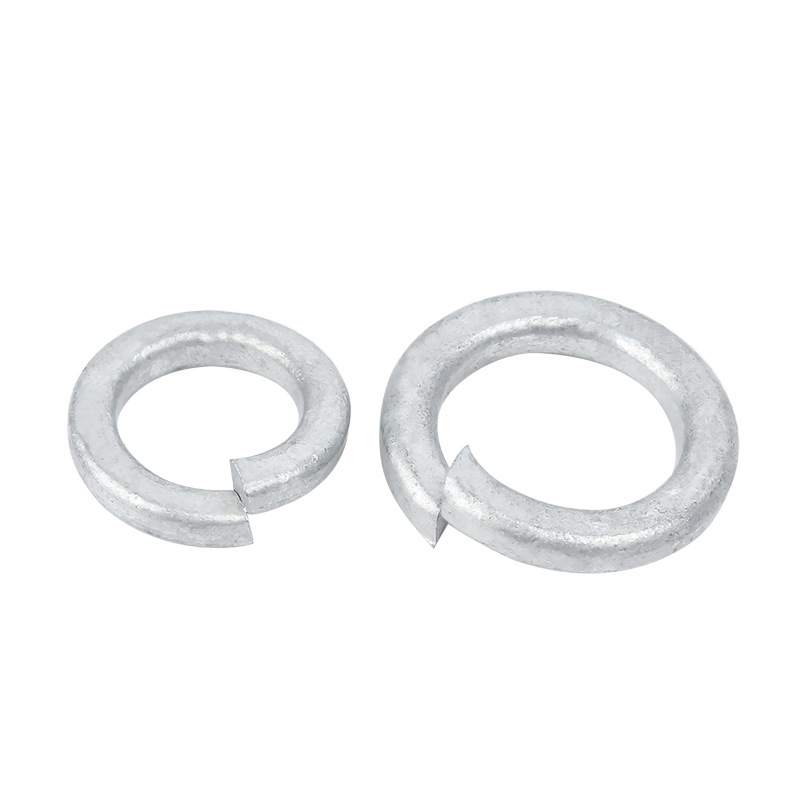
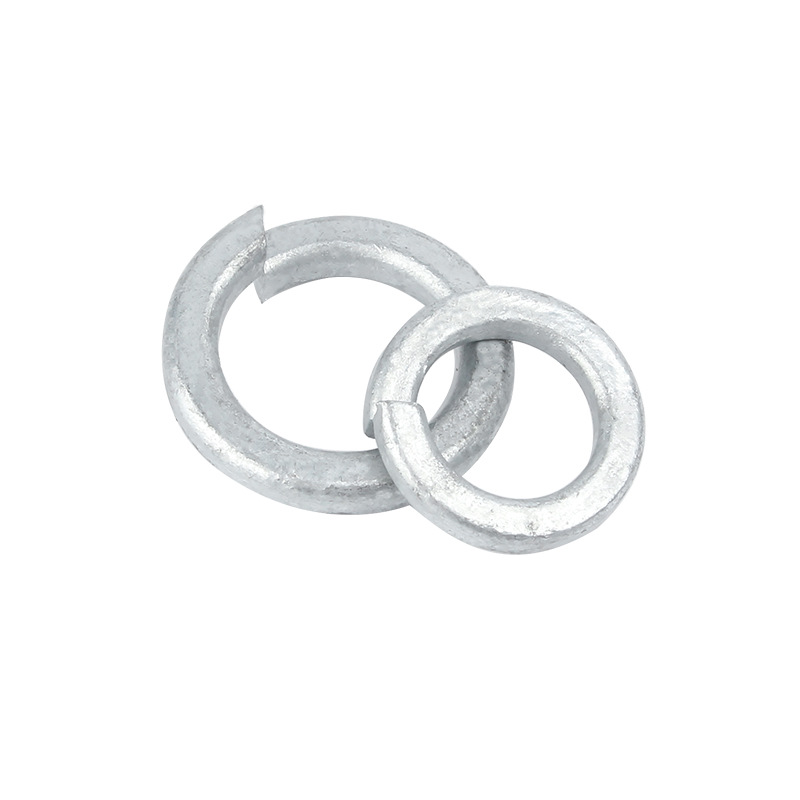
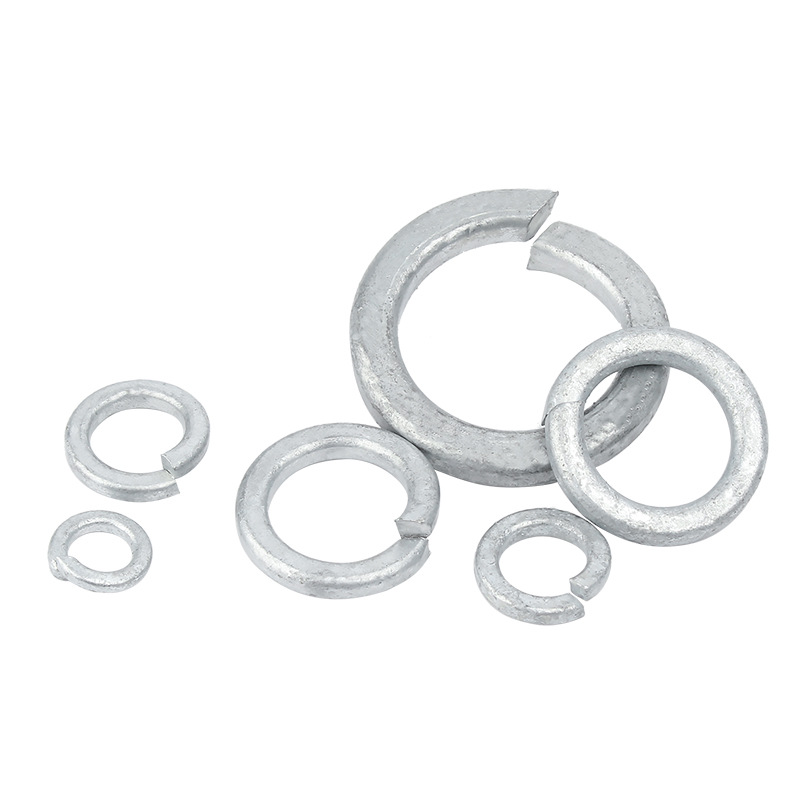
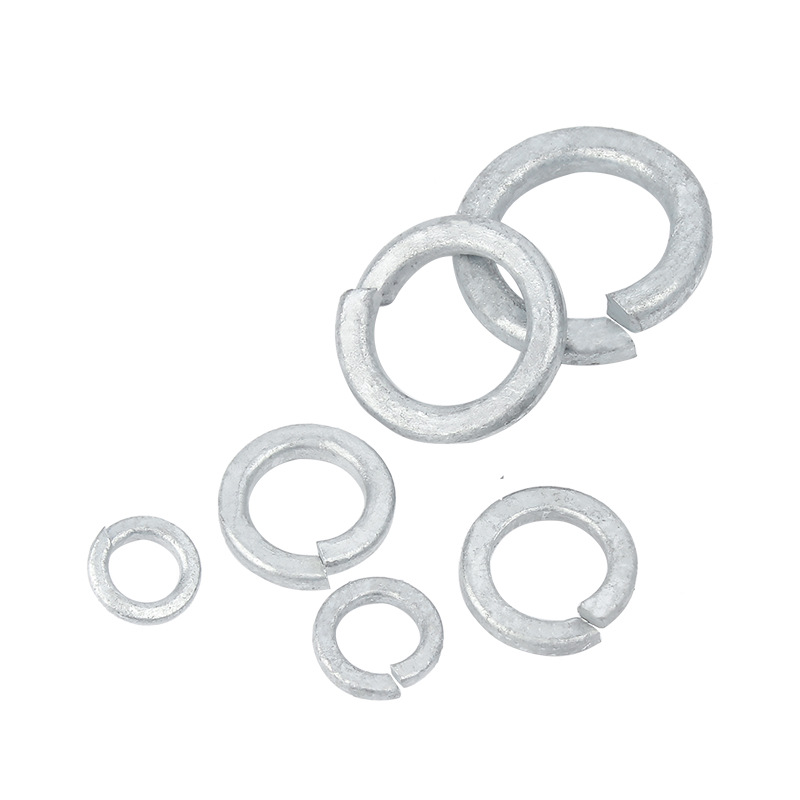
A hot-dip galvanized spring washer (also known as a hot-dip zinc spring washer) is a fastener accessory formed by creating a zinc-iron alloy layer and a pure zinc outer layer on the surface of a standard spring washer (usually manufactured according to GB/T 93) through a high-temperature hot-dip galvanizing process. Its zinc layer thickness usually reaches 50–80 μm, much thicker than ordinary electro-galvanizing. The hot-dip galvanized spring washer utilizes the continuous springback force generated after the washer is flattened, combined with its thick anti-corrosion layer. It is mainly used in connection parts that are exposed outdoors for a long time and subject to vibration, such as outdoor steel structures, power towers, and photovoltaic mounting brackets, providing anti-loosening pre-tightening force while meeting heavy-duty anti-corrosion requirements.
I. Product Features
-
Heavy-duty anti-corrosion zinc layer: The hot-dip galvanized layer thickness is typically 50–80 μm, several times that of ordinary electro-galvanizing (about 5–15 μm). A dense zinc-iron alloy layer is formed on the surface, significantly improving resistance to white rust and red rust.
-
Durable and stable spring force: As a spring washer, its curvature tolerance is strictly controlled, and the springback force after flattening is stable. It can continuously provide the pre-tightening force required for anti-loosening during long-term service, and the elasticity usually does not significantly decay during inspection.
-
Split anti-loosening structure: The washer body has a split, which produces elastic deformation under pressure and relies on the springback force to press tightly against the nut or bolt head, effectively resisting the loosening of the threaded pair caused by vibration.
-
Material and specifications: The commonly used material is 65Mn spring steel. Nominal specifications cover M4–M36 (some manufacturers can provide up to M120).
-
Used in sets: In actual engineering, hot-dip galvanized spring washers are usually used in sets with hot-dip galvanized bolts, hot-dip galvanized flat washers, and hot-dip galvanized nuts to form a complete anti-corrosion and anti-loosening fastening system.
II. Product Advantages
-
Ultra-long outdoor weather resistance lifespan: The thick zinc layer can significantly delay substrate corrosion in humid, salt spray, and industrial atmospheric environments. In scenarios such as power towers, chemical plants, and municipal bridges, the anti-corrosion lifespan can be extended several times compared to ordinary galvanized parts.
-
Active sacrificial anode protection: The zinc layer not only acts as a physical barrier to isolate corrosive media, but when the coating is locally damaged, zinc will corrode first to protect the steel substrate. This is the electrochemical protection mechanism of "sacrificial anode," preventing rust from spreading deep.
-
Ensures long-term anti-loosening reliability: Under vibration and alternating temperature conditions, the springback force of the spring washer and the friction characteristics brought by the hot-dip galvanized layer work together to help maintain the pre-tightened state of the connection and reduce maintenance frequency caused by loosening.
-
Good life-cycle economy: Although the unit price is higher than that of ordinary electro-galvanized spring washers, it eliminates the maintenance costs of frequent replacement and anti-corrosion touch-up. For large-scale outdoor projects, the overall maintenance cost is more advantageous.
III. Scope of Application
-
Power and communication towers: Tower material connections for transmission towers and communication base station towers, and fastening of power fittings (hoop clamps, cable clamps, crossarms) are among the most core application scenarios for hot-dip galvanized spring washers.
-
New energy infrastructure: Connection and fastening of photovoltaic power station mounting systems and auxiliary steel structures for wind turbine towers, which bear outdoor wind, rain, and vibration for a long time.
-
Transportation and bridge engineering: Outdoor connection parts of highway guardrails, railway auxiliary facilities, and bridge steel structures.
-
Construction and general steel structures: Outdoor projects that require both heavy-duty anti-corrosion and anti-loosening, such as industrial plants, long-span steel structures, and curtain wall supports.