Product Specifications
| Material | Carbon Steel |
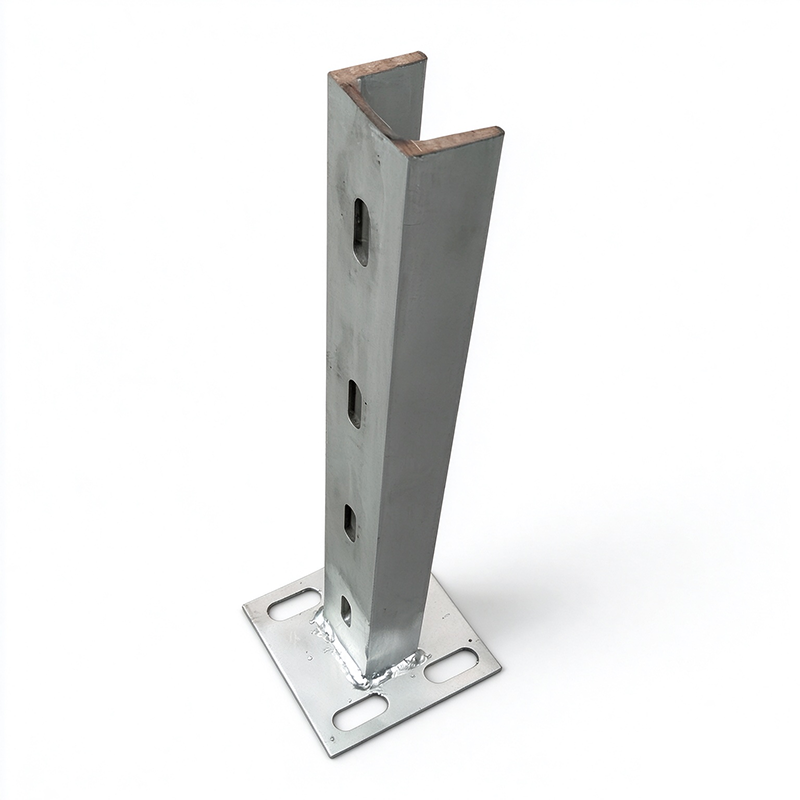
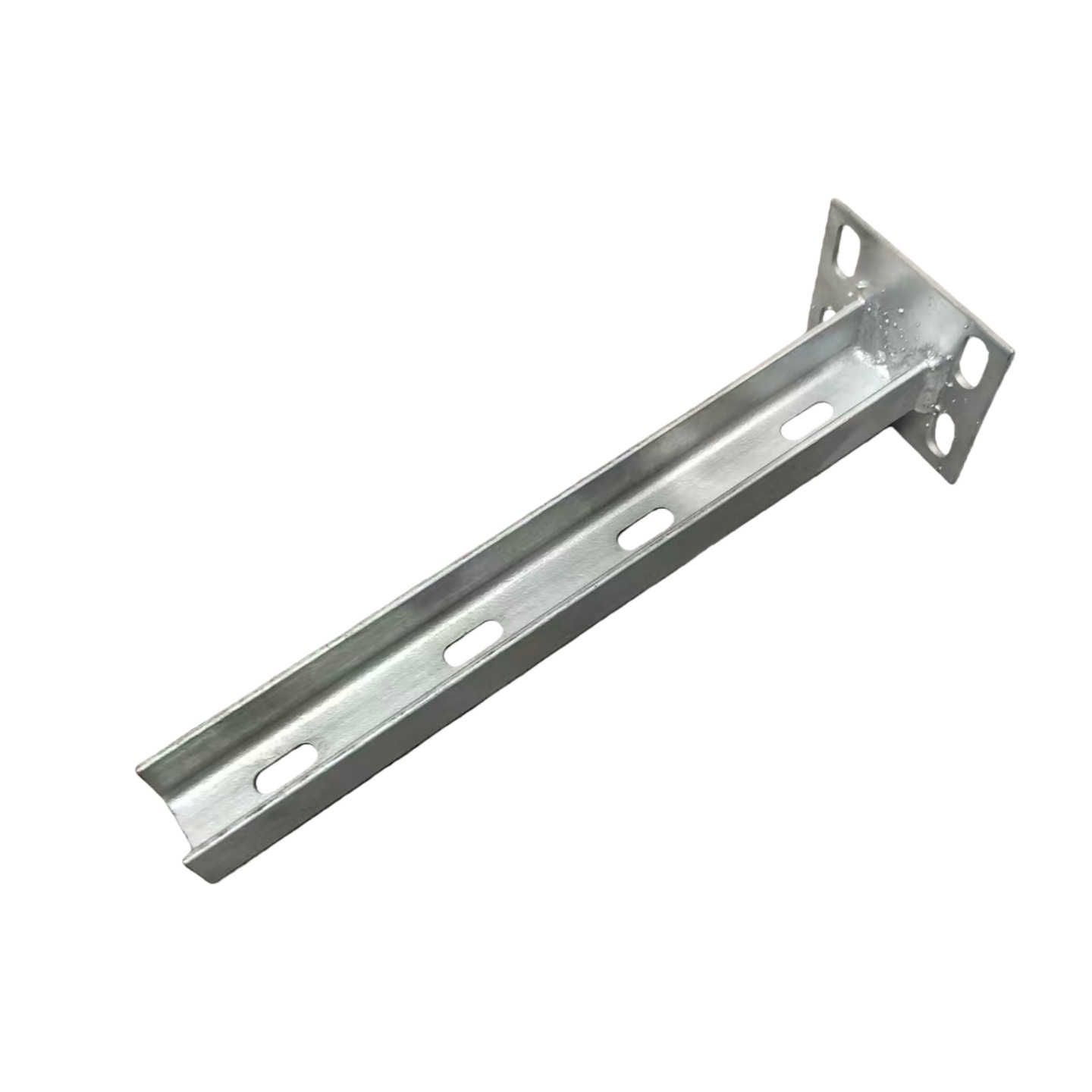
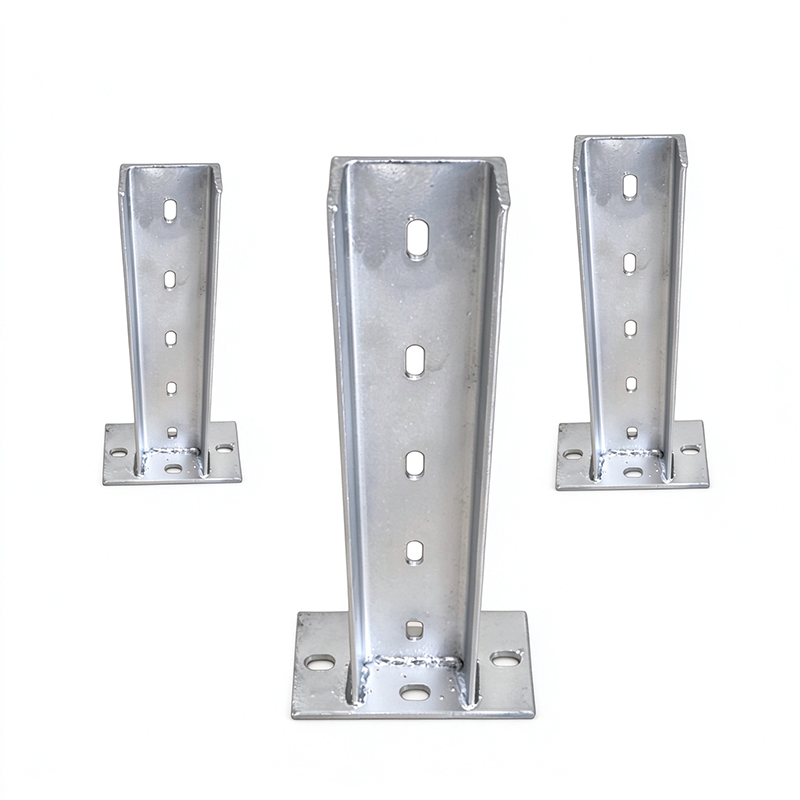
Channel Steel Column — Product Introduction
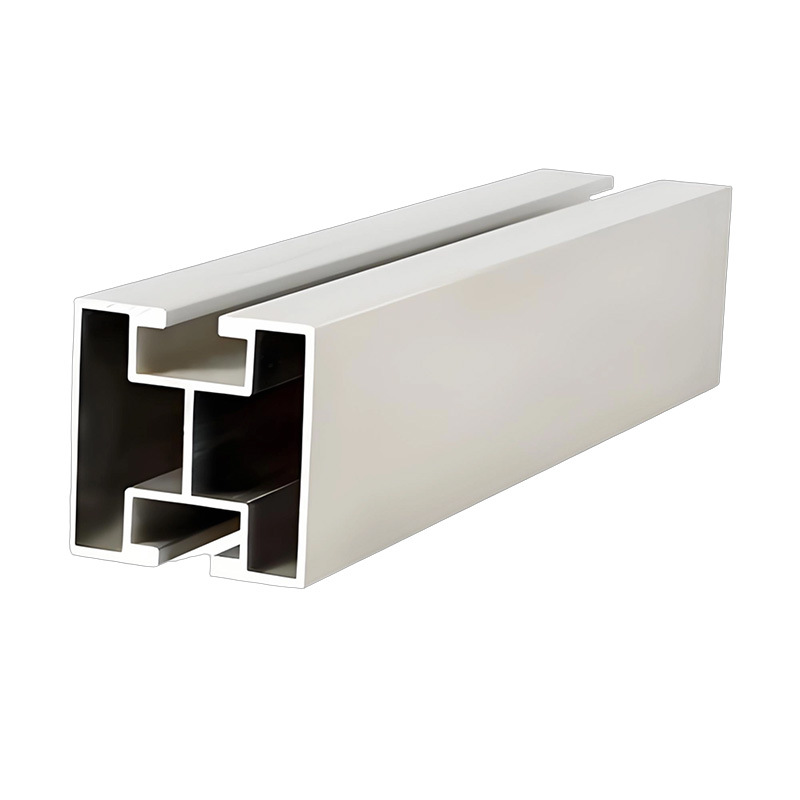
The channel steel column is a core structural component that uses channel steel (long steel with a grooved cross-section) as its main body, undertaking vertical support and load transmission functions in various bracket systems. In photovoltaic (PV) mounting brackets, building mechanical and electrical (M&E) seismic bracing supports, industrial plants, and equipment supports, the channel steel column serves as the main load-bearing pillar. It transmits the dead weight of upper components, pipes, or equipment, as well as external loads (wind load, snow load, seismic action, etc.), to the foundation or the building's load-bearing structure. The material is primarily Q235B carbon structural steel, with Q345B available for heavy-load scenarios; the surface is usually hot-dip galvanized to meet the long-term usage requirements of outdoor and corrosive environments.
I. Product Features
-
Ribbed cross-section design with outstanding bending resistance
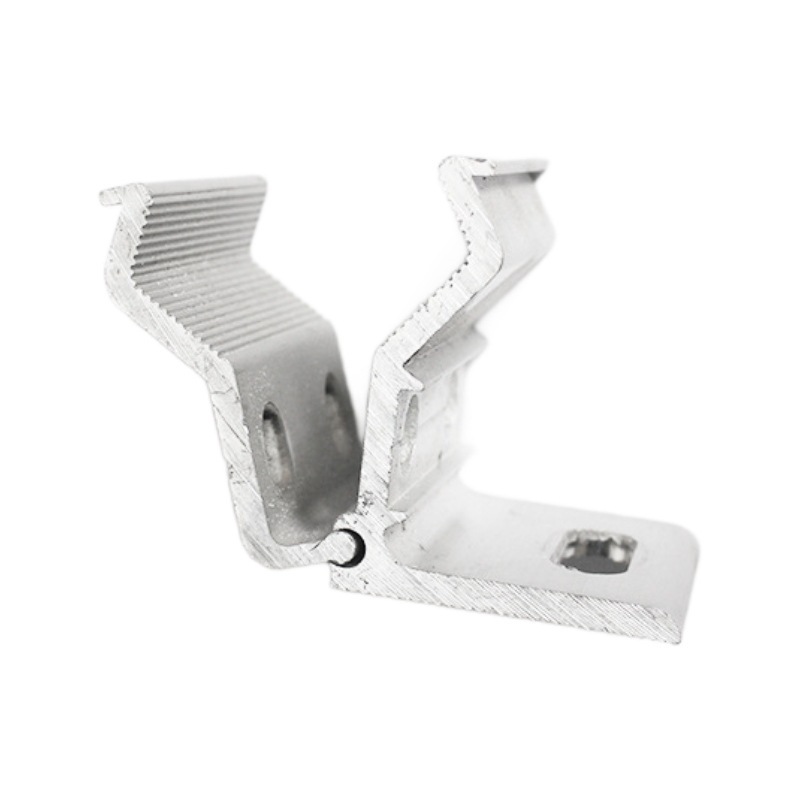
The grooved cross-section of channel steel inherently possesses a high moment of inertia and bending stiffness. Some C-channel steels are equipped with axial stiffening ribs on the web, further enhancing the column's bending resistance under vertical compression and horizontal wind loads; the hemmed serrated structure combined with dedicated locking clips can improve the shear, slip, and impact resistance of the connection nodes. -
Clear material grading, selected according to load
The commonly used material is Q235B, with a yield strength of ≥235MPa, suitable for general load-bearing scenarios; for heavy-load or long-span brackets, Q345B can be selected, with a tensile strength of 470–630MPa and a bending strength approximately 30% higher than Q235B. -
Hot-dip galvanizing for anti-corrosion, firmly bonded zinc layer
The column is usually hot-dip galvanized, immersing the derusted steel parts in a zinc bath at 440–460°C to form a zinc layer and a zinc-iron alloy layer on the surface. This process not only provides the barrier protection of the pure zinc layer, but the alloy layer also gives it better corrosion resistance than electro-galvanizing. The zinc layer is uniform and has strong adhesion, suitable for outdoor and highly corrosive environments. -
Standardized cross-section and continuous perforations
Channel steel columns are produced in national standard series (such as 5#, 8#, 10#, 12#, etc.), with unified specifications for section height, leg width, and web thickness. Some products feature continuous straight slots or keyhole slots along the axial direction, facilitating quick positioning and fixing of connectors at any position without the need for additional on-site drilling. -
Modular assembly, adaptable to various connectors
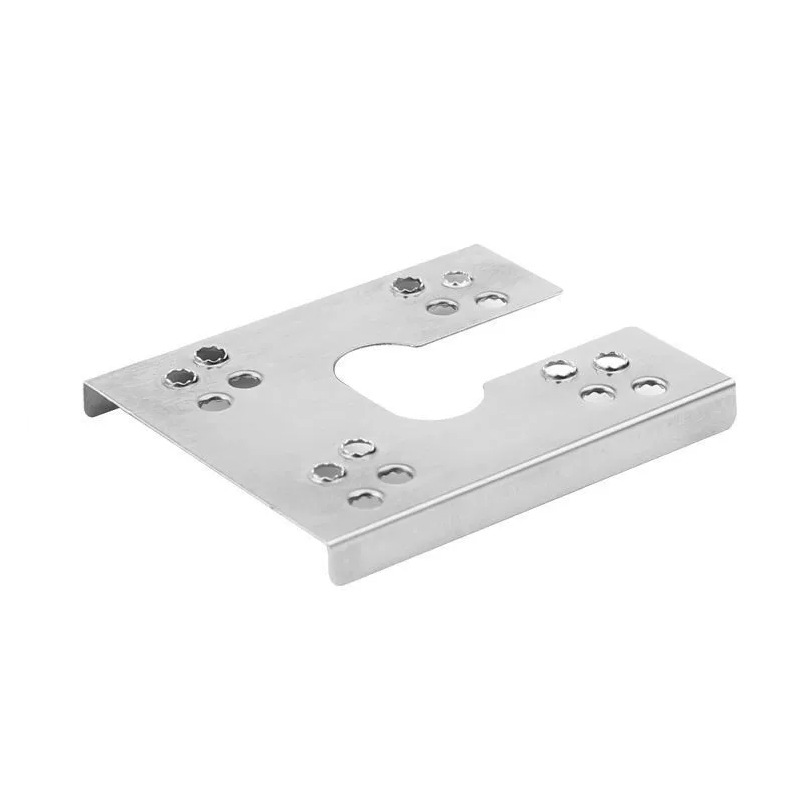
The column can be combined with standard accessories such as channel locking clips, connectors, hoop clamps, and rafter connectors to form an assembled bracket system. On-site bolt assembly requires no cutting or welding (hot work processes), and the structural form can be flexibly combined according to loads and terrain.
II. Product Advantages
-
Balancing vertical load-bearing and lateral stability
The geometric characteristics of the channel section enable it to effectively transmit vertical loads while possessing good lateral stiffness as a column. Adding lateral horizontal bracing in the middle of the main force-bearing direction of taller columns can reduce the effective length for stability calculations, thereby meeting stability requirements with a smaller cross-section and saving steel. -
Long anti-corrosion life, adapting to harsh outdoor environments
The dual action of the physical barrier and electrochemical protection of the hot-dip galvanized layer keeps the column structurally intact in long-term sunlight, rain, salt spray, and industrial corrosive environments, reducing section thinning and load-bearing capacity reduction caused by rust, and lowering the maintenance cost of the entire life cycle. -
High assembly efficiency, short construction period
The combination of standardized channel steel with matching locking clips and connectors makes the installation of the column primarily bolt tightening, with no on-site welding or cutting. For large-area, multi-column projects such as PV power stations, this feature can significantly shorten the construction period and reduce reliance on on-site processing equipment and skilled welders. -
Strong structural adjustability, adapting to complex conditions
The continuous perforations and modular accessory system of the channel steel allow the column's height, spacing, and connection angle to be flexibly adjusted on-site. In PV mounting brackets, the coordination of front and rear columns can form different module tilt angles; in M&E seismic bracing, the column can be positioned according to pipeline elevations, adapting to diverse design requirements. -
Complete cross-section specifications, economical selection
From light 5# channel steel to larger specifications of 12# and above, combined with the material grading of Q235B and Q345B, designers can accurately match the cross-section according to actual loads, avoiding material waste caused by a "one-size-fits-all" approach and striking a balance between safety margin and steel cost.
III. Scope of Application
-
Photovoltaic (PV) mounting bracket systems
The channel steel column is the core vertical component of PV mounting brackets. In ground-mounted power stations, the front and rear columns are combined with inclined beams and support beams through connectors to form a module installation frame; in bracket designs requiring high stability such as typhoon resistance, the channel steel columns, purlins, and diagonal braces form the main steel structure, enhancing overall stability through multiple hinged connections. -
Building M&E seismic bracing and finished supports
In the finished support systems for M&E pipelines such as water supply and drainage, electrical, HVAC, and fire protection, channel steel columns are used as main load-bearing pillars, combined with crossbeams, pipe clamps, and anchors to form a pipeline support system. They are widely used in subways, industrial plants, public buildings, underground utility tunnels, and data centers. -
Industrial plants and equipment supports
In plant structures, channel steel columns can be used as equipment foundation supports, operating platform pillars, or light steel structure columns; in thick pile cap reinforcement support systems, channel steel columns serve as main load-bearing pillars, combined with crossbeams and diagonal braces to meet the load-bearing requirements of the construction phase. -
Cable supports and electrical installation
Main components such as columns and shelves of cable supports are often made of Q235B channel steel, used for the support of cable trays and power communication systems, meeting the structural strength and anti-corrosion performance requirements of electrical engineering. -
Temporary support and demountable structures
In temporary works such as trench excavation support and cast-in-place crossbeam formwork support at wharves, channel steel columns provide vertical support in a demountable and reusable form, which is more compact and easier to adjust than welded structures.