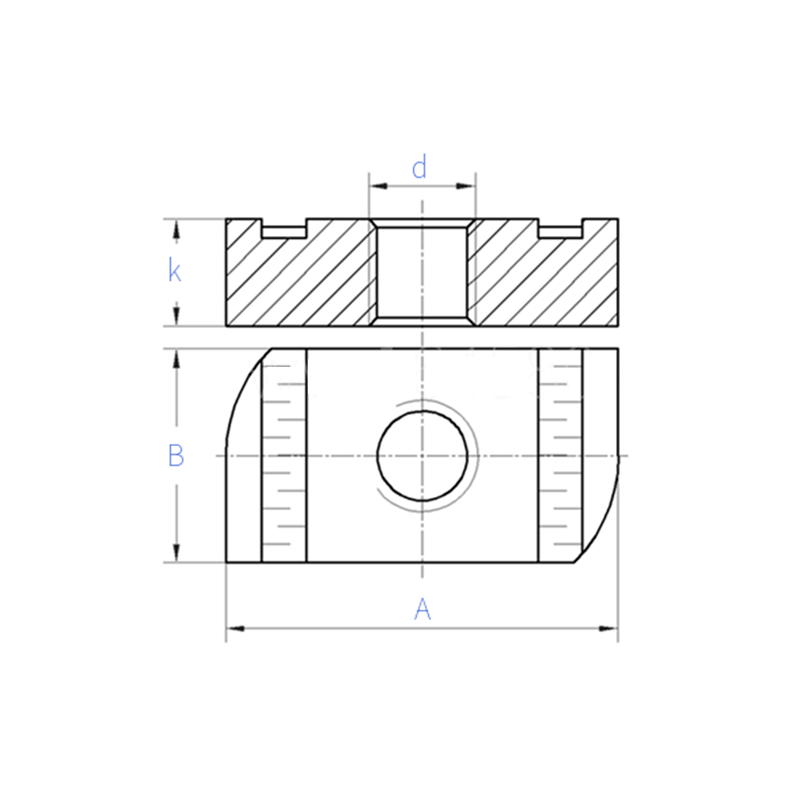
Product Specifications
| Model / Specification | M6–M12 |
| Material | Carbon Steel |
| Thd. size d |
M6 | M8 | M10 | M12 |
| A | 34.5 | 34.5 | 34.5 | 34.5 |
| B | 20 | 20 | 20 | 20 |
Plastic Wing Nut (41)——Product Introduction
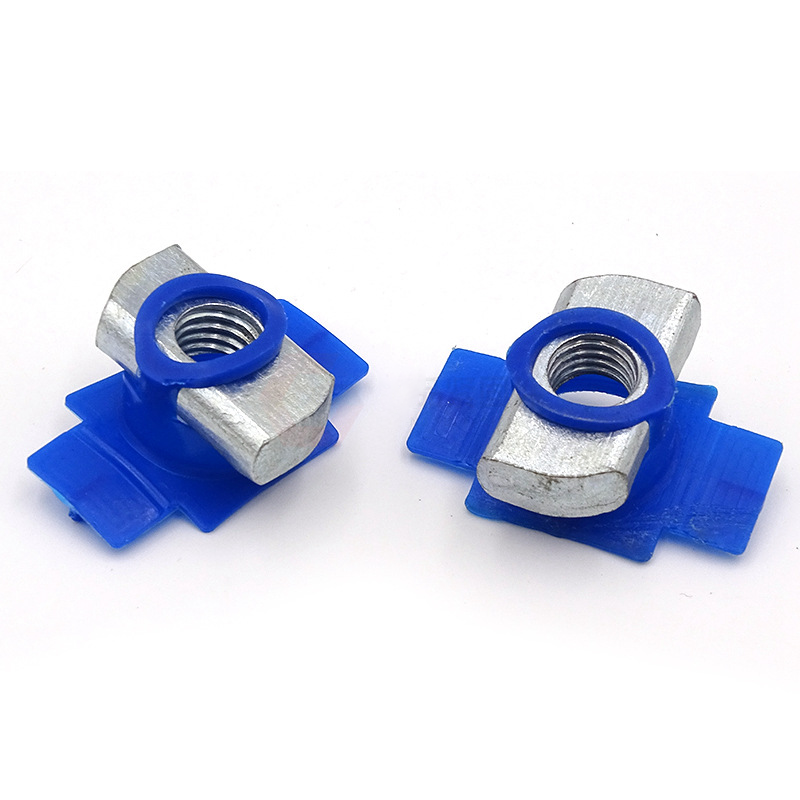
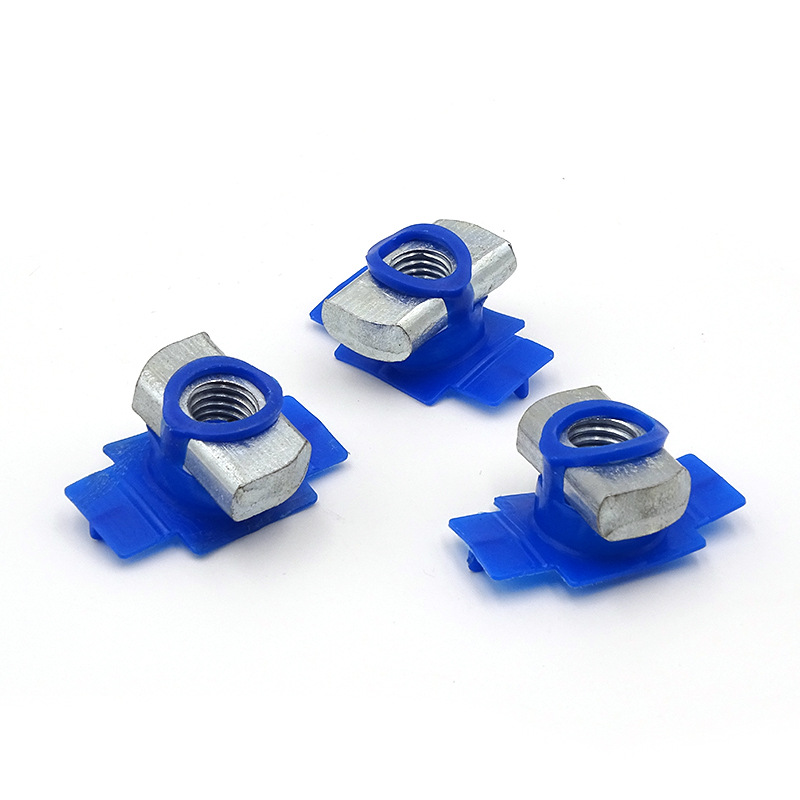
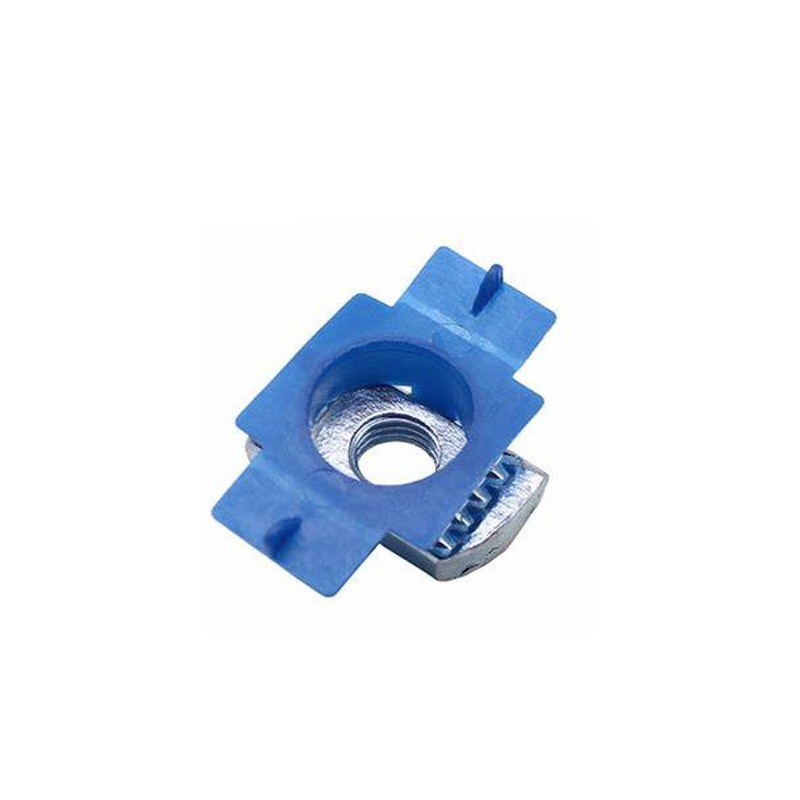
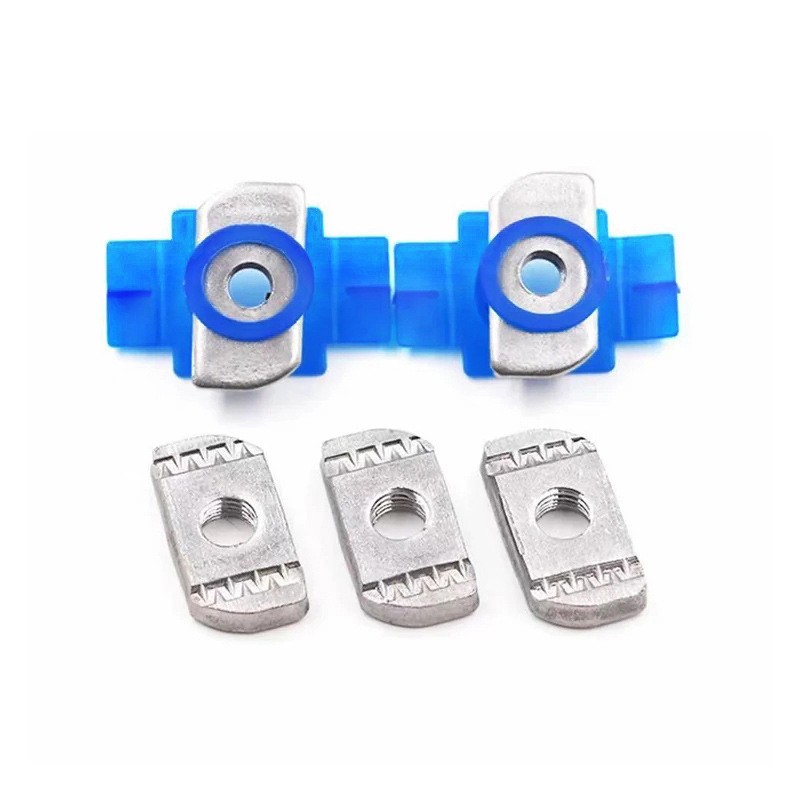
Plastic Wing Nut (41) is a composite fastener specially designed for C-channel steel systems. Its core structure consists of two parts: a metal threaded core and plastic wings. The metal core is usually made of Q235 carbon steel, providing reliable threaded connection strength; the plastic wings wrap around the outside of the metal core, forming a shape similar to butterfly wings for easy hand operation. The product is installed by placing the metal nut block into the C-channel steel groove, using the elasticity of the plastic wings to temporarily fix it in the channel, preventing the nut from slipping or rotating during installation. A bolt is then inserted and tightened to complete the fixation. “41” refers to its compatibility with the 41 mm series C-channel steel (such as 41×41 mm, 41×21 mm sections), and it is widely used in photovoltaic mounting brackets, seismic bracing supports, and mechanical and electrical installation projects.
I. Product Features
-
Composite structure of metal core and plastic wings: The metal threaded core provides load-bearing capacity, while the plastic wings (commonly made of PP polypropylene or nylon PA) provide insulation, scratch protection, and noise reduction, while also making it easy to grip with fingers.
-
Compatible with 41 series C-channel steel: Specially designed for C-channel steel with a groove width of 41 mm. The bottom of the nut block has a serrated structure, which engages tightly with the channel steel flange after installation, providing anti-slip and seismic performance.
-
Complete thread specifications: Common thread specifications include M6, M8, M10, and M12, among which M8 and M10 are the most commonly used, and can match corresponding specifications of bolts or threaded rods.
-
Diverse materials and surface treatments: The metal core is commonly made of Q235 carbon steel or S235JR. Surface treatments can be selected from electro-galvanizing, hot-dip galvanizing, Dacromet, etc., to meet different anti-corrosion requirements.
-
Spring-assisted positioning design: Some models have a spring structure. After the nut block is placed into the groove, the spring presses against the channel wall to keep it positioned, so there is no need to hold the nut by hand when installing the bolt.
II. Product Advantages
-
Convenient installation without tool-assisted positioning: The plastic wings and spring structure allow the nut to self-position within the channel. The installer can complete bolt insertion and tightening with one hand, significantly improving construction efficiency, especially suitable for high-altitude or narrow space operations.
-
Good anti-slip and seismic performance: The serrations at the bottom of the nut block engage with the C-channel steel flange to form a mechanical interlock, which is not easy to loosen under vibration conditions. It is suitable for seismic bracing support systems (complying with GB 50981-2014 seismic design code) and photovoltaic mounting brackets and other occasions with high requirements for connection stability.
-
Insulation and surface protection: The plastic wings provide electrical insulation performance, while also preventing the metal nut block from directly scratching the galvanized layer of the C-channel steel or scratching the installer's fingers.
-
Good weather resistance: The plastic wings are made of anti-aging nylon or PP material, which can maintain stable performance within an outdoor temperature range of -40°C to 80°C and are not easy to become brittle and crack.
-
Adjustable position: The nut block can slide freely along the channel within the C-channel steel. During installation, it can be positioned and fixed at any position as needed, providing high flexibility.
III. Scope of Application
-
Photovoltaic mounting bracket systems: As a connector between photovoltaic module fixing clamps (middle clamps, end clamps) and C-channel steel rails, it is one of the most commonly used accessories in photovoltaic mounting bracket installation.
-
Seismic bracing support systems: Used in building mechanical and electrical seismic bracing supports to connect pipe supports, cable trays, air ducts, etc. with C-channel steel base materials, meeting the requirements of seismic design codes.
-
Mechanical and electrical installation and utility tunnel projects: Fixed connections for C-channel steel systems such as underground comprehensive utility tunnel supports, cable tray supports, and pipe supports and hangers.
-
General channel steel connections: Suitable for various industrial and construction scenarios where accessories and connectors (such as triangular brackets, 90° connectors, L-shaped connectors, etc.) need to be fixed in 41 series C-channel steel grooves.