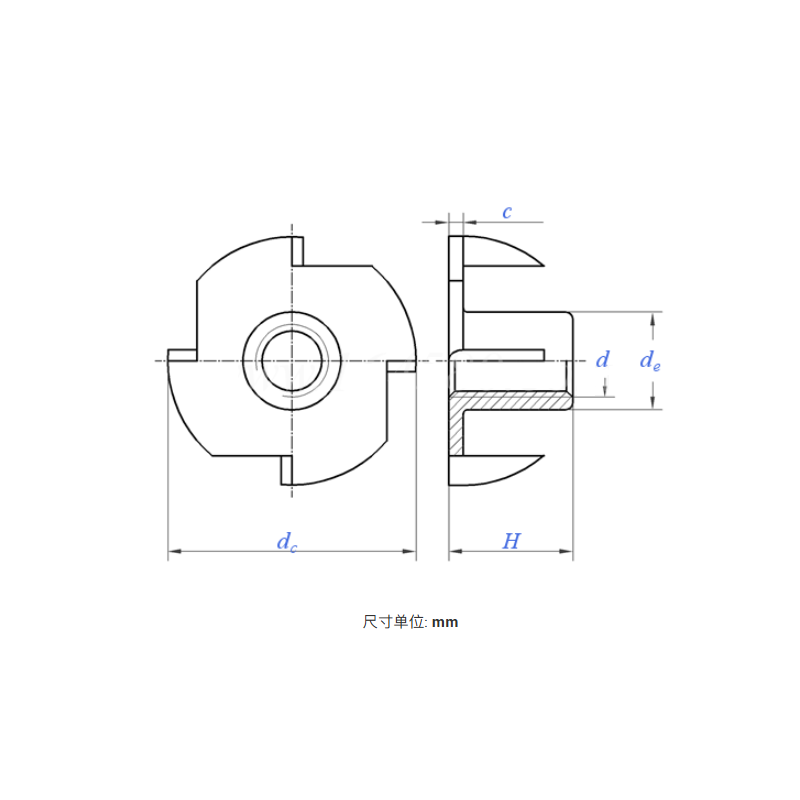
Product Specifications
| Model / Specification | M4 – M10 |
| Material | Carbon Steel |
| Thread size d |
M4 | M4 | M5 | M6 | M6 | M8 | M8 | M10 | |
| P | Pitch | 0.7 | 0.7 | 0.8 | 1 | 1 | 1.25 | 1.25 | 1.5 |
| de | 5.6 | 5.6 | 6.5 | 7.7 | 7.7 | 10 | 10 | 12 | |
| H | 6.95 | 8.95 | 9.15 | 10.3 | 13.3 | 12.75 | 16.75 | 14.5 | |
| dc | 15 | 15 | 17 | 19 | 19 | 22 | 22 | 25.5 | |
| c | 0.95 | 0.95 | 1.15 | 1.3 | 1.3 | 1.75 | 1.75 | 1.5 | |
Product Introduction — Four-Claw Nut DIN 1624 (Metric)
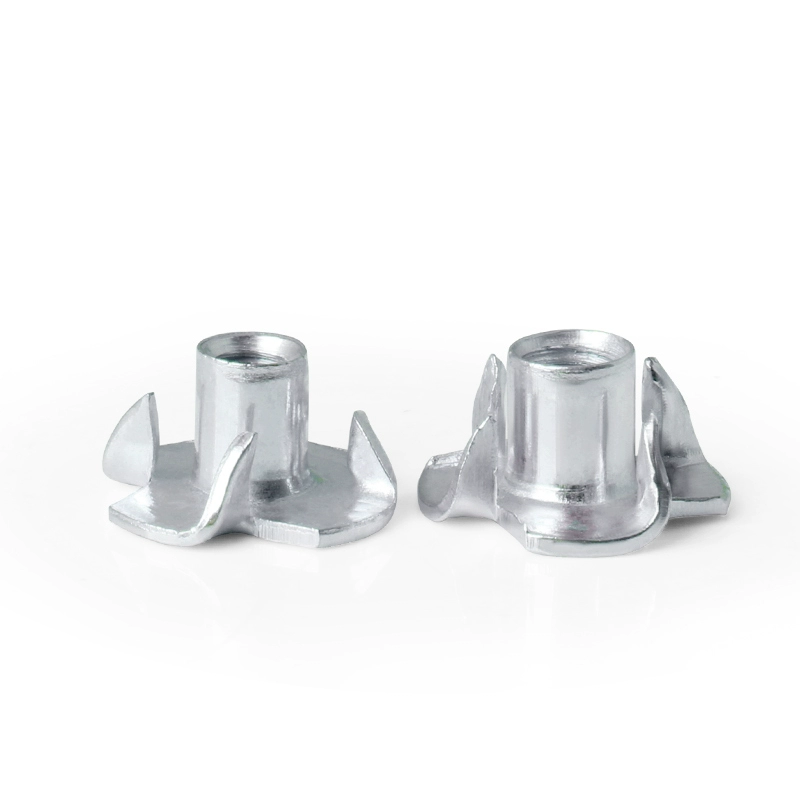
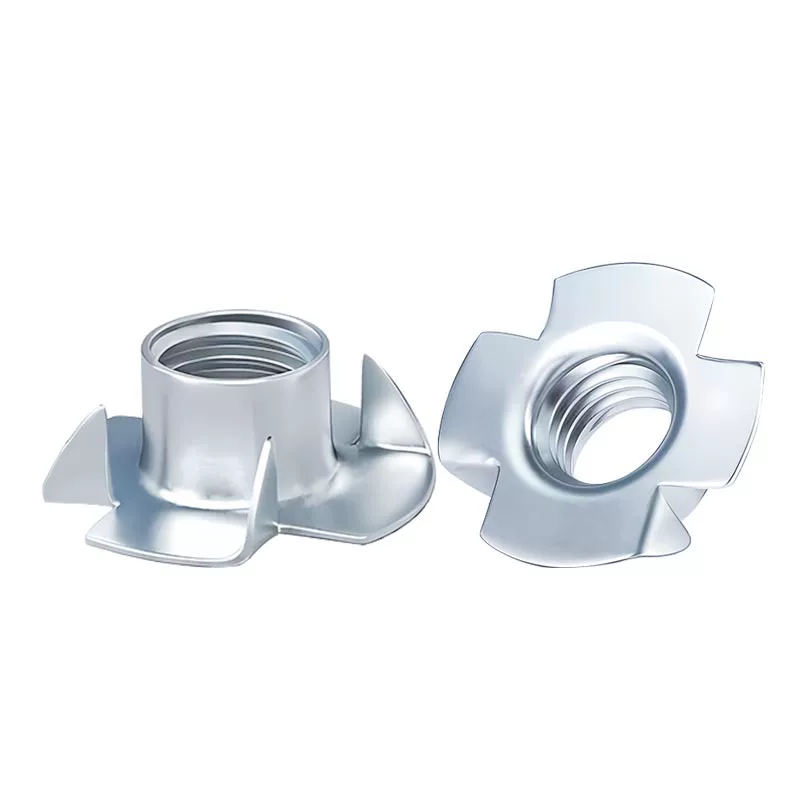
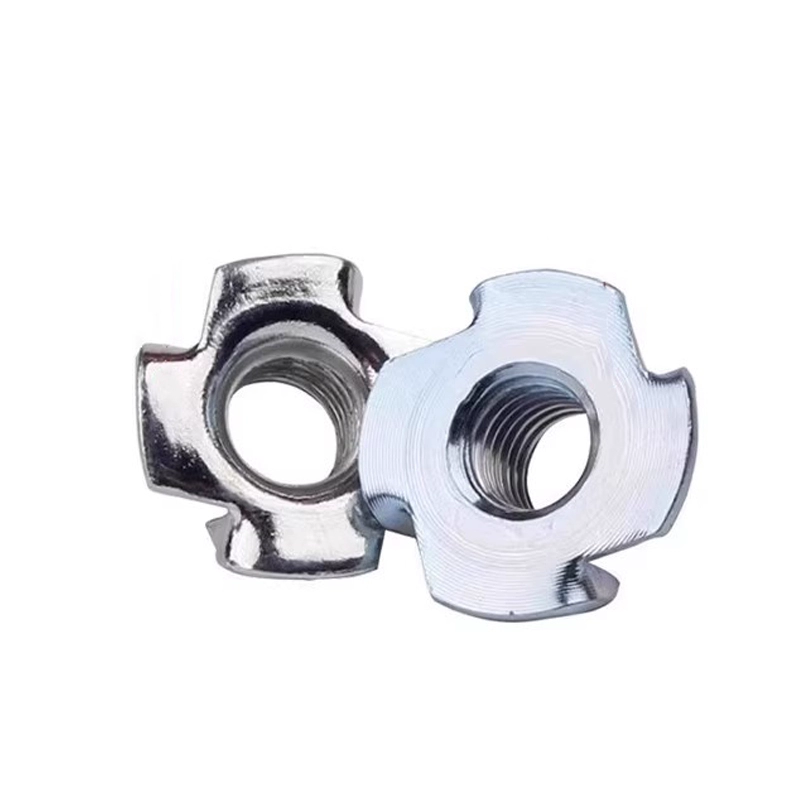
The DIN 1624 four-claw nut is a specialized fastener designed for thin-sheet connections, also known as a four-prong nut, cage nut, or press-in nut. It consists of a nut body with internal threads and four elastic prongs. During installation, it is pressed into a pre-punched square or round hole; the four prongs expand and clamp onto the back of the sheet, creating a secure threaded connection in the thin plate. This product conforms to the German standard DIN 1624, with metric threads and model number YJT 3023. Common materials include carbon steel (such as SPCC and Q235), with zinc plating as the standard surface treatment; stainless steel is also available upon request.
One Product Features
Four-prong elastic clamping structure: The four prongs at the base are elastic; after being pressed into the mounting hole, they automatically expand and firmly grip the sheet material, making them resistant to loosening.
Quick and easy installation: No welding, riveting, or specialized tools are required — simply press the nut into the pre-punched hole to complete the installation.
Metric standard threads: Uses metric threads in compliance with DIN 1624 standard, offering excellent versatility and easy bolt matching.
Multiple surface treatment options: Available with zinc plating, blackening, nickel plating, and other treatments to enhance rust resistance for various environments.
Suitable for thin-sheet applications: Specifically designed for thin plates and thin-walled components, providing a reliable threaded hole on sheets where tapping is not possible.
Two Product Advantages
High production efficiency: Compared to welded nuts, four-claw nuts install much faster without welding equipment or post-weld cleanup, saving labor time.
No damage to sheet surface: Cold-press installation causes no heat-affected zone, avoiding deformation, discoloration, or damage to the surface coating of the sheet.
Excellent anti-rotation performance: The four prongs engage the hole walls, preventing the nut from rotating when the bolt is tightened and ensuring a reliable connection.
Easy removal and replacement: Compared to welding or riveting, four-claw nuts are much easier to remove and replace, facilitating maintenance.
Low overall cost: Simple installation, minimal tooling requirements, and high efficiency help reduce labor and manufacturing costs.
Three Application Areas
Enclosures and cabinets: Threaded connections for thin-sheet housings of electrical control cabinets, distribution boxes, and network racks.
Automotive body panels: Fastening of automotive body panels, interior components, and chassis sheet metal.
Household appliances: Connections for outer casings and internal sheet metal components of washing machines, refrigerators, air conditioners, and other appliances.
Ventilation and piping: Threaded connections required in air ducts, exhaust pipes, thin-walled piping, and similar applications.
Electronic and communication equipment: Assembly of thin-sheet structures in instruments, communication enclosures, and office equipment.