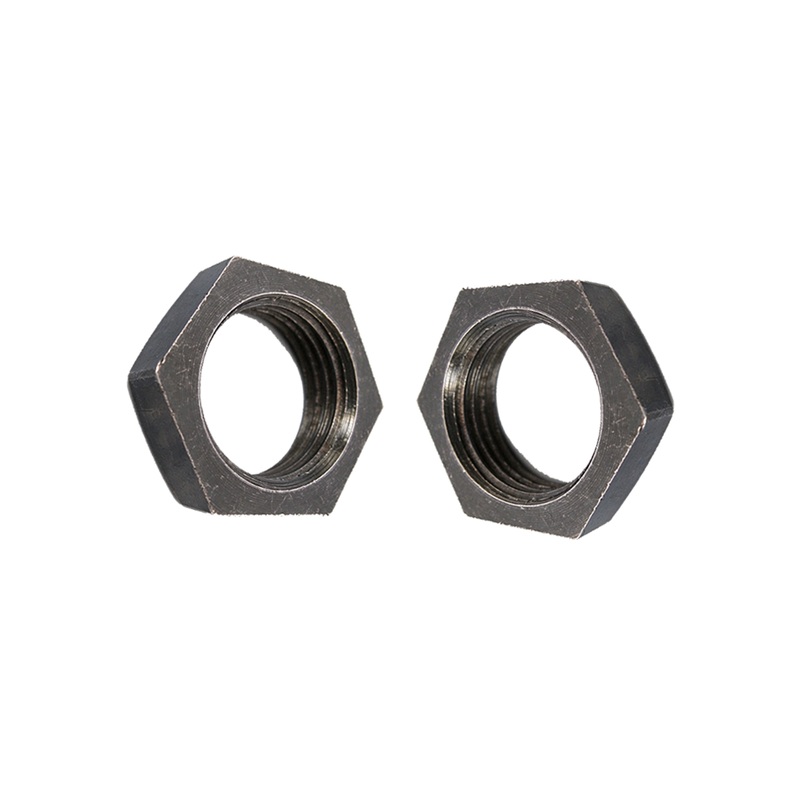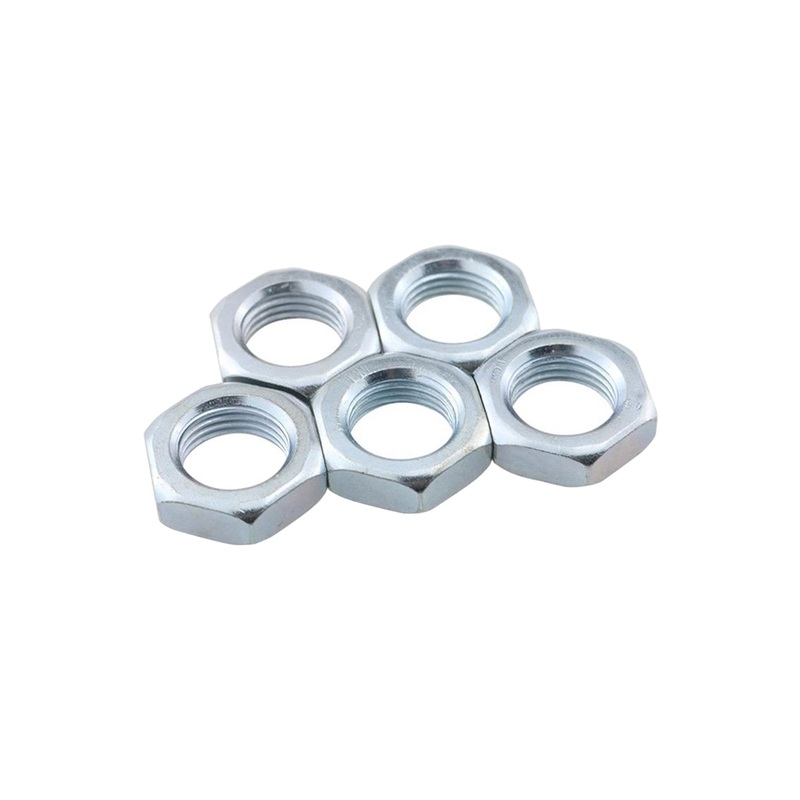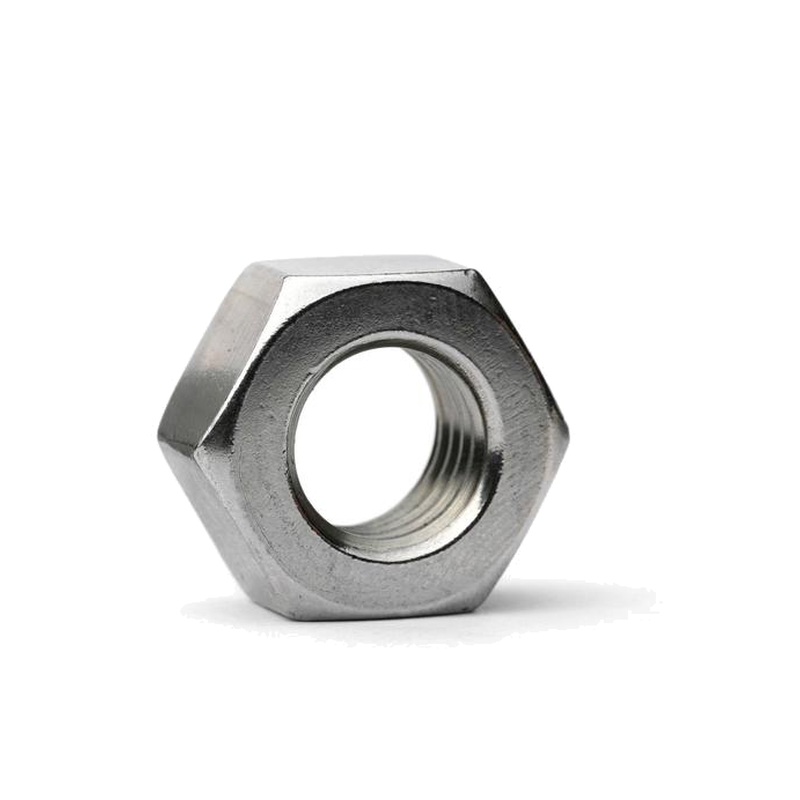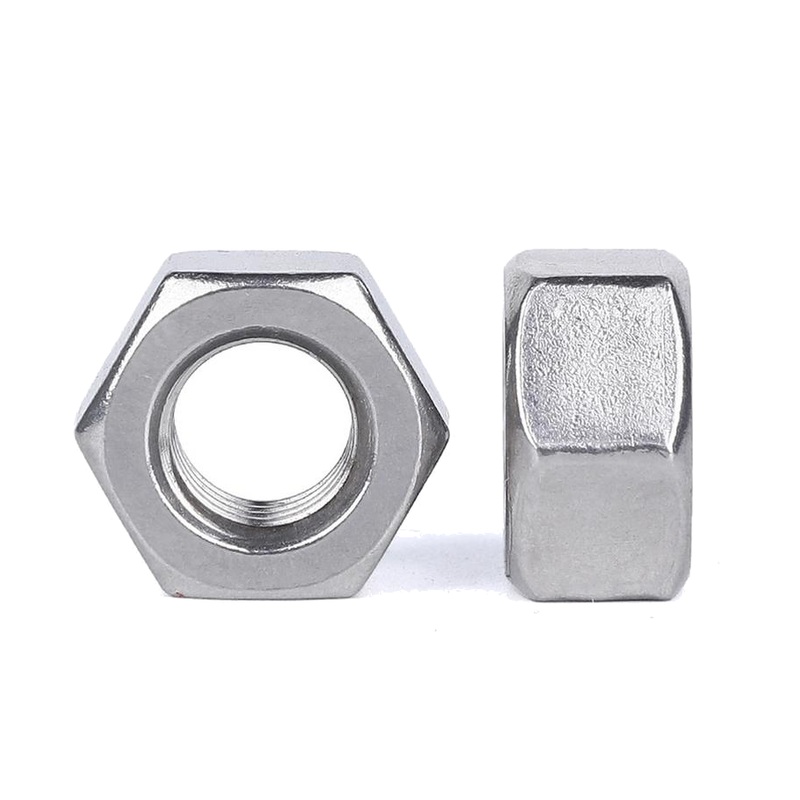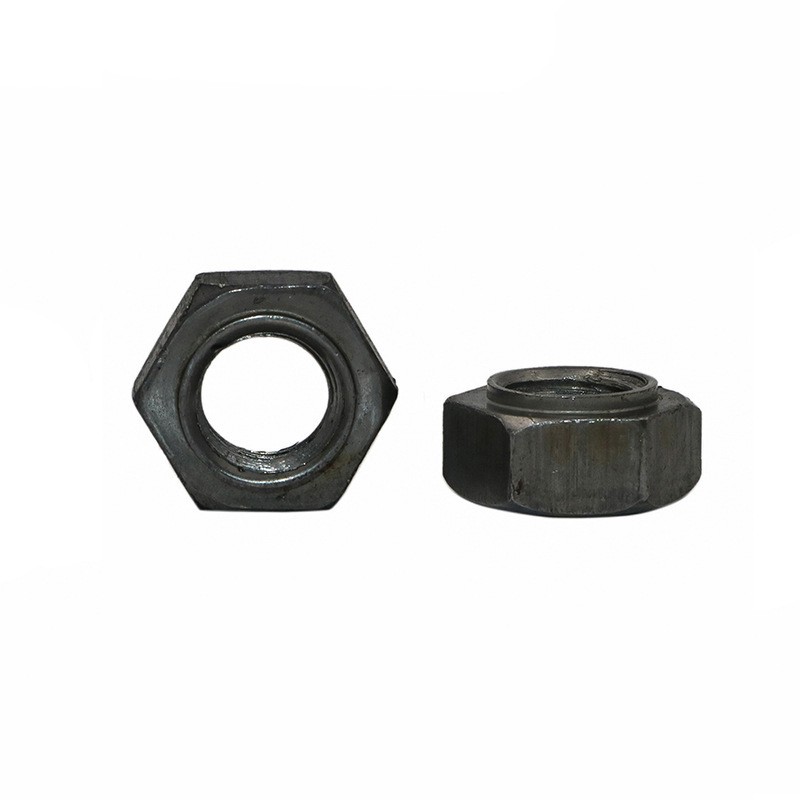
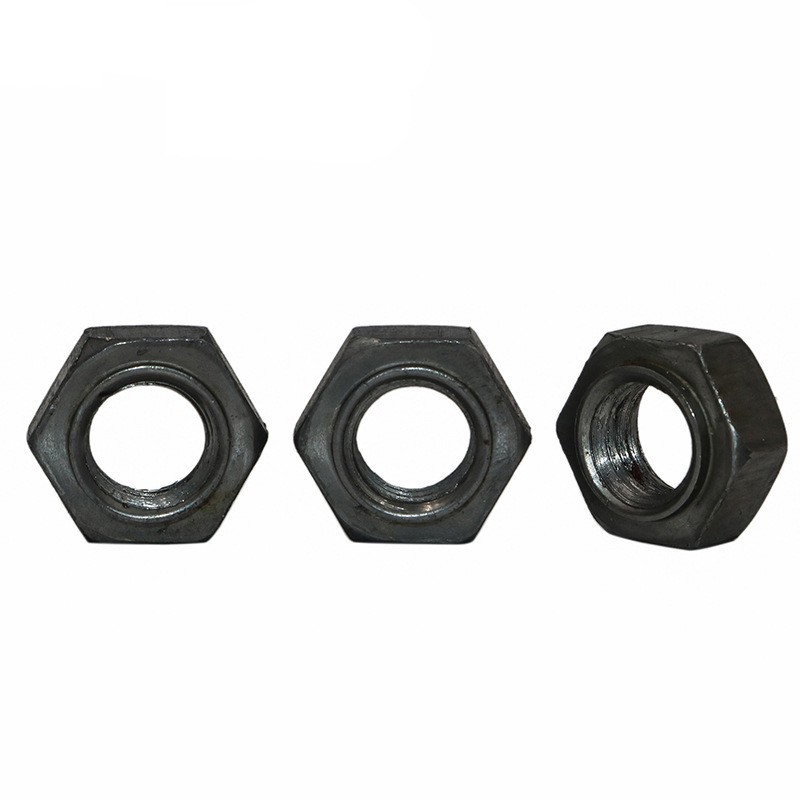
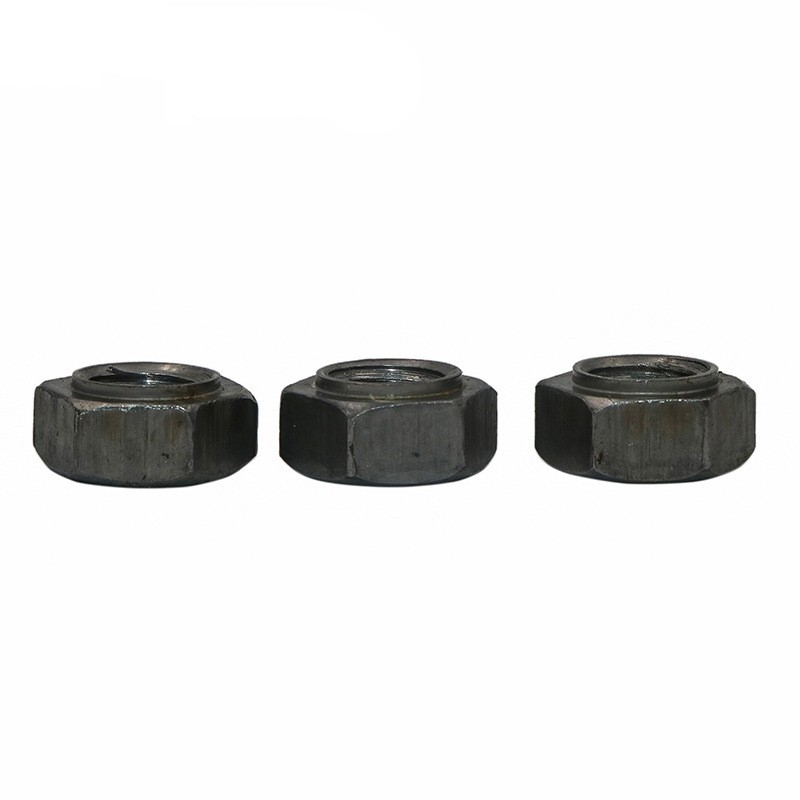
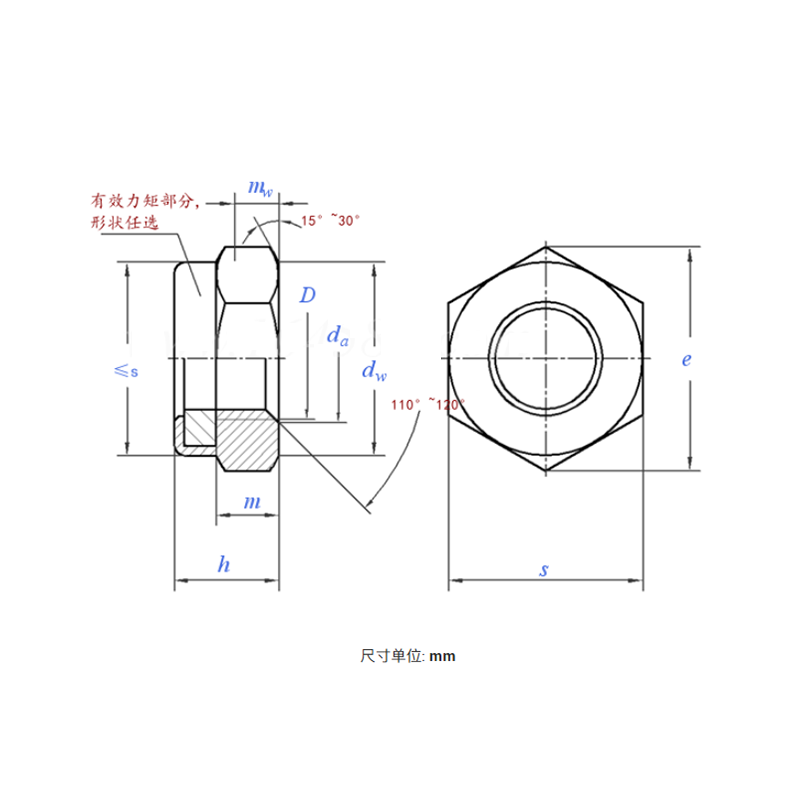
Product Specifications
| Model / Specification | M3 - M36 |
| Material | Carbon steel |
| Thread D |
M3 | M4 | M5 | M6 | M8 | M10 | M12 | (M14) | M16 | M20 | M24 | M30 | M36 | |
| P | Pitch | 0.5 | 0.7 | 0.8 | 1 | 1.25 | 1.5 | 1.75 | 2 | 2 | 2.5 | 3 | 3.5 | 4 |
| da | Max | 3.45 | 4.60 | 5.75 | 6.75 | 8.75 | 10.80 | 13.00 | 15.10 | 17.30 | 21.60 | 25.90 | 32.40 | 38.90 |
| Min | 3.00 | 4.00 | 5.00 | 6.00 | 8.00 | 10.00 | 12.00 | 14.00 | 16.00 | 20.00 | 24.00 | 30.00 | 36.00 | |
| dw | Min | 4.56 | 5.90 | 6.90 | 8.90 | 11.60 | 14.60 | 16.60 | 19.60 | 22.50 | 27.70 | 33.20 | 42.80 | 51.10 |
| e | Min | 6.01 | 7.66 | 8.79 | 11.05 | 14.38 | 17.77 | 20.03 | 23.35 | 26.75 | 32.95 | 39.55 | 50.85 | 60.79 |
| h | Max | 3.90 | 5.00 | 5.00 | 6.00 | 6.76 | 8.56 | 10.23 | 11.32 | 12.42 | 14.90 | 17.80 | 22.20 | 25.50 |
| Min | 3.42 | 4.52 | 4.52 | 5.52 | 6.18 | 7.98 | 9.53 | 10.22 | 11.32 | 13.10 | 16.00 | 20.10 | 23.40 | |
| m | Min | 1.55 | 1.95 | 2.45 | 2.90 | 3.70 | 4.70 | 5.70 | 6.42 | 7.42 | 9.10 | 10.90 | 13.90 | 16.90 |
| mw | Min | 1.24 | 1.56 | 1.96 | 2.32 | 2.96 | 3.76 | 4.56 | 5.14 | 5.94 | 7.28 | 8.72 | 11.12 | 13.52 |
| s | Max | 5.50 | 7.00 | 8.00 | 10.00 | 13.00 | 16.00 | 18.00 | 21.00 | 24.00 | 30.0 | 36.00 | 46.00 | 55.00 |
| Min | 5.32 | 6.78 | 7.78 | 9.78 | 12.73 | 15.73 | 17.73 | 20.67 | 23.67 | 29.1 | 35.00 | 45.00 | 53.80 | |
| Weight per 1000 pcs (Steel) ≈ kg | 0.335 | 0.694 | 0.94 | 1.85 | 3.61 | 10.18 | 10.18 | 15.08 | 22.03 | 38.9 | 68.12 | 145.2 | 243.8 | |
Product Introduction — Hexagon Lock Thin Nut
The hexagon lock thin nut is a lock nut with a nylon ring or similar non-metallic material ring embedded in the inner hole of a hexagon thin nut. Its height is lower than that of an ordinary hexagon lock nut, and through the interference fit between the nylon ring and the bolt thread, it generates frictional resistance to achieve effective locking and prevent loosening under vibration or impact. This product combines a thin structure with anti-loosening functionality, commonly used in connection positions with limited space that require anti-loosening. Common specifications range from M3 to M20, with materials mainly carbon steel and stainless steel, and surface treatments including galvanizing, blackening, and nickel plating. Due to the nylon ring, the operating temperature is generally limited to -40℃ to +120℃.
One Product Features
Thin design: The height is smaller than that of ordinary hexagon lock nuts of the same specification, saving axial installation space.
Nylon insert locking: An oil-resistant and wear-resistant nylon ring is embedded in the inner hole, forming a stable friction torque with the thread for reliable anti-loosening.
Standard hexagonal shape: Can be normally assembled and disassembled using open-end wrenches, combination wrenches, or sockets, with good tool compatibility.
Diverse materials: Carbon steel (such as Q235, 35K), stainless steel (SUS304, SUS316), and other options are available.
Rich surface treatments: Carbon steel can be galvanized, blackened, or nickel-plated; stainless steel can be left natural or passivated.
Clear temperature range: The nylon ring operating temperature is generally -40℃ to +120℃; beyond this range, all-metal lock nuts should be selected.
Two Product Advantages
Excellent anti-loosening effect: The interference fit between the nylon ring and the thread effectively absorbs vibration energy and prevents the nut from loosening on its own.
Space and weight saving: The thin structure makes the connection more compact, suitable for narrow spaces such as chassis and automotive accessories.
Easy installation: Ordinary tools can complete assembly and disassembly without additional anti-loosening washers, simplifying the assembly process.
Reusable: Within a certain number of times, it can be repeatedly assembled and disassembled while maintaining locking performance (the nylon ring gradually wears, with a slight decrease in locking force).
Optional corrosion resistance: Stainless steel materials combine anti-loosening and corrosion resistance, suitable for humid and outdoor environments.
Reasonable overall cost: Compared with all-metal lock nuts, nylon insert lock nuts generally have lower cost under the same anti-loosening requirements.
Three Applications
Electronics and instruments: Space-compact applications requiring anti-loosening such as chassis cover plates, PCB fixation, and instrument panels.
Automobiles and motorcycles: Thin connection points affected by vibration such as interior parts, electrical brackets, and engine accessories.
Mechanical equipment: Anti-loosening fixation in limited spaces such as machine tool guards, safety baffles, and automation equipment.
Furniture and hardware: Products requiring frequent assembly/disassembly or anti-loosening such as folding furniture, display stands, lighting fixtures, and fitness equipment.
Power and communications: Compact space fixation such as distribution cabinets, communication equipment interiors, and cable tray bridges.
Other industries: Applications with space and anti-loosening requirements such as medical equipment, precision instruments, and environmental protection equipment.