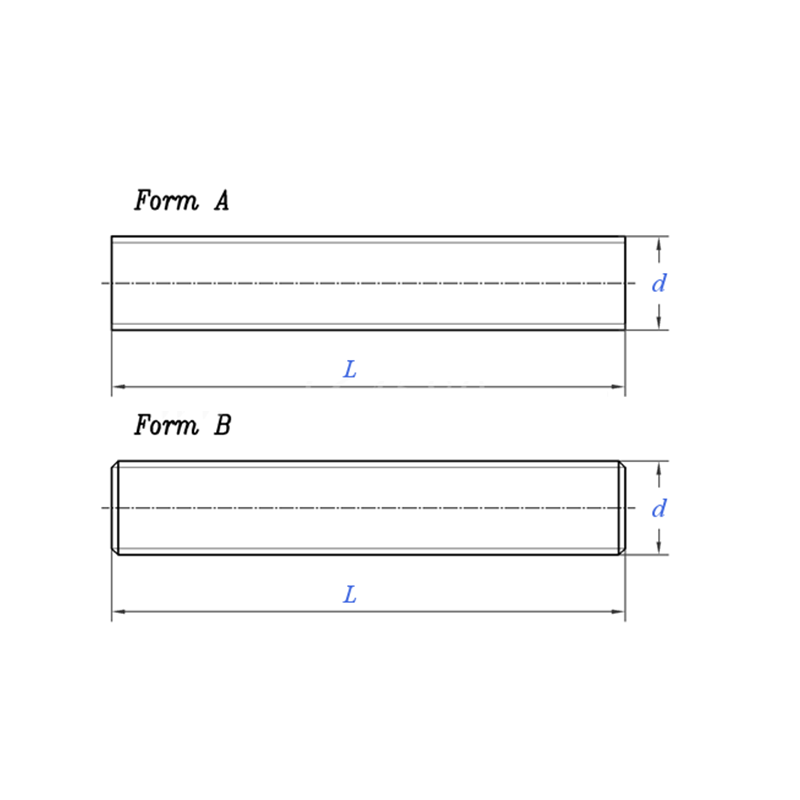
Product Specifications
| Model / Specification | M2 - M22 |
| Material | Carbon Steel |
| Thread d |
M2 | M2.5 | M3 | (M3.5) | M4 | M5 | M6 | M8 | M10 | M12 | (M14) | M16 | (M18) | M20 | (M22) | ||
| P | Pitch | Coarse | 0.4 | 0.45 | 0.5 | 0.6 | 0.7 | 0.8 | 1 | 1.25 | 1.5 | 1.75 | 2 | 2 | 2.5 | 2.5 | 2.5 |
| Fine1 | / | / | / | / | / | / | / | 1 | 1.25 | 1.25 | 1.5 | 1.5 | 1.5 | 1.5 | 1.5 | ||
| Fine2 | / | / | / | / | / | / | - | 1 | 1.5 | / | / | / | / | / | / | ||
| Wt./1,000 pcs (steel) | - | - | - | - | - | - | - | - | - | - | - | - | - | - | - | ||
| Thread d |
M24 | (M27) | M30 | (M33) | M36 | (M39) | M42 | (M45) | M48 | (M52) | M56 | (M60) | M64 | (M68) | M72 | ||
| P | Pitch | Coarse | 3 | 3 | 3.5 | 3.5 | 4 | 4 | 4.5 | 4.5 | 5 | 5 | 5.5 | 5.5 | 6 | 6 | / |
| Fine1 | 2 | 2 | 2 | 2 | 3 | 3 | 3 | 3 | 3 | 3 | 4 | 4 | 4 | 4 | 6 | ||
| Fine2 | / | / | / | / | / | / | / | / | / | / | / | / | / | / | / | ||
| Wt./1,000 pcs (steel) | - | - | - | - | - | - | - | - | - | - | - | - | - | - | |||
Metric Threaded Rod — Product Introduction
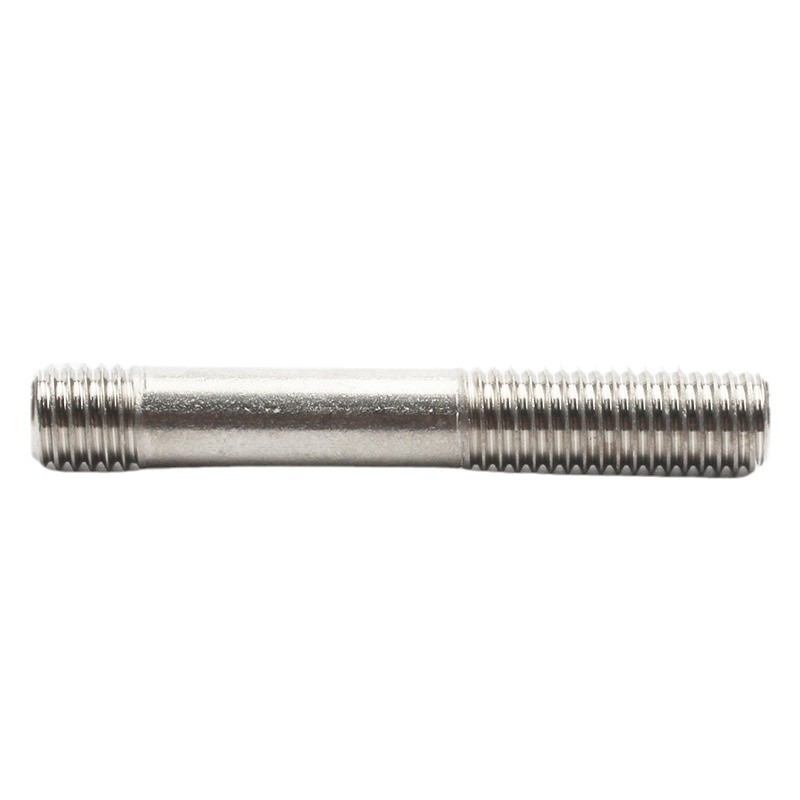
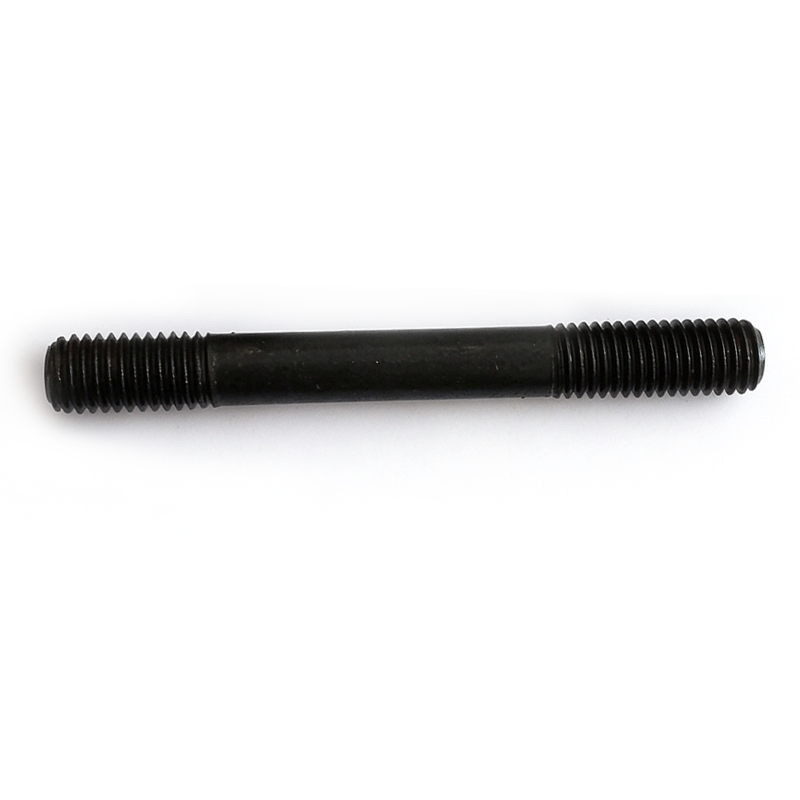
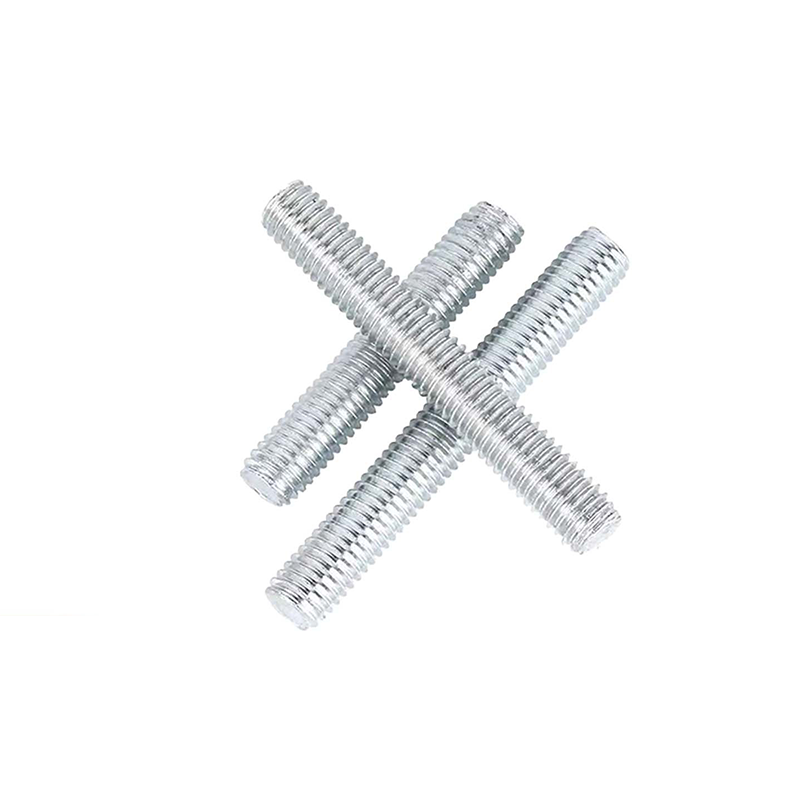
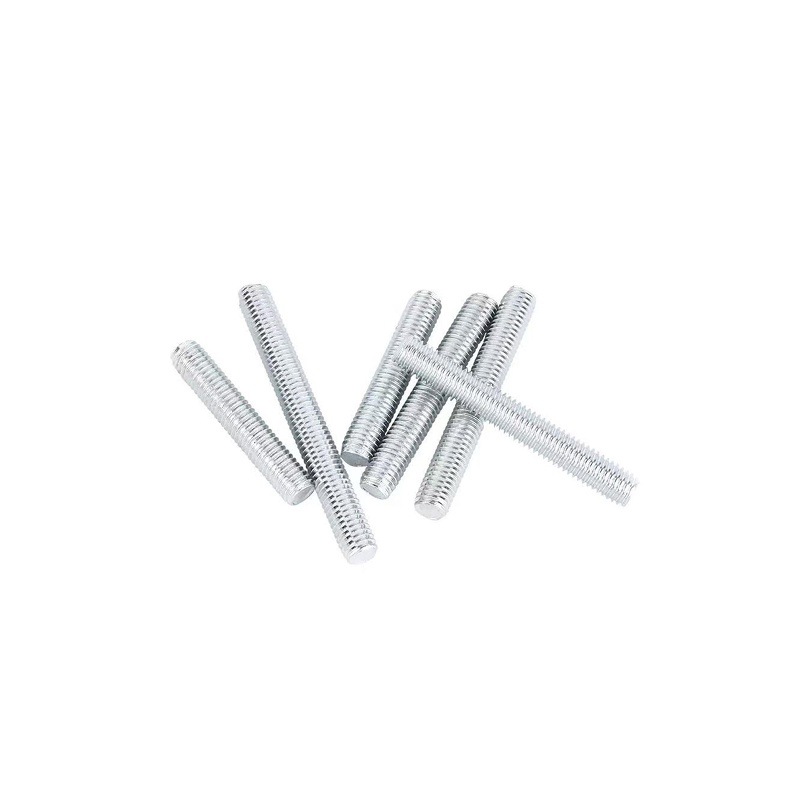
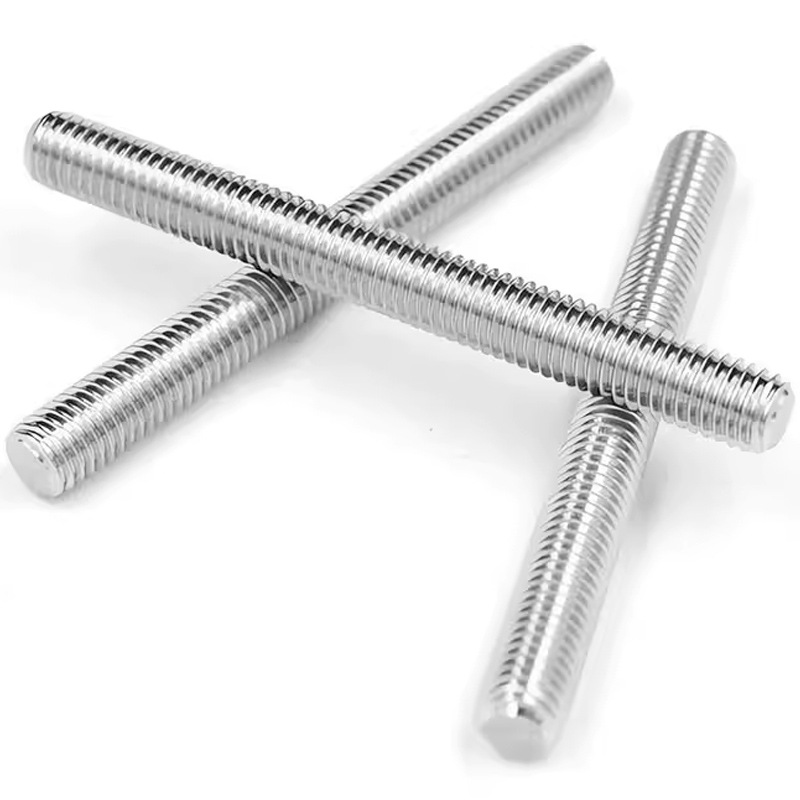
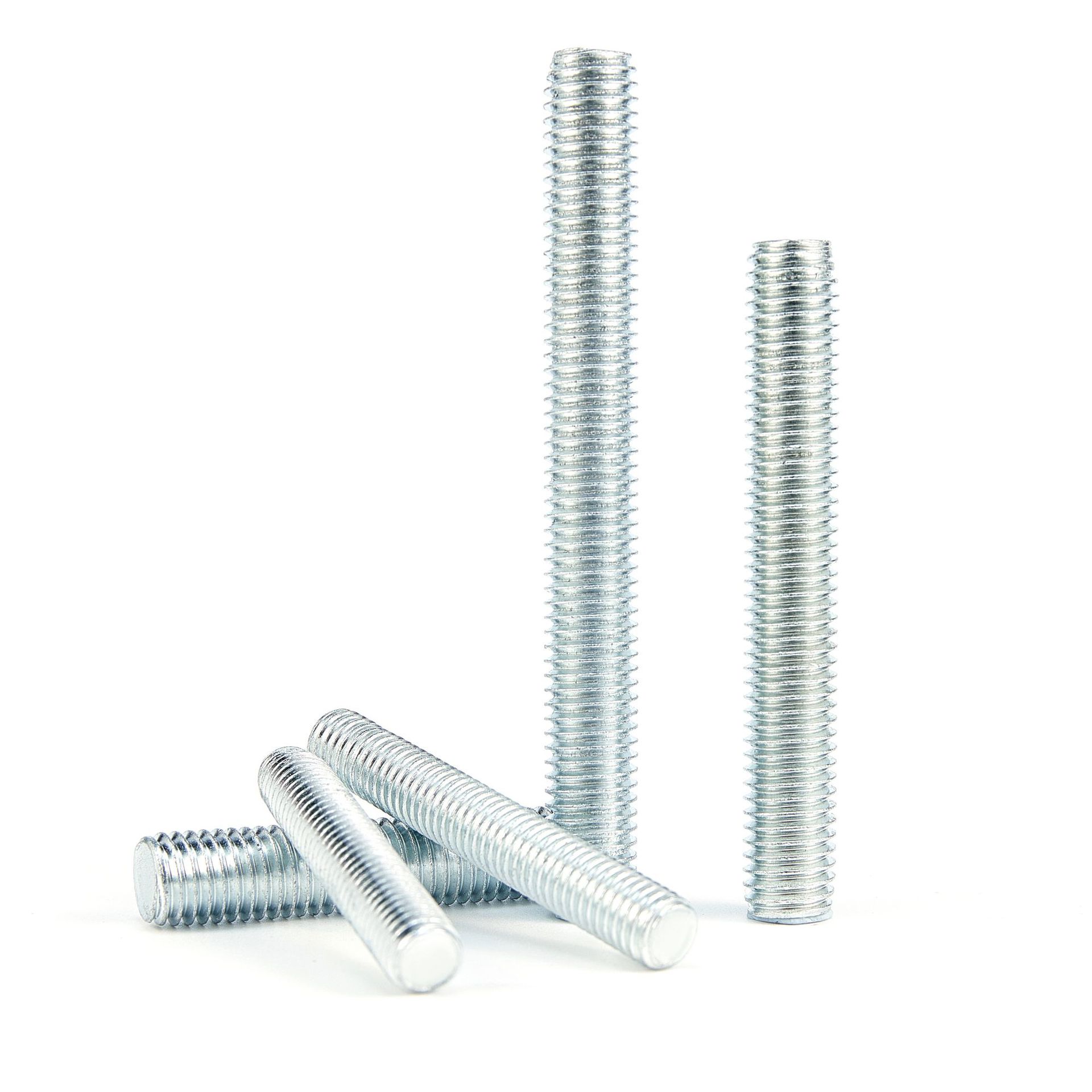
Metric threaded rod (also called threaded bar, lead screw, or fully threaded stud) is a rod-shaped fastener with continuous metric threads along its entire length. It is usually supplied in standard lengths of 1 m or 2 m and can be cut to length as required. Its thread dimensions and tolerances mainly refer to standards such as DIN 976-1 or GB/T 901. Nominal diameters cover M2 to M56 and even larger ranges. Property classes include 4.8 to 12.9, as well as stainless steel A2-70, A4-70, etc. Materials can be carbon steel, alloy steel, stainless steel and non-ferrous metals, and surfaces can be zinc plated, blackened, hot-dip galvanized, etc. Both ends can be screwed into nuts or threaded holes, and it is mainly used for fastening applications requiring long-distance adjustment, connection or support.
1. Product Features
• Continuous fully threaded structure: The thread extends continuously along the entire rod body, with no plain shank section. Both ends can bear load, and an effective threaded connection can be formed after cutting to any length.
• Complete specification system: Nominal diameters cover M2–M56 and above. Standard lengths are usually 1000 mm or 2000 mm, and the length can be cut freely.
• Various materials and grades: Carbon steel (classes 4.8, 5.8, 8.8, 10.9, 12.9), stainless steel (A2-70, A4-70), brass, aluminum alloy, etc. are available; carbon steel parts can be zinc plated, hot-dip galvanized or blackened.
• Standardized thread accuracy: Ordinary thread tolerance is 6g/8g, and zinc-plated thread tolerance is 6h/8h, conforming to the dimensional and tolerance requirements of DIN 976-1 or GB/T 901.
• Optional interference-fit type: Some products are manufactured according to DIN 976-2, suitable for applications requiring interference fit to improve assembly accuracy and connection strength.
2. Product Advantages
• Length can be cut freely: Users can cut any length according to actual needs, without relying on fixed-length bolts, reducing spare parts types and inventory pressure.
• Both ends can be connected: Full-length threads allow both ends to be screwed into nuts or threaded holes, suitable for structures requiring two-way adjustment, butt connection or support.
• Uniform force distribution: The fully threaded structure avoids stress concentration at the transition between the plain shank and the threaded section, providing more uniform stress distribution under tensile and compressive loads.
• Strong versatility: As a standardized rod, it can be flexibly matched with nuts, washers, flanges and other standard parts, suitable for various connection and support solutions.
• Mature processing technology: It can be produced by rolling, with high thread strength, good surface quality, high production efficiency and relatively controllable cost.
3. Scope of Application
• Pipeline and flange connection: Used for fastening pipe flanges; it is a commonly used connector in industrial pipeline systems such as petroleum, chemical and power industries.
• Mechanical equipment installation and adjustment: Used for equipment base leveling, component support, slide rail adjustment and other applications requiring length adjustment and positioning.
• Construction and structural engineering: Used for steel structure connections, embedded part fixing, curtain wall support and other scenarios requiring long threaded rod connections.
• Automotive and rail transit: Used for engine component connections, body fixing, rail vehicle assembly, etc.
• Electronics and electrical: Used for internal support and fixing of cabinets, control boxes, instruments and meters.
• General industry and DIY: Used for metal shelving construction, temporary equipment fixing, maintenance replacement and other flexible fastening needs.