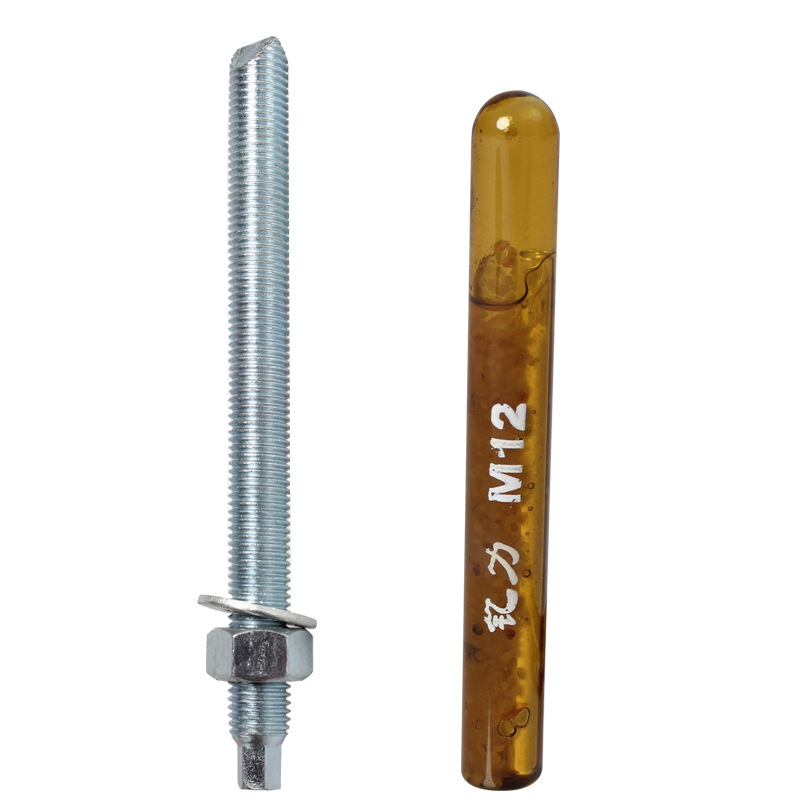
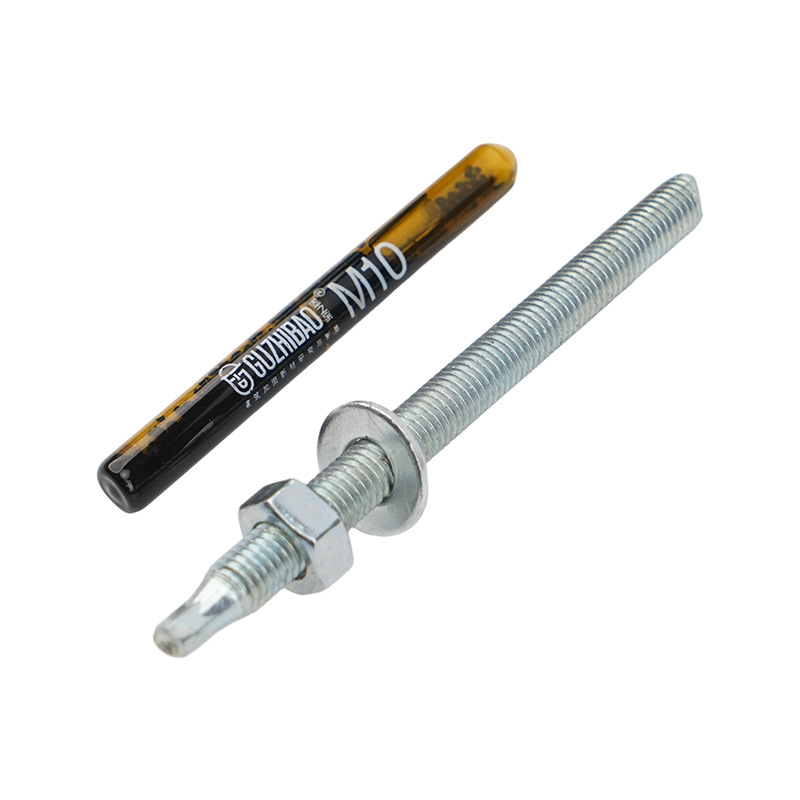
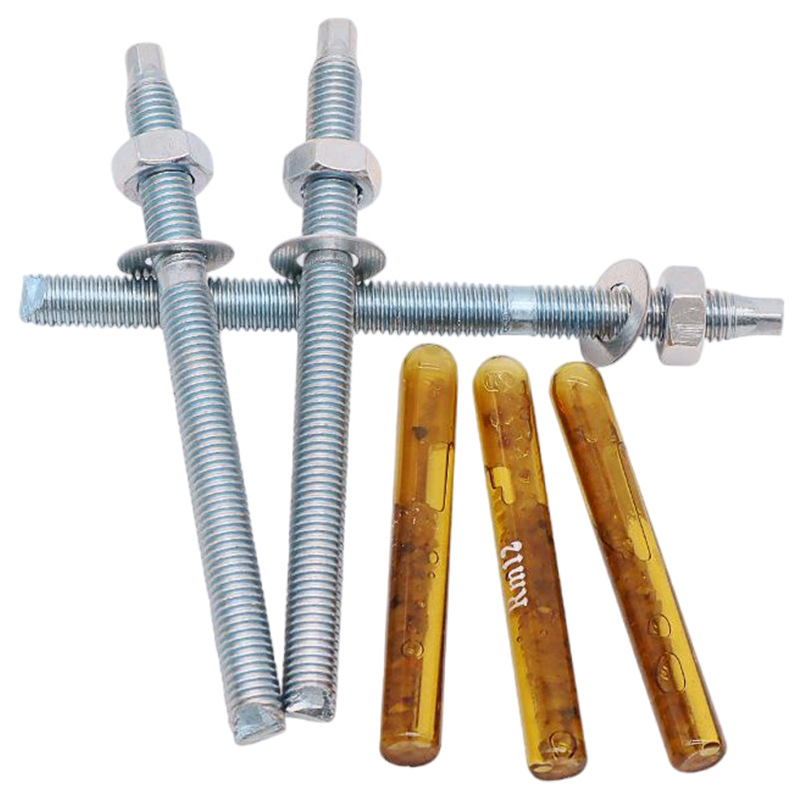
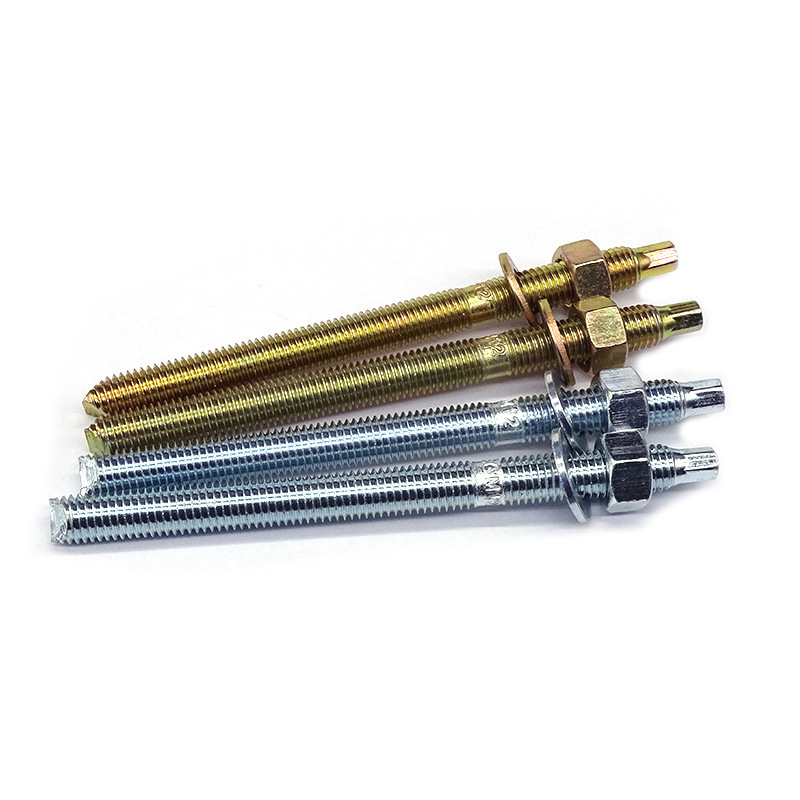
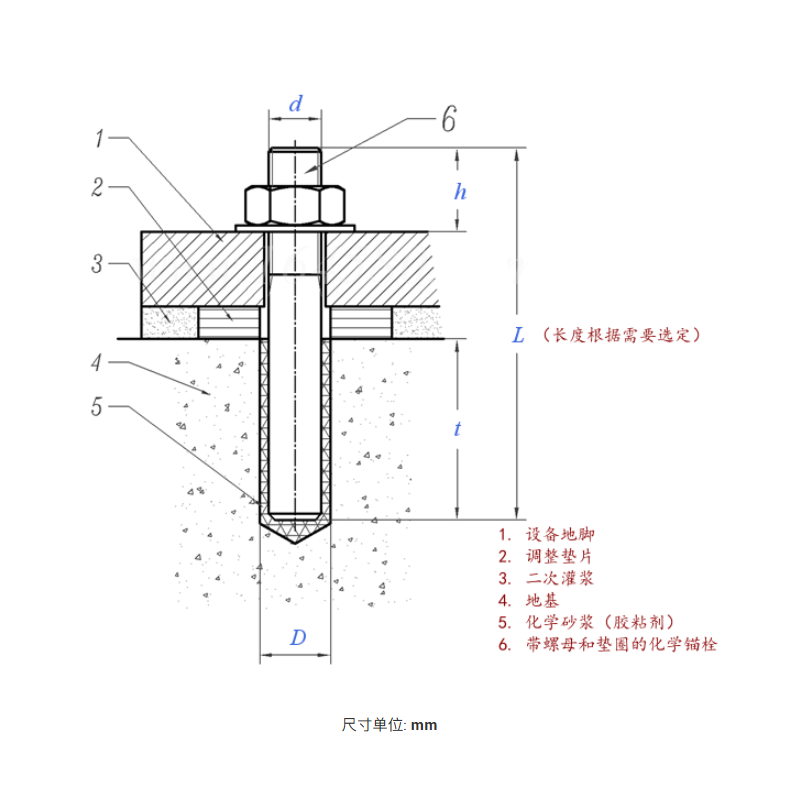
Product Specifications
| Model / Specification | M12 – M64 |
| Material | Carbon Steel |
| Thd. Size d |
M12 | M16 | M20 | M24 | M30 | M36 | M42 | M48 | M64 | M64 | |
| D | Hole Dia. | 15 | 20 | 25 | 30 | 36 | 42 | 48 | 55 | 62 | 72 |
| t | Install. Depth | 110 | 125 | 170 | 210 | 280 | 300 | 350 | 400 | 500 | 600 |
| h | Protrusion | 30 | 35 | 40 | 50 | 60 | 80 | 90 | 100 | 120 | 130 |
| Unit Wt. ≈ kg | Wt. w/ Nut & Washer(L=100mm) | 0.113 | 0.205 | 0.336 | 0.505 | 0.857 | 1.32 | 1.94 | 2.76 | 3.87 | 5.1 |
| Per Additional 10mm | 0.009 | 0.016 | 0.025 | 0.036 | 0.055 | 0.08 | 0.109 | 0.142 | 0.193 | 0.252 | |
Chemical Anchor Bolt — Product Introduction
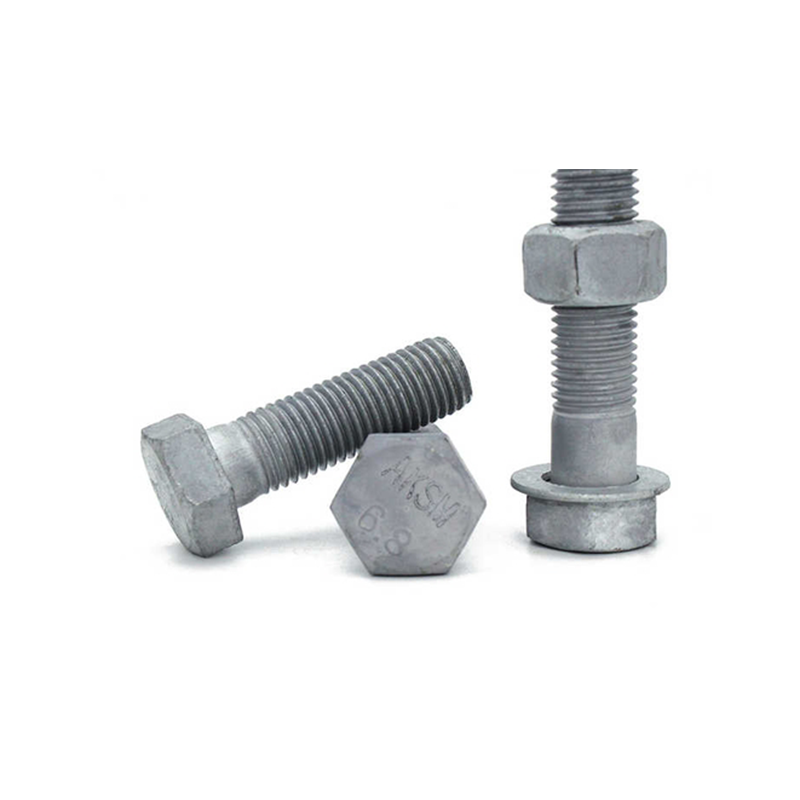
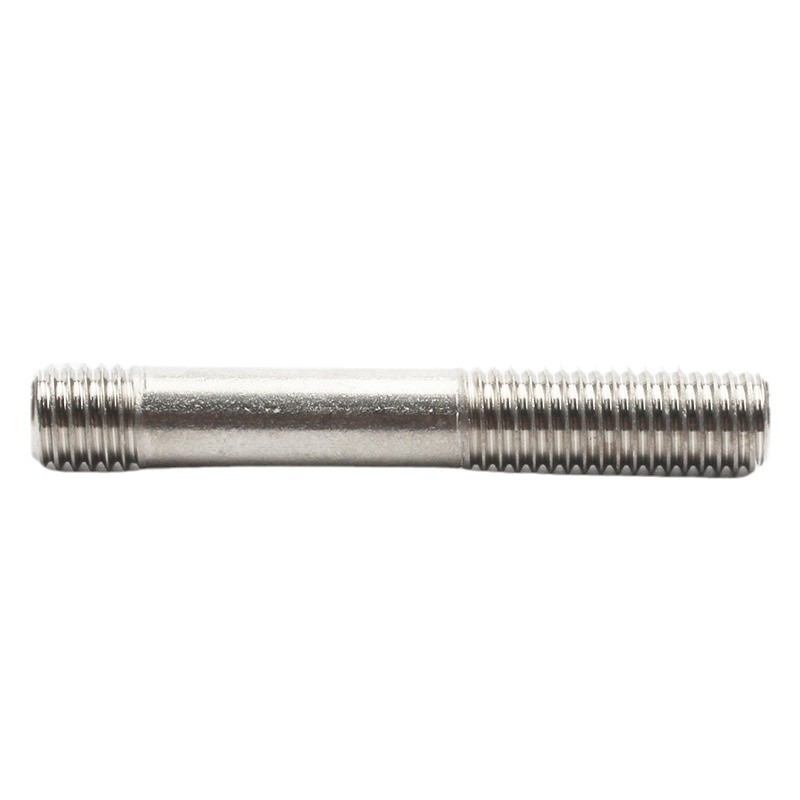
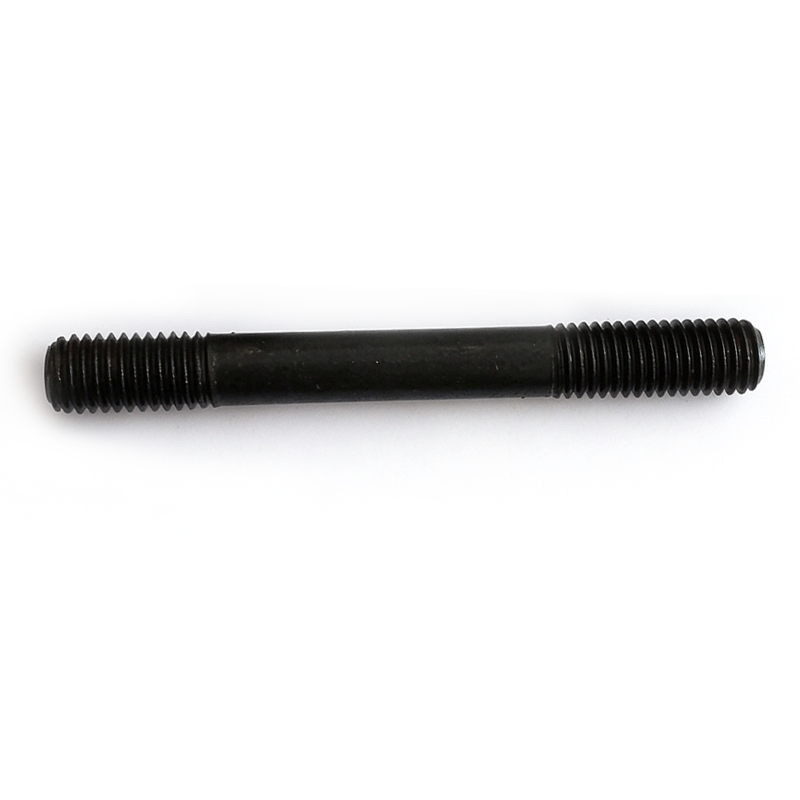
JB/ZQ 4757-2006 is the Chinese mechanical industry standard for Chemical Anchor Bolts, specifying the type, dimensions, technical requirements, test methods, and other relevant content. Chemical anchor bolts typically consist of a metal threaded rod, nut, washer, and a chemical capsule (or injection-type bonding adhesive). They form a high-strength anchoring connection with concrete substrates through a chemical bonding agent. This type of anchor bolt is suitable for post-installed anchoring in concrete structures, capable of withstanding static loads, dynamic loads, and certain fatigue loads. It is widely applied in building curtain walls, steel structures, equipment foundations, bridge reinforcement, tunnels, and underground engineering, making it a common fastening method in modern reinforcement, renovation, and embedded-part installation.
I. Product Features
- High anchoring strength and reliable load capacity: Through the bonding and keying action between the chemical adhesive and the concrete hole wall as well as the threaded rod, the anchoring strength is high and stress distribution is uniform. Single-point load capacity is far superior to that of ordinary expansion bolts.
- Suitable for a variety of base materials: Applicable to ordinary concrete and reinforced concrete, as well as lightweight concrete, solid bricks, and natural stone. However, it is not suitable for weak base materials such as hollow bricks.
- No expansion stress; small edge distance requirements: Compared with expansion-type anchor bolts, chemical anchor bolts generate no expansion stress, allowing placement closer to structural edges. Minimum edge distances and spacing are smaller, causing minimal damage to the concrete base.
- Flexible material selection: Metal threaded rods can be selected in carbon steel, alloy steel, or stainless steel (such as A2-70, A4-70) to meet different strength grades and corrosion resistance requirements. Common strength grades are 5.8 and 8.8; stainless steel rods are often used in humid or corrosive environments.
- Convenient construction and strong adaptability: Holes can be drilled, cleaned, injected with adhesive, and the rod inserted directly on hardened concrete, making it suitable for embedded-part omissions in new construction, renovation of existing buildings, and new anchoring of equipment foundations.
II. Product Advantages
- Excellent tensile and shear performance: After the chemical adhesive cures, it forms an integral bond with the threaded rod and hole wall, providing high tensile and shear load capacity with uniform load transfer and minimal stress concentration.
- Fatigue and vibration resistance: Chemical anchor bolts adapt well to dynamic loads and vibrational loads. After curing, they do not loosen, making them suitable for equipment foundations and structural connections subjected to vibration or alternating loads.
- Good corrosion and aging resistance: Depending on the service environment, hot-dip galvanized, stainless steel rods, or specialized anti-corrosion coatings can be selected. Combined with high-quality chemical adhesive, they can meet requirements in outdoor, humid, and acidic/alkaline environments.
- Minimal disturbance to base material; safe and reliable: With no expansion stress, base material cracking is effectively avoided. This makes chemical anchors suitable for small edge distances, small spacing, and structurally sensitive locations, improving anchoring safety.
- Quick installation; load-bearing immediately after curing: Drilling, hole cleaning, adhesive injection, and rod insertion are straightforward. Curing time is short, construction efficiency is high, effective anchoring is rapidly achieved, and project timelines are shortened.
III. Applications
- Building curtain walls and decoration engineering: Post-installed anchoring of stone curtain walls, metal curtain walls, and glass curtain wall subframes to concrete main structures.
- Steel structure engineering: Connections between steel columns, steel beams, supplementary embedded parts, and new steel structure nodes with concrete structures.
- Equipment foundations and pipeline supports: Fixing of mechanical equipment, power equipment, pipeline supports, cable trays, and similar items on concrete.
- Bridge and tunnel engineering: Anchoring and reinforcement of bridge railings, bearings, tunnel pipelines, fans, and auxiliary facilities.
- Renovation and reinforcement engineering: Reinforcement of concrete structures, rebar bonding, connections between new components and existing structures, and repair or replacement of failed existing anchors.
- Other occasions requiring post-installed anchoring on concrete substrates subjected to static loads, dynamic loads, or fatigue loads.