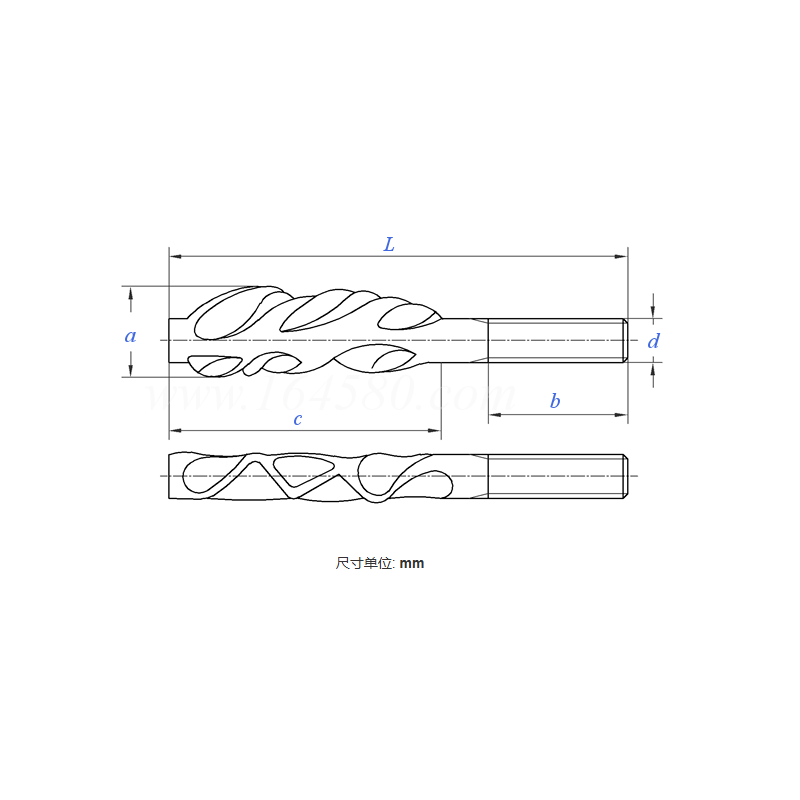
Product Specifications
| Model / Specification | M8 - 48 |
| Material | Carbon Steel |
|
Thread Size d |
M8 | M10 | M12 | M16 | M20 | M24 | M30 | M36 | M42 | M48 | |
| a | Nom. | 16 | 20 | 24 | 32 | 40 | 48 | 60 | 72 | 85 | 98 |
| Max. | 19 | 23 | 27 | 35 | 43 | 51 | 63 | 75 | 88 | 101 | |
| Min. | 13 | 17 | 21 | 29 | 37 | 45 | 57 | 69 | 82 | 95 | |
| c | Nom. | 45 | 55 | 70 | 90 | 100 | 135 | 150 | 180 | 260 | 260 |
| Max. | 50 | 60 | 75 | 95 | 105 | 140 | 155 | 185 | 265 | 265 | |
| Min. | 40 | 50 | 65 | 85 | 95 | 130 | 145 | 175 | 255 | 255 | |
| b | Min. = Nom. | 20 | 25 | 30 | 40 | 50 | 60 | 75 | 90 | 105 | 120 |
| Max. | 22.5 | 28 | 33.5 | 44 | 55 | 66 | 82 | 98 | 114 | 130 | |
E-Type Foundation Bolt — Product Introduction
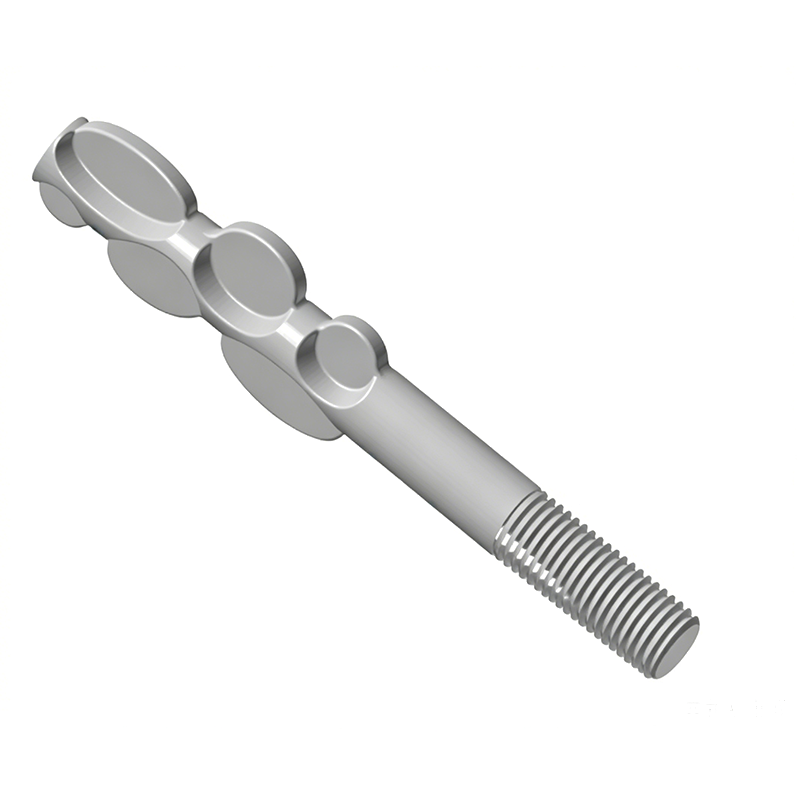
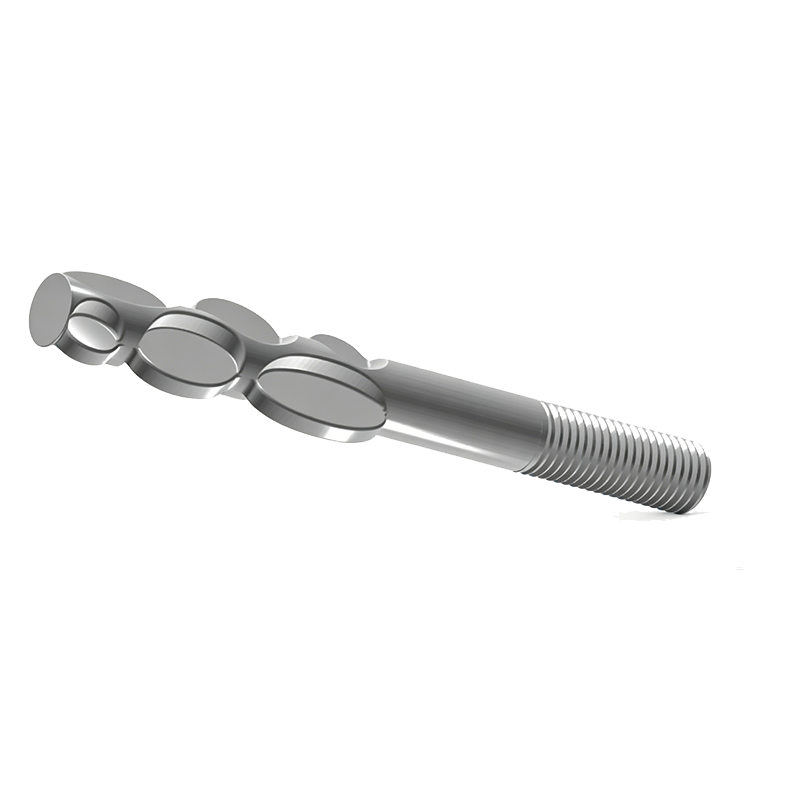
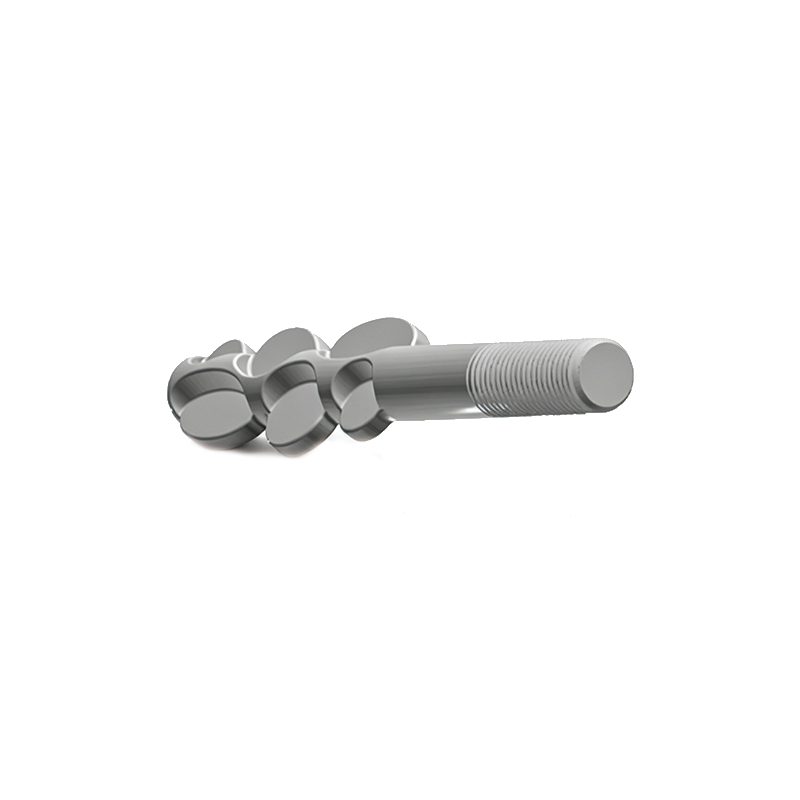
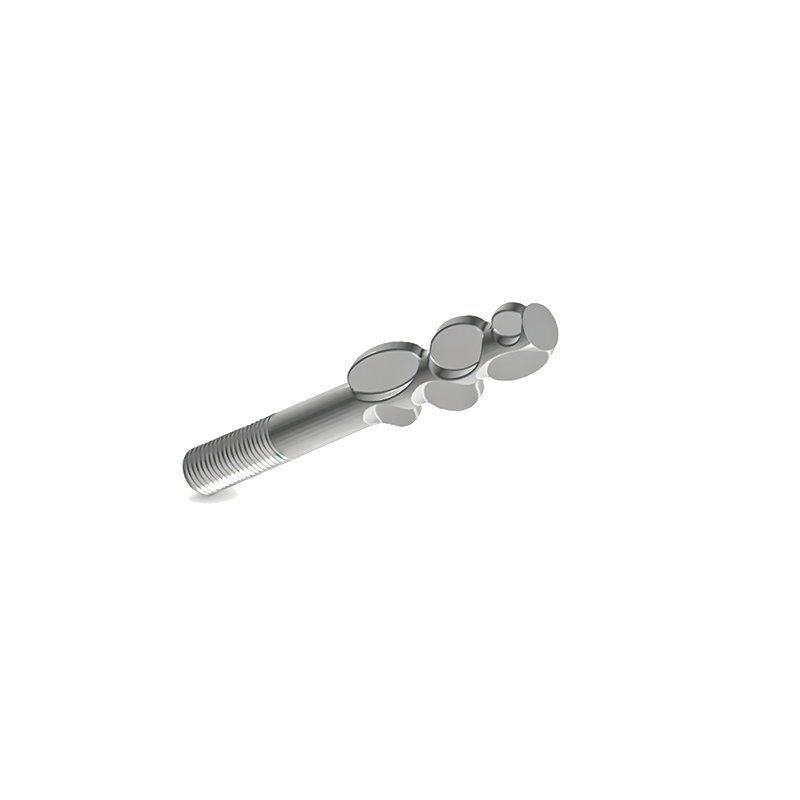
The E-Type Foundation Bolt (also known as the sleeve-type foundation bolt, or DIN 529 German-standard foundation bolt) is most characterized by its ability to achieve secondary adjustment through pre-embedded sleeves. It is manufactured in strict accordance with the German Industrial Standard DIN 529-1986, with specifications covering M8 to M48, and is widely used in power, machinery, chemical and other fields.
During installation, the sleeve is first embedded in the concrete foundation, and after the equipment is positioned, the bolt rod is inserted through the sleeve and tightened. This design allows fine adjustment of the bolt position during installation, solving the long-standing pain point of traditional Type A hook-type or Type B stiffened foundation bolts, which cannot be repositioned once embedded.
I. Product Features
Sleeve-type anchoring structure: An externally embedded sleeve is provided, with the bolt rod and sleeve designed independently, which not only ensures anchoring strength but also provides flexibility for secondary adjustment.
Compliance with German Standard DIN 529: Produced strictly in accordance with the DIN 529-1986 standard, with standardized specification parameters covering M8 to M48, ensuring reliable quality.
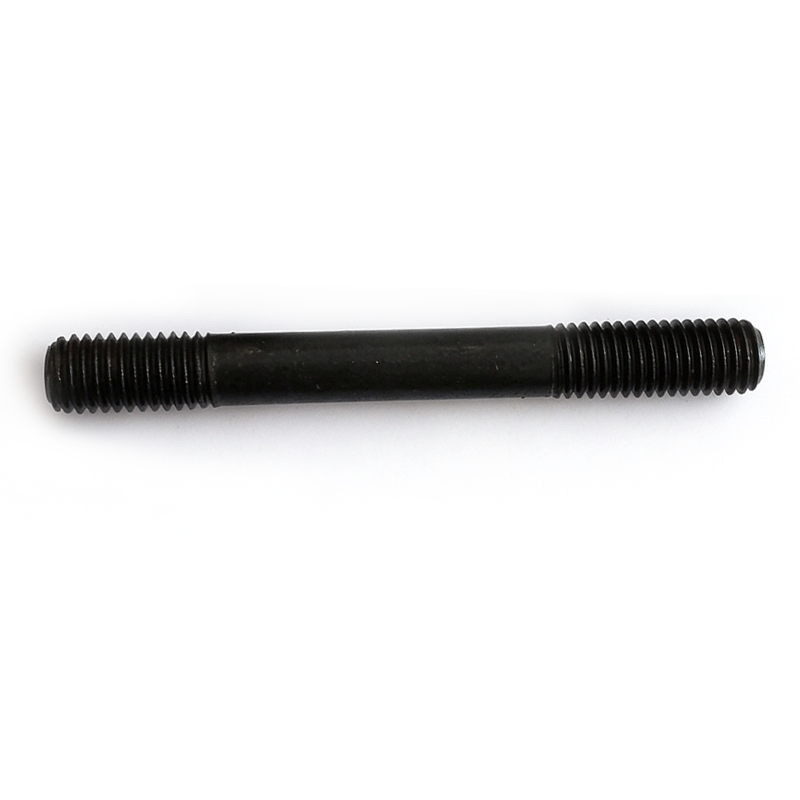
Diverse material options: Commonly used materials include carbon steel (Q235B, 45# steel) and stainless steel (304, 316L); surface treatments such as hot-dip galvanizing, Dacromet, and blackening can be applied as anti-corrosion processes to suit different environmental requirements.
Clear performance grades: The standard performance grade is 4.6 (for M39 and below), which meets the strength requirements of general industrial equipment installation; alternatively, high-strength grades such as 8.8 can be achieved by selecting alloy steel.
Wide specification coverage: Thread diameters cover M8 to M48, and the total length can be customized as needed, adapting to various equipment installation scenarios.
II. Product Advantages
High installation accuracy and flexible positioning: The design of pre-embedded sleeve plus secondary insertion of the bolt rod allows fine adjustment of the bolt position even after the equipment is positioned, ensuring installation accuracy. This is the core advantage that distinguishes Type E from Type A (straight-hook type).
Easy equipment replacement and maintenance: When equipment needs to be replaced or relocated, only the bolt rod needs to be removed without damaging the foundation sleeve, greatly reducing retrofit difficulty and cost.
Reliable anchoring performance: The gripping force between the sleeve and concrete is stable and reliable; after embedding, the bolt rod and sleeve cooperate to fasten, effectively withstanding the tensile and shear forces generated during equipment operation.
Standardized production with stable quality: Manufactured following the international DIN 529 standard, featuring high dimensional accuracy and good interchangeability, facilitating procurement and stocking.
Flexible material and anti-corrosion solutions: Carbon steel with hot-dip galvanizing (economical for outdoor environments) or stainless steel (maintenance-free in corrosive environments) can be selected based on the service environment, offering strong adaptability.
Controllable overall cost: Although the initial installation process is more complex than that of Type A, its adjustable and replaceable characteristics result in a lower overall cost during equipment modification and long-term use.
III. Scope of Application
The E-Type Foundation Bolt is specifically intended for scenarios requiring high installation accuracy or where future equipment replacement is possible. Its core applications include:
High-precision equipment foundations: Installation of equipment requiring precise positioning, such as precision machine tools, large compressors, steam turbines, and generators.
Power and energy engineering: Equipment foundations in main power plant buildings, equipment supports in substations, and foundations for large transformers.
Chemical and metallurgical industries: Installation of chemical and metallurgical equipment such as reactor tower foundations, large pumping equipment, and fan foundations.
Workshops with frequent modifications: Workshops or production lines that require periodic equipment updates; the Type E design facilitates equipment replacement without damaging the foundation.
Export and international engineering projects: Produced according to the German Standard DIN 529, suitable for projects designed to German and EU standards, and can replace overseas procurement.