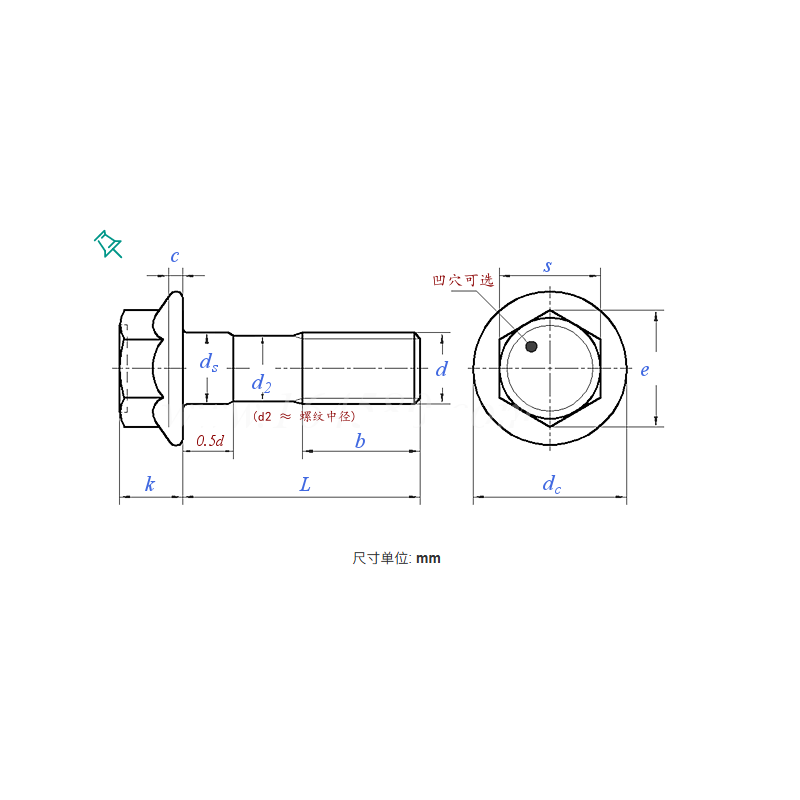
Product Specifications
| Model / Specification | M5–M16 |
| Material | Carbon Steel |
| Thread Spec. d |
M5 | M6 | M8 | M10 | M12 | (M14) | M16 | |
| P | Pitch | 0.8 | 1 | 1.25 | 1.5 | 1.75 | 2 | 2 |
| b | L≤125 | 16 | 18 | 22 | 26 | 30 | 34 | 38 |
| 125<L≤200 | / | / | / | / | / | 40 | 44 | |
| dc | Max. | 11.4 | 13.6 | 17 | 20.8 | 24.7 | 28.6 | 32.8 |
| ds | Max. | 5 | 6 | 8 | 10 | 12 | 14 | 16 |
| Min. | 4.82 | 5.82 | 7.78 | 9.78 | 11.73 | 13.73 | 15.73 | |
| e | Min. | 7.59 | 8.71 | 10.95 | 14.26 | 16.5 | 19.86 | 23.15 |
| k | Max. | 5.6 | 6.9 | 8.5 | 9.7 | 12.1 | 12.9 | 15.2 |
| s | Max. | 7 | 8 | 10 | 13 | 15 | 18 | 21 |
| Min. | 6.78 | 7.78 | 9.78 | 12.73 | 14.73 | 17.73 | 20.67 | |
| c | Min. | 1 | 1.1 | 1.2 | 1.5 | 1.8 | 2.1 | 2.4 |
HEXAGON FLANGE FINE SHANK BOLT — PRODUCT INTRODUCTION
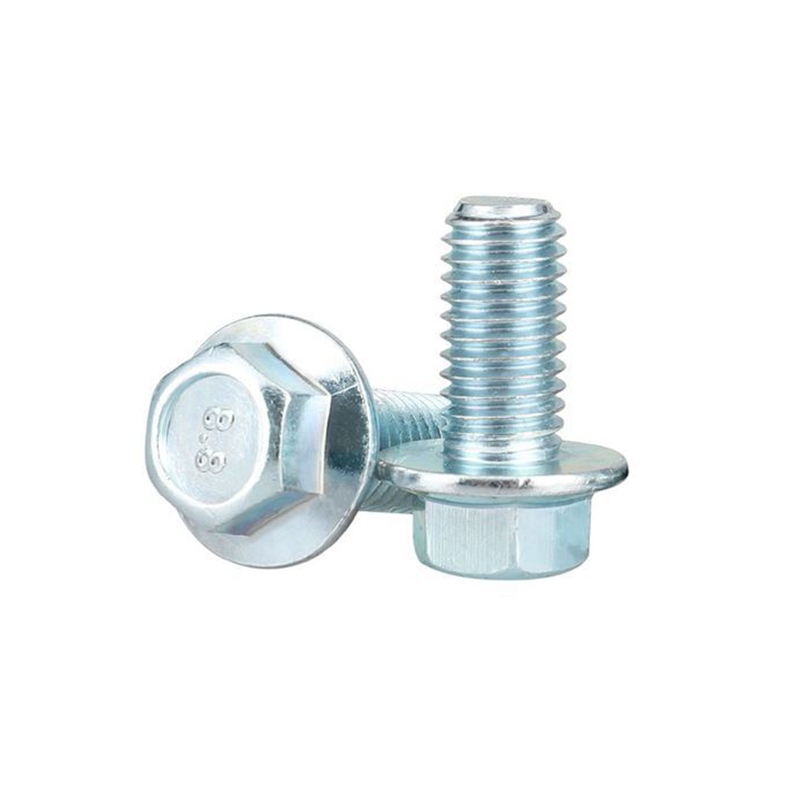
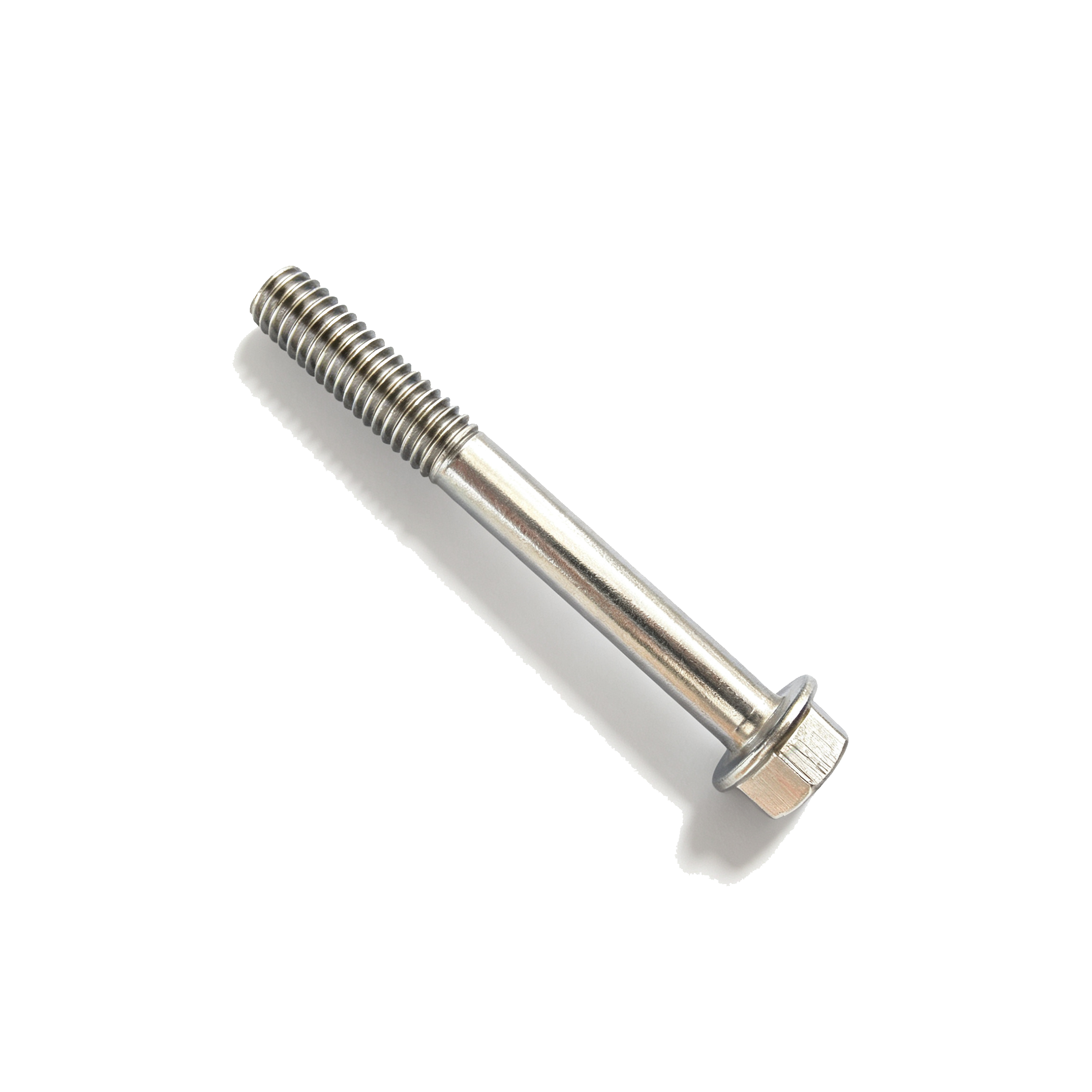
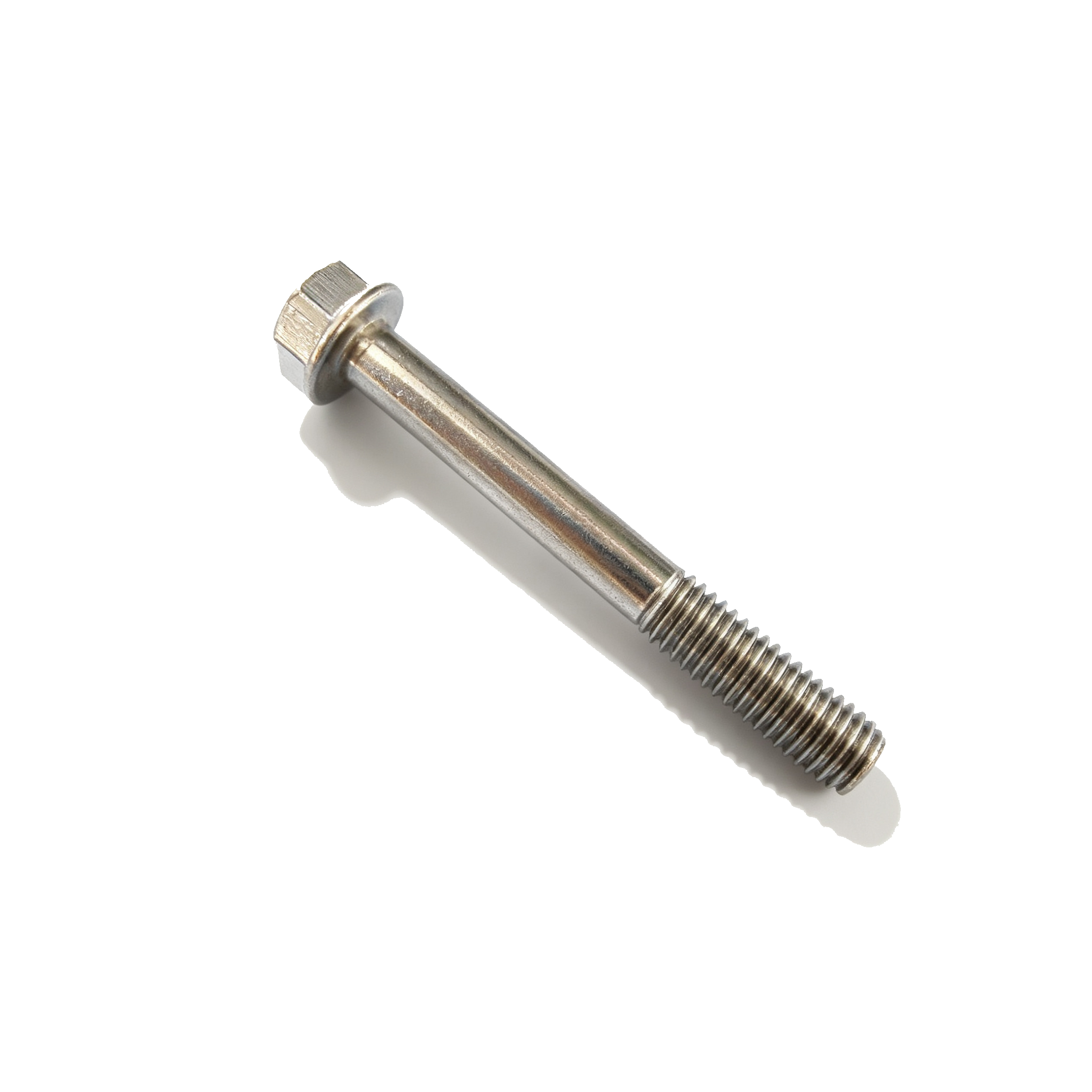
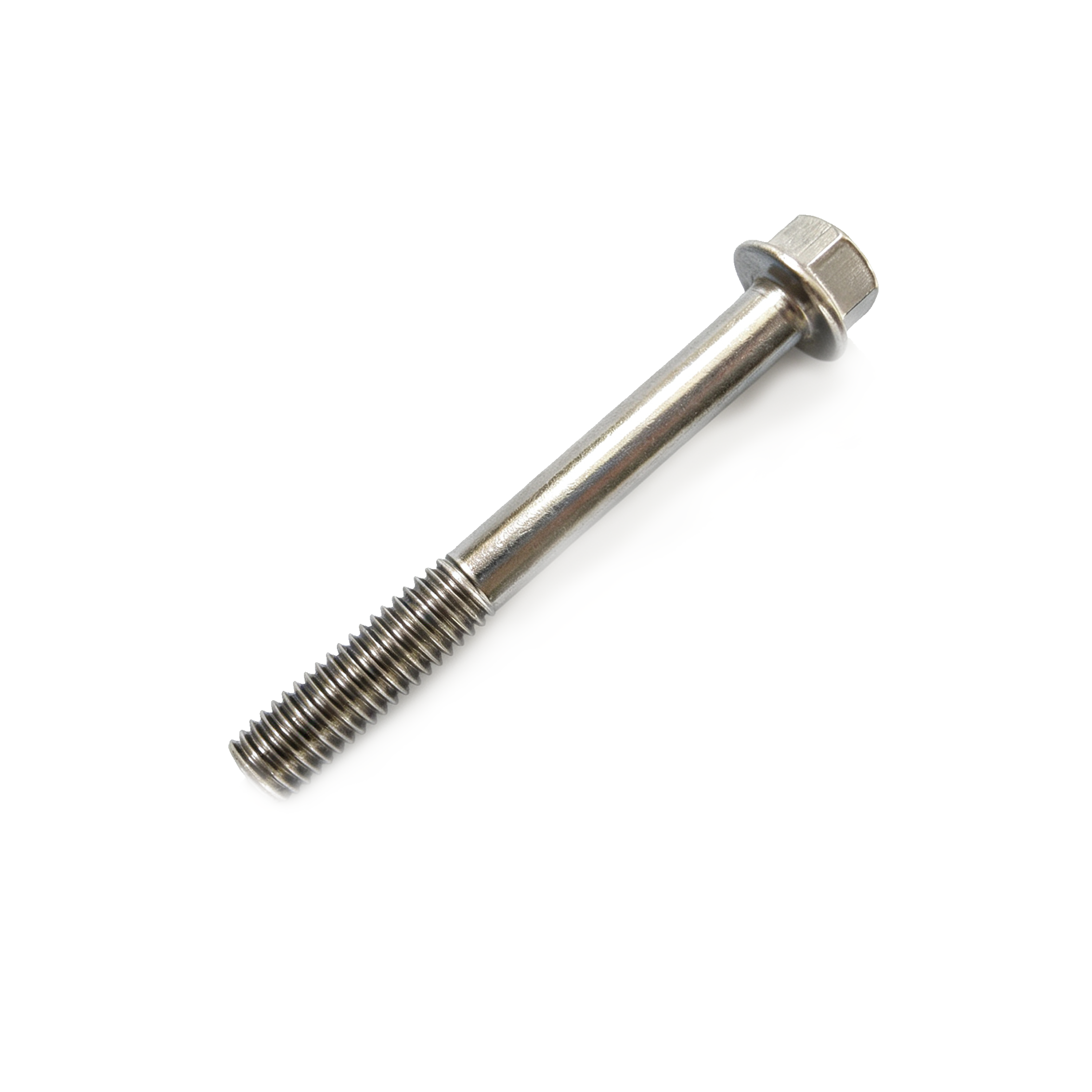
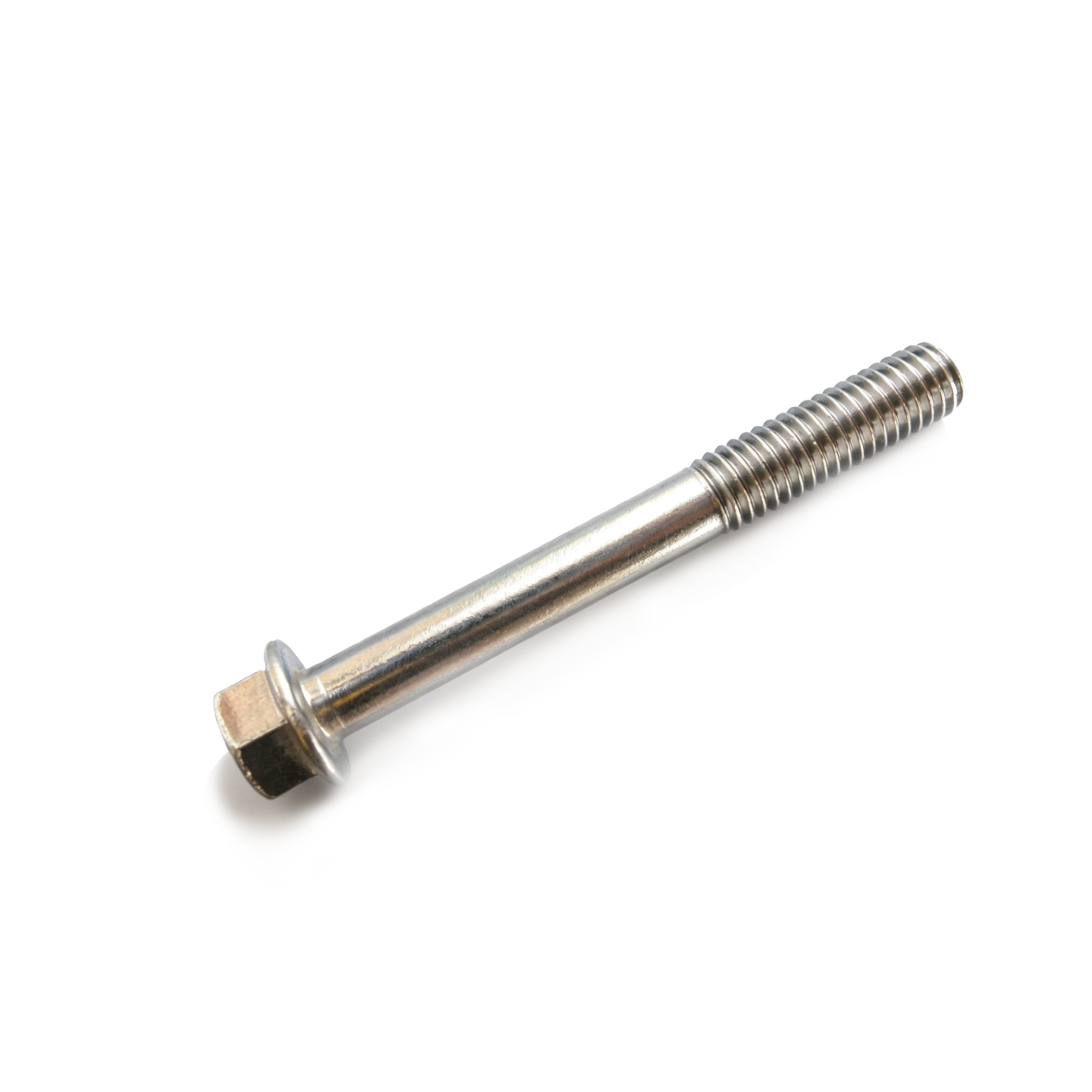
A reduced shank bolt, also known as a fine shank bolt or shank reduction bolt, is a high-performance fastener featuring a smooth shank diameter significantly smaller than the major thread diameter. Its core design lies in reducing the unthreaded smooth shank section to approximately the pitch diameter size. Common head styles include hexagon heads and hexagon flanges (with built-in anti-loosening serrations). Through refined shank design, these bolts achieve weight reduction, enhanced elasticity, and avoidance of assembly interference — with automotive high-strength flange fine shank bolts conforming to GB/T 16674.2 and QC/T 340 (such as the Q 182 series) being the most typical examples.
I. PRODUCT FEATURES
UNIQUE FINE SHANK STRUCTURE: The smooth shank diameter is significantly smaller than the major thread diameter, presenting a “dumbbell-shaped” or “necked” profile — the most visually distinctive feature that sets it apart from ordinary bolts.
INTEGRATED FLANGE HEAD: The head comes with a built-in circular flange (washer face), increasing the bearing area and eliminating the need for additional flat washers. The bottom of the flange often features anti-loosening serrations that bite into the workpiece surface, providing excellent locking and anti-loosening performance.
HIGH-STRENGTH MATERIAL AND PROCESSING: The body is primarily made from premium alloy steels such as ML30CrMnSiA and SCM435, formed by cold heading and quenching and tempering heat treatment, with mechanical properties typically reaching 10.9 grade or higher, meeting the stringent high-strength requirements of the automotive industry.
TAILORED SURFACE TREATMENTS: To withstand the harsh environments of automotive chassis and engine compartments, environmentally friendly Dacromet, zinc-nickel alloy, and other surface coatings with zero risk of hydrogen embrittlement and high corrosion resistance are widely adopted.
II. PRODUCT ADVANTAGES
IMPROVED FATIGUE LIFE: The fine shank design endows the bolt with superior elastic deformation capability, effectively absorbing and distributing stress from vibration and alternating loads. Compared to constant-diameter bolts, its resistance to fatigue fracture is significantly enhanced, ensuring more reliable connections.
WEIGHT REDUCTION AND CLEARANCE: Reducing shank material lowers the bolt’s own weight, aligning with the automotive lightweight trend. Meanwhile, the thinner shank provides effective clearance for other moving parts or internal structures within the mating hole, avoiding interference.
INTEGRATED ANTI-LOOSENING AND PRESSURE UNIFORMITY: The flange structure integrates anti-loosening and pressure-uniformity functions in one component. It not only prevents bolt loosening due to vibration but also reduces surface compressive stress on the joined components, protecting soft materials such as aluminum alloys and plastics from crushing.
EXCELLENT ASSEMBLY WORKMANSHIP: The fine shank end design facilitates easier insertion into threaded holes, effectively compensating for minor misalignments during assembly and improving the first-pass success rate of automated or manual assembly.
III. APPLICATION SCOPE
AUTOMOTIVE POWERTRAIN: Fastening of engine blocks, cylinder heads, oil pans, and transmission housings.
AUTOMOTIVE CHASSIS AND SUSPENSION SYSTEMS: High-load, high-vibration connection points such as subframes, control arms, brake calipers, and wheel hub bearings.
MOTORCYCLES AND CONSTRUCTION MACHINERY: Engine and body critical connections requiring high strength with lightweight considerations.
PRECISION MACHINERY AND POWER TOOLS: Moving mechanisms or sealed connections with high requirements for vibration reduction and uniform stress distribution.