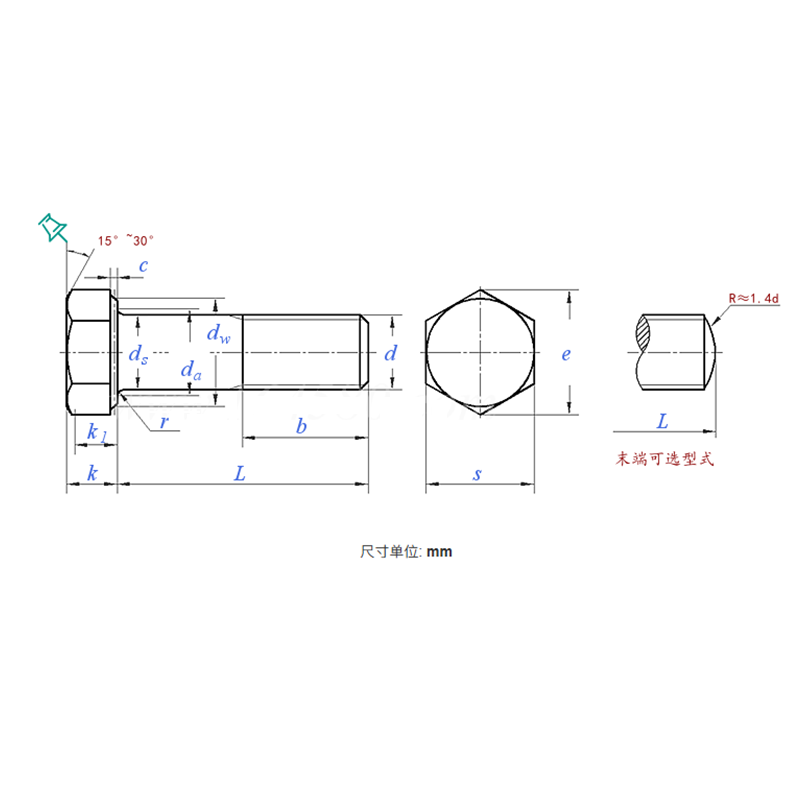
Product Specifications
| Model / Specification | M12-30 |
| Material | Alloy Steel |
| Thread Size d |
M12 | M16 | M20 | (M22) | M24 | (M27) | M30 | |
| P | Pitch | 1.75 | 2 | 2.5 | 2.5 | 3 | 3 | 3.5 |
| c | Max. | 0.8 | 0.8 | 0.8 | 0.8 | 0.8 | 0.8 | 0.8 |
| Min. | 0.4 | 0.4 | 0.4 | 0.4 | 0.4 | 0.4 | 0.4 | |
| da | Max. | 15.23 | 19.23 | 24.32 | 26.32 | 28.32 | 32.84 | 35.84 |
| ds | Max. | 12.43 | 16.43 | 20.52 | 22.52 | 24.52 | 27.84 | 30.84 |
| Min. | 11.57 | 15.57 | 19.48 | 21.48 | 23.48 | 26.16 | 29.16 | |
| dw | Min. | 19.2 | 24.9 | 31.4 | 33.3 | 38.0 | 42.8 | 46.5 |
| e | Min. | 22.78 | 29.56 | 37.29 | 39.55 | 45.2 | 50.85 | 55.37 |
| k | Nominal | 7.5 | 10 | 12.5 | 14 | 15 | 17 | 18.7 |
| Max. | 7.95 | 10.75 | 13.4 | 14.9 | 15.9 | 17.9 | 19.75 | |
| Min. | 7.05 | 9.25 | 11.6 | 13.1 | 14.1 | 16.1 | 17.65 | |
| k1 | Min. | 4.9 | 6.5 | 8.1 | 9.2 | 9.9 | 11.3 | 12.4 |
| r | Min. | 1.0 | 1.0 | 1.5 | 1.5 | 1.5 | 2.0 | 2.0 |
| s | Max. | 21 | 27 | 34 | 36 | 41 | 46 | 50 |
| Min. | 20.16 | 26.16 | 33 | 35 | 40 | 45 | 49 | |
| Mass per 1000 Steel Pieces ≈kg | - | - | - | - | - | - | - | |
| Thread Length (b) | - | - | - | - | - | - | - | |
Hot-Forged Bolt — Product Introduction
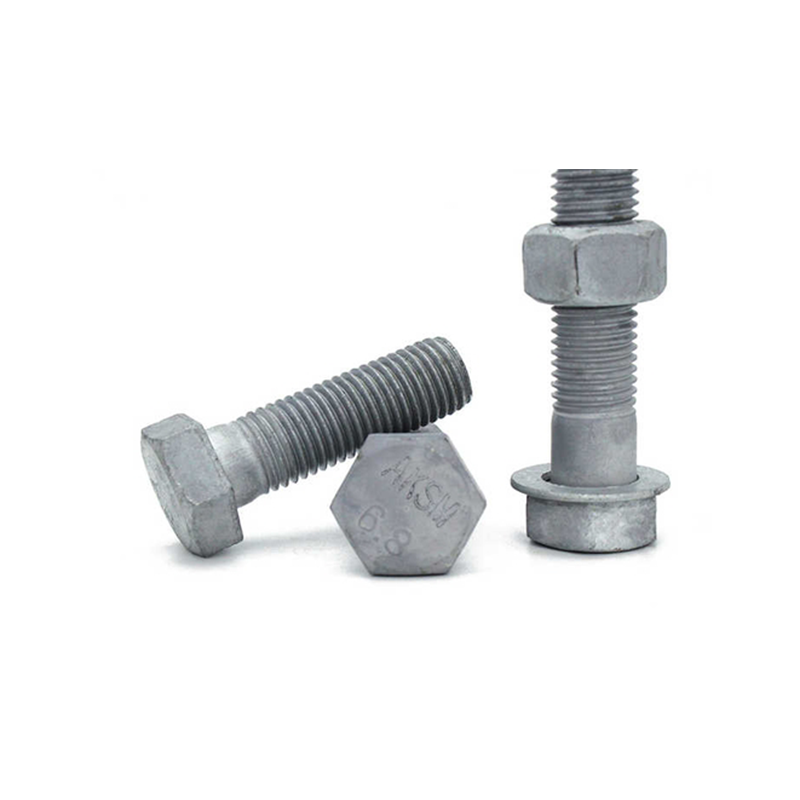
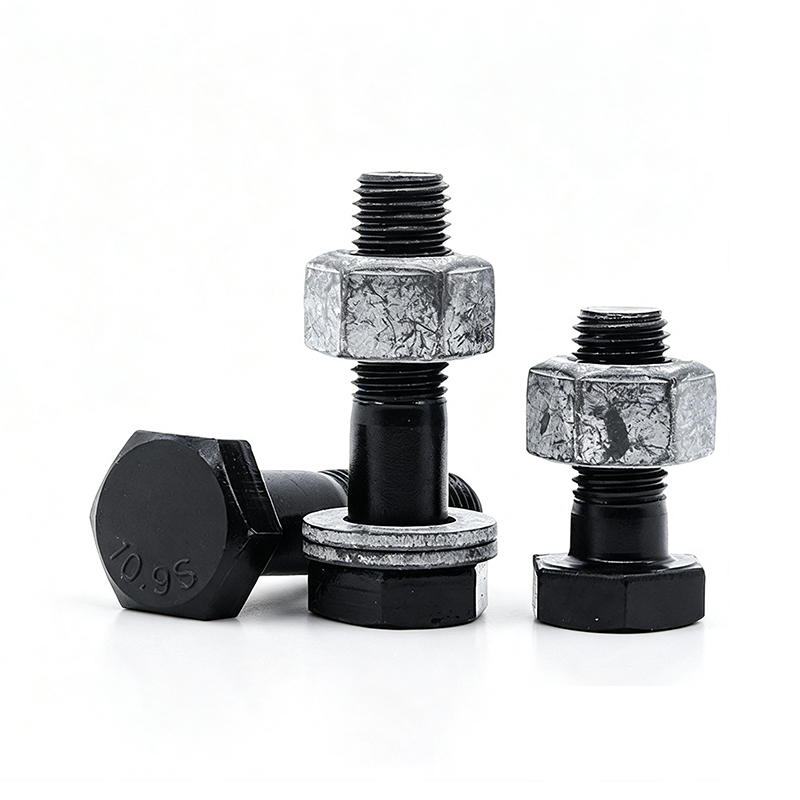
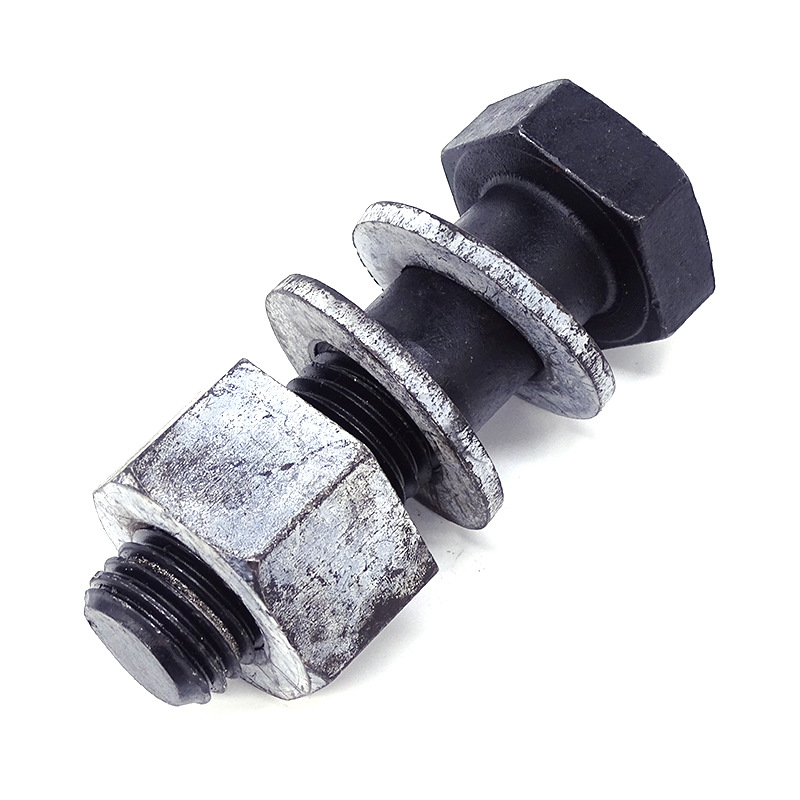
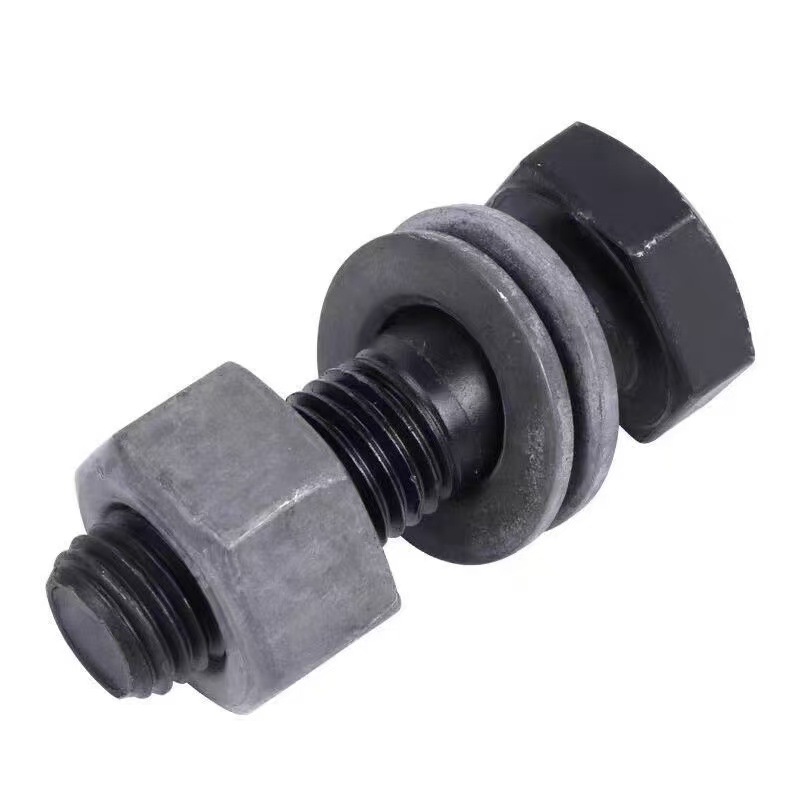
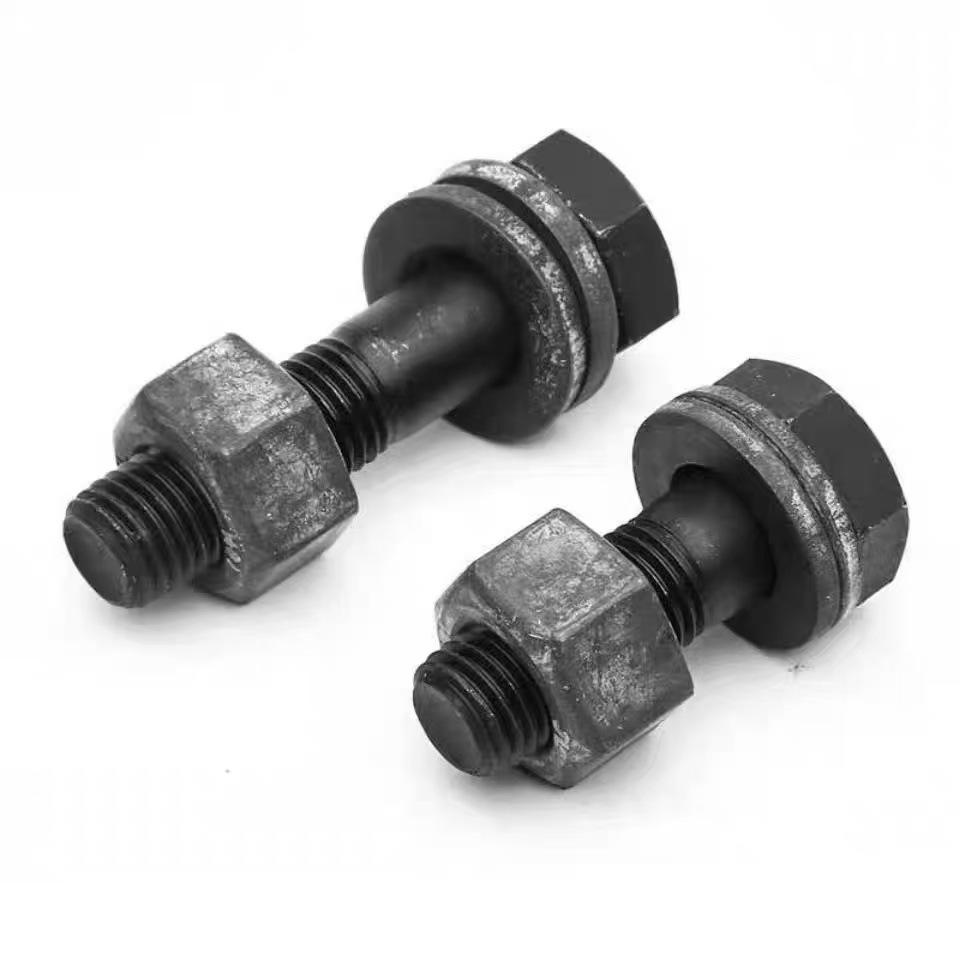
The hot-forged bolt, formally known as a hot-forged high-strength bolt, is a type of high-strength fastener manufactured by heating steel to above its recrystallization temperature and then using a press to forge the metal, causing the metal fiber flow lines to continuously distribute along the bolt’s profile. Its characteristic feature is the ability to produce bolts of large specifications, non-standard special shapes, and extremely high strength requirements. It is widely used in core load-bearing locations such as steel structures, bridges, and heavy machinery.
I. Product Features
Complete Metal Fiber Flow Lines: Forging causes the internal metal fibers to continuously distribute along the bolt head and shank, with no fiber cutting, resulting in excellent fatigue resistance.
High Strength and Toughness: It can relatively easily achieve 8.8, 10.9, and even 12.9 strength grades, and after heat treatment, can obtain an excellent combination of strength and toughness.
Flexible Specifications (Strong Non-Standard Capability): Bolts can be manufactured with extra-large diameters (above M36), extra-long lengths (several meters), special shaped heads, and special shank configurations.
Distinctive Appearance Characteristics: The head shows obvious traces of oxide scale shedding, with non-turned rounded corner transitions, and the surface often carries forging marks.
Dense Internal Structure: Hot forging can weld together fine voids and pores inside the raw material, improving density.
II. Product Advantages
Long Fatigue Life: Under alternating loads, bolts with complete fiber flow lines have significantly better resistance to fatigue fracture compared to machined bolts.
Suitable for Extreme Dimensions: Cold-heading processes are limited by die loads, whereas hot-forging can produce bolts of M64, M72, and even larger specifications, making it the preferred process for large-specification fasteners.
Relatively Reasonable Cost: For large specifications or small-batch non-standard products, hot-forging die costs are lower than cold-heading, with higher material utilization rates.
Wide Material Adaptability: In addition to conventional carbon steel and alloy steel, it can also process some high-temperature alloys, stainless steel, and other materials that are difficult to deform.
High Reliability: The dense metal fiber structure and high density ensure greater safety under long-term tension and shear working conditions.
III. Scope of Application
Heavy Steel Structures: Core joint connections in high-rise buildings, large-span venues, bridges, and iron towers.
Energy and Chemical Engineering: Anchor bolts for wind power towers, nuclear power equipment, and main bolts for pressure vessels.
Large Machinery and Shipbuilding: Fasteners for mining machinery, excavators, ship engine bases, and port machinery.
Transportation Infrastructure: Rail sleeper bolts, tunnel segment connections, and bridge bearing anchor bolts.
Special Non-Standard Applications: Custom hot-forged fasteners such as foundation embedment anchor bolts, T-head bolts, and bolts with perforated pins.