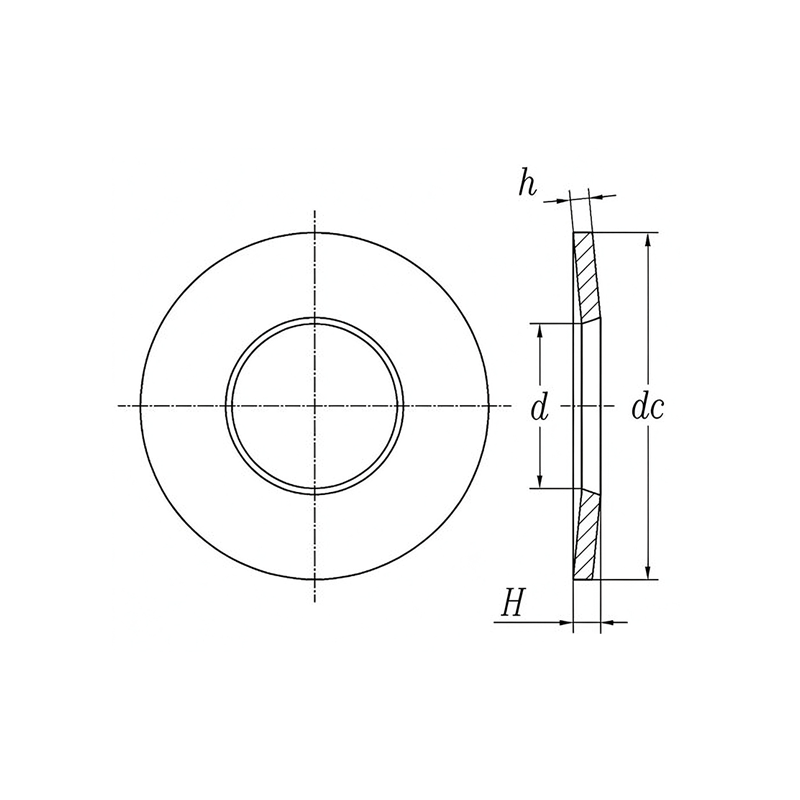
Product Specifications
| Model / Specification | Φ2 - Φ30 |
| Material | Carbon Steel |
| Spec. | Φ2 | Φ2.5 | Φ3 | Φ3.5 | Φ4 | Φ5 | Φ6 | Φ7 | Φ8 | Φ10 | |
| d | Max. | 2.45 | 2.95 | 3.5 | 4 | 4.6 | 5.6 | 6.76 | 7.76 | 8.76 | 10.93 |
| Min. = Nom. | 2.2 | 2.7 | 3.2 | 3.7 | 4.3 | 5.3 | 6.4 | 7.4 | 8.4 | 10.5 | |
| dc | Max. = Nom. | 5 | 6 | 7 | 8 | 9 | 11 | 1.4 | 17 | 18 | 23 |
| Min. | 4.7 | 5.7 | 6.64 | 7.64 | 8.64 | 10.57 | 13.57 | 16.57 | 17.57 | 22.48 | |
| h | Max. | 0.45 | 0.55 | 0.7 | 0.9 | 1.1 | 1.4 | 1.7 | 1.95 | 2.2 | 2.7 |
| Min. | 0.35 | 0.45 | 0.5 | 0.7 | 0.9 | 1 | 1.3 | 1.55 | 1.8 | 2.3 | |
| H | Max. | 0.6 | 0.72 | 0.85 | 1.06 | 1.3 | 1.55 | 2 | 2.3 | 2.6 | 3.2 |
| Min. | 0.5 | 0.61 | 0.72 | 0.92 | 1.12 | 1.35 | 1.7 | 2 | 2.24 | 2.8 | |
| Wt./1,000 pcs (steel) | 0.05 | 0.09 | 0.14 | 0.25 | 0.38 | 0.69 | 1.43 | 2.53 | 3.13 | 6.45 | |
| Spec. | Φ12 | Φ14 | Φ16 | Φ18 | Φ20 | Φ22 | Φ24 | Φ27 | Φ30 | |
| d | Max. | 13.43 | 15.43 | 17.43 | 19.52 | 21.52 | 23.52 | 25.52 | 28.52 | 31.62 |
| Min. = Nom. | 13 | 15 | 17 | 19 | 21 | 23 | 25 | 28 | 31 | |
| dc | Max. = Nom. | 29 | 35 | 39 | 42 | 45 | 49 | 56 | 60 | 70 |
| Min. | 28.48 | 34.38 | 38.38 | 41.38 | 44.38 | 48.38 | 55.26 | 59.26 | 69.26 | |
| h | Max. | 3.3 | 3.8 | 4.3 | 5.1 | 5.6 | 6.1 | 6.6 | 7.5 | 8 |
| Min. | 2.7 | 3.2 | 3.7 | 3.9 | 4.4 | 4.9 | 5.4 | 5.5 | 6 | |
| H | Max. | 3.95 | 4.65 | 5.25 | 5.8 | 6.4 | 7.05 | 7.75 | 8.35 | 9.2 |
| Min. | 3.43 | 4.04 | 4.58 | 5.08 | 5.6 | 6.15 | 6.77 | 7.3 | 8 | |
| Wt./1,000 pcs (steel) | 12.4 | 21.6 | 30.4 | 38.9 | 48.8 | 63.5 | 92.9 | 113 | 170 | |
Conical Spring Washer — Product Introduction
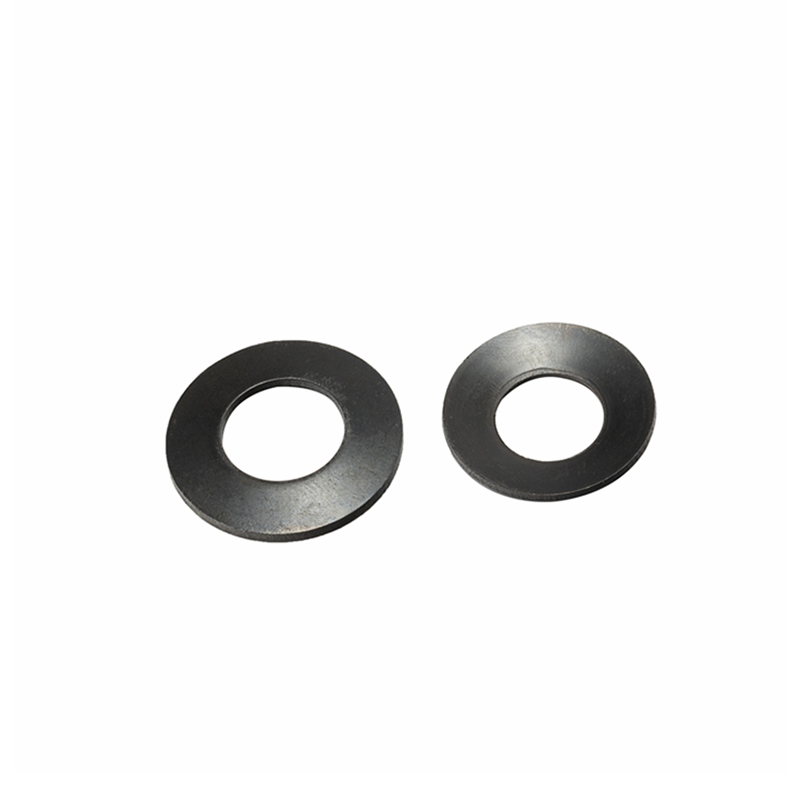
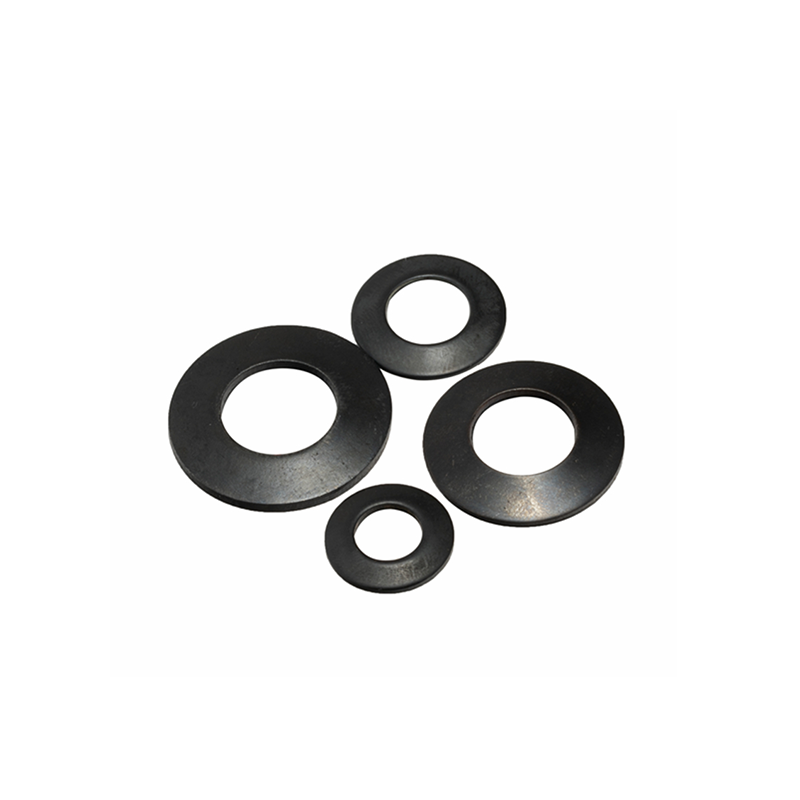
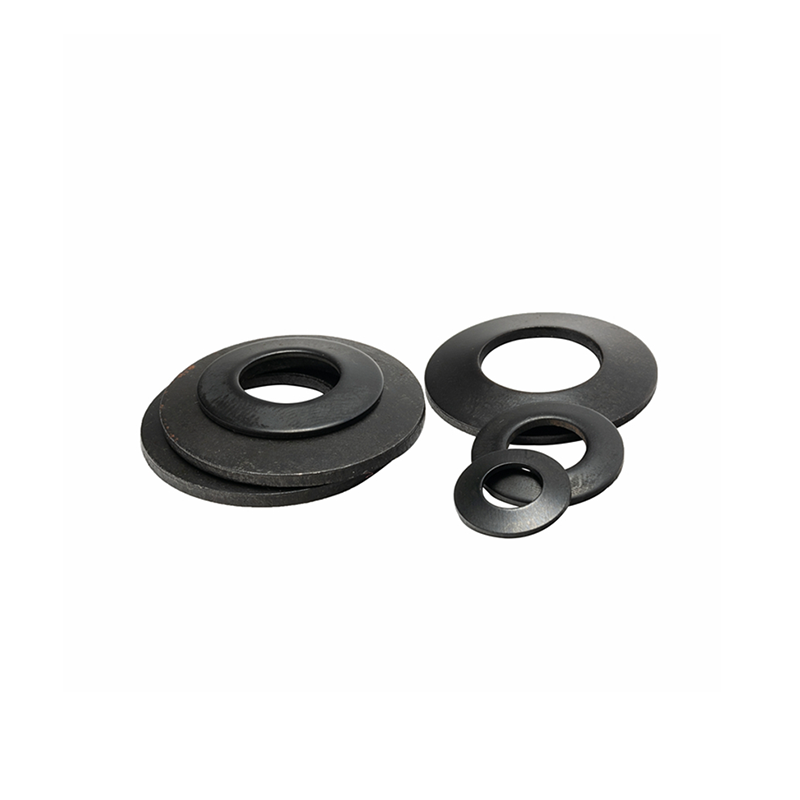
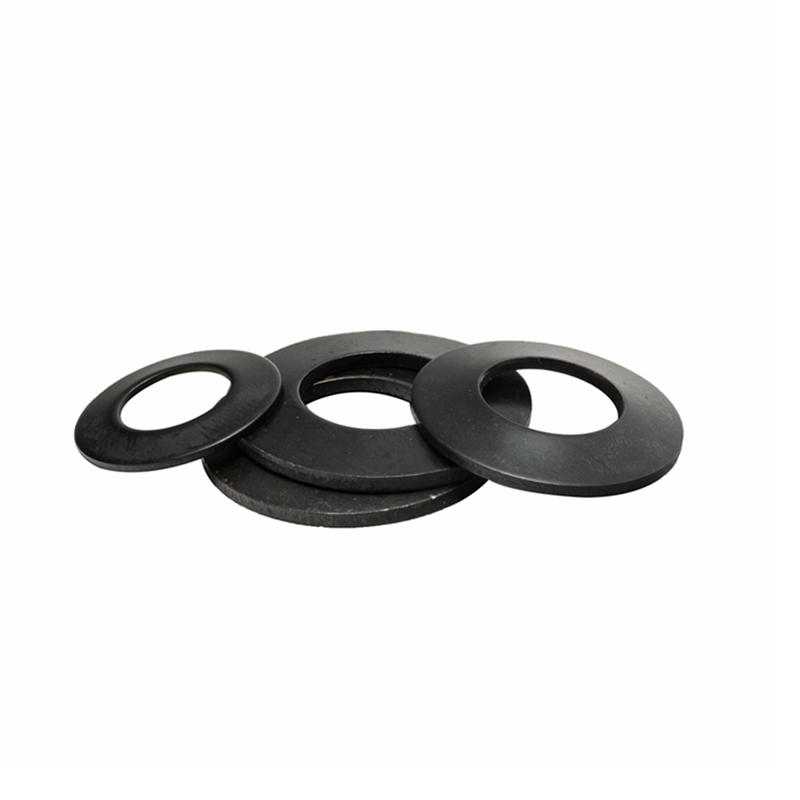
The conical spring washer is an annular elastic fastener made of spring steel, with a conical disc shape. It is an important part of the fastener standard system. Its core function is to provide a continuous axial load through elastic deformation, preventing bolted connections from loosening under vibration, thermal expansion or wear, while also compensating for preload loss caused by seal compression or part creep. In China, it mainly follows GB/T 956.3-2017 and is widely compatible with German standard DIN 6796 and automotive industry standard QC/T 601, etc.
1. Product Features
• Conical disc structure: The washer is conical and generates a continuous load through elastic deformation, capable of withstanding high loads in a small space.
• Material and hardness: Commonly made of spring steel (such as 65Mn, 50CrV, 60Si2Mn, etc.), with hardness up to 420–490 HV or 43–50 HRC.
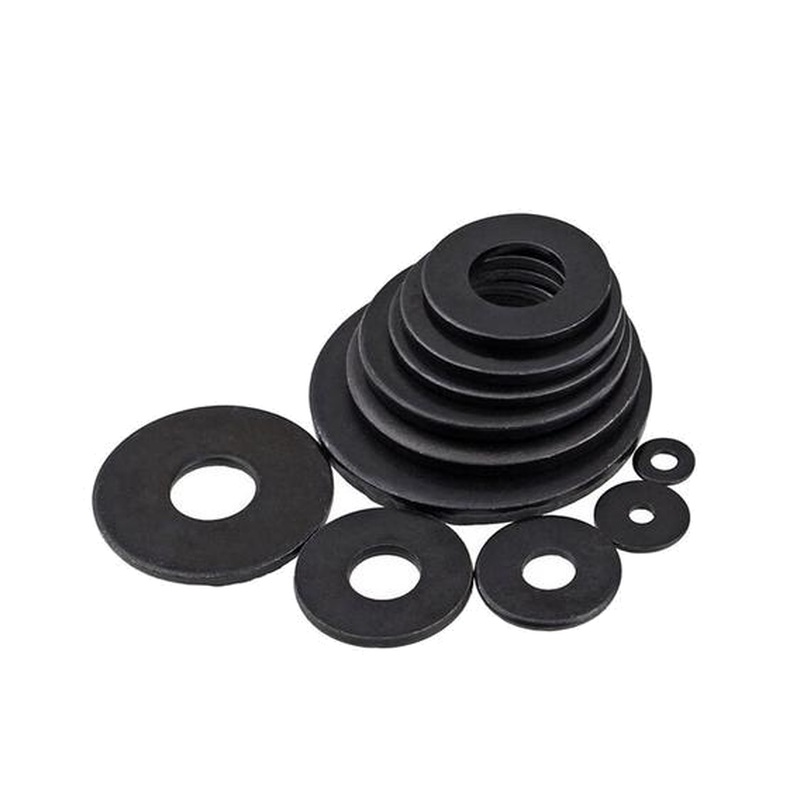
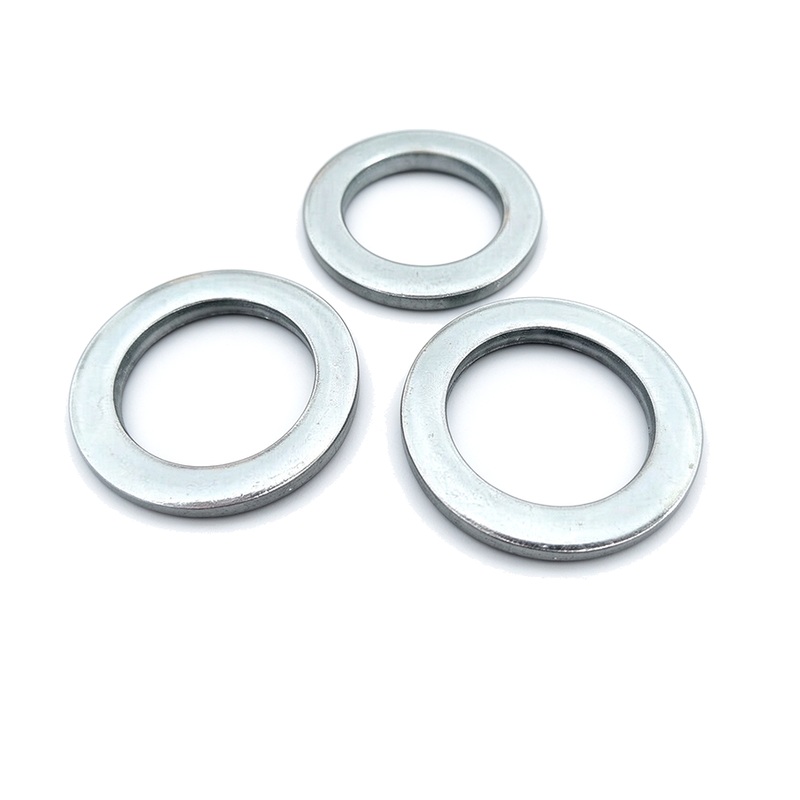
• Various surface treatments: Phosphating, Dacromet, zinc plating, blackening, etc. are available to meet different anti-corrosion requirements.
• Specification range: Suitable for 2 mm–30 mm specifications, mainly used with grade 8.8 and 10.9 medium- and high-strength bolts.
• Complete standard system: Domestic standards include GB/T 956.3-2017 (dimensions), GB/T 94.4-2017 (technical conditions), etc.
2. Product Advantages
• Excellent anti-loosening and anti-vibration effect: Compared with ordinary spring washers, conical spring washers provide better anti-loosening and anti-vibration performance, effectively resisting vibration and impact loads.
• Uniform load bearing and adjustable stiffness: They have advantages in load uniformity and stiffness variation. Different spring characteristics can be obtained by changing the disc combination.
• Compensation for preload loss: They can compensate for preload relaxation caused by part wear, creep, thermal expansion, contraction and seal compression.
• Long service life and buffering/damping: They offer high axial load capacity, long fatigue life and inherent damping, with high deformation energy per unit volume.
• Low manufacturing cost and easy installation: Compared with disc springs, the machining process is simpler and no turning is required to meet requirements, and installation is convenient.
3. Scope of Application
• Automotive and aviation: Static load conditions in automotive, aviation and other fields, as well as anti-loosening fastening connection equipment for high-speed rail trains.
• Power and construction: Power equipment, building steel structures, machine tools and other connection points requiring high-load anti-loosening.
• Heavy machinery: Bolted connections in construction machinery, mining equipment and other applications subjected to high loads and vibration.
• General industry: Electronics, medical devices, defense systems and other scenarios requiring anti-loosening and preload maintenance.