Product Specifications
| Model / Specification | M3.2–M31 |
| Material | Carbon Steel |
| Nom. Dia. d |
3.2 | 4.3 | 5.3 | 6.4 | 8.4 | 10.5 | 13 | 15 | 17 | 19 | 21 | 23 | 25 | 28 | 31 |
| dc | 9 | 12 | 15 | 17 | 21 | 25 | 30 | 36 | 40 | 44 | 44 | 50 | 50 | 60 | 68 |
| h | 1 | 1.6 | 2 | 3 | 4 | 4 | 6 | 6 | 6 | 8 | 8 | 8 | 10 | 10 | 10 |
| Wt/1000 pcs (Steel) ≈ kg | 0.436 | 1.24 | 2.43 | 4.59 | 9.15 | 12.7 | 27.1 | 39.6 | 48.5 | 77.4 | 73.4 | 97.1 | 116 | 174 | 226 |
| Bolt Size | 3 | 4 | 5 | 6 | 8 | 10 | 12 | 14 | 16 | 18 | 20 | 22 | 24 | 27 | 30 |
HEAVY DUTY WASHER — PRODUCT INTRODUCTION
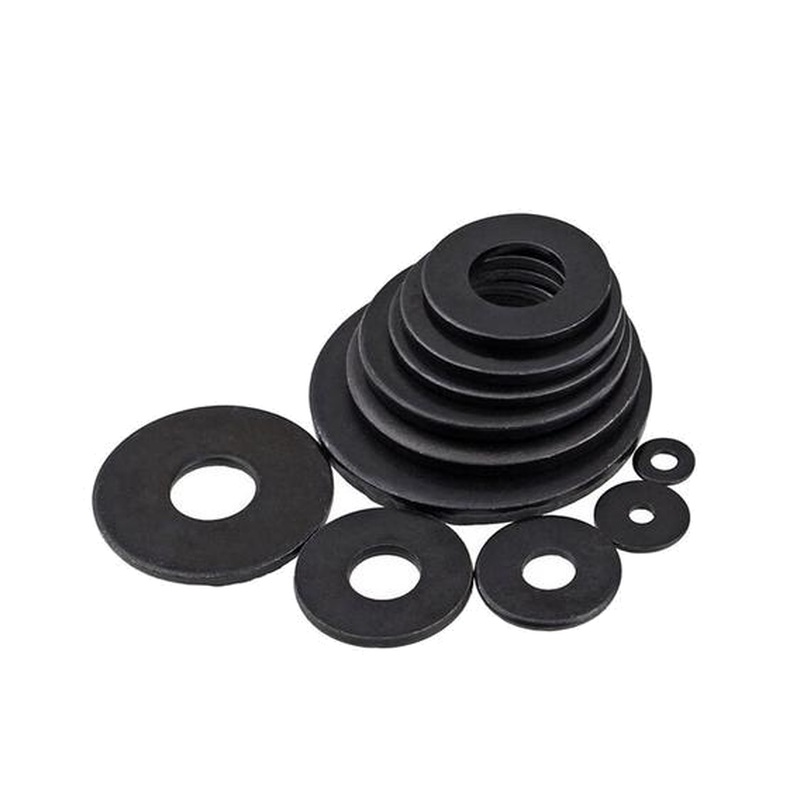
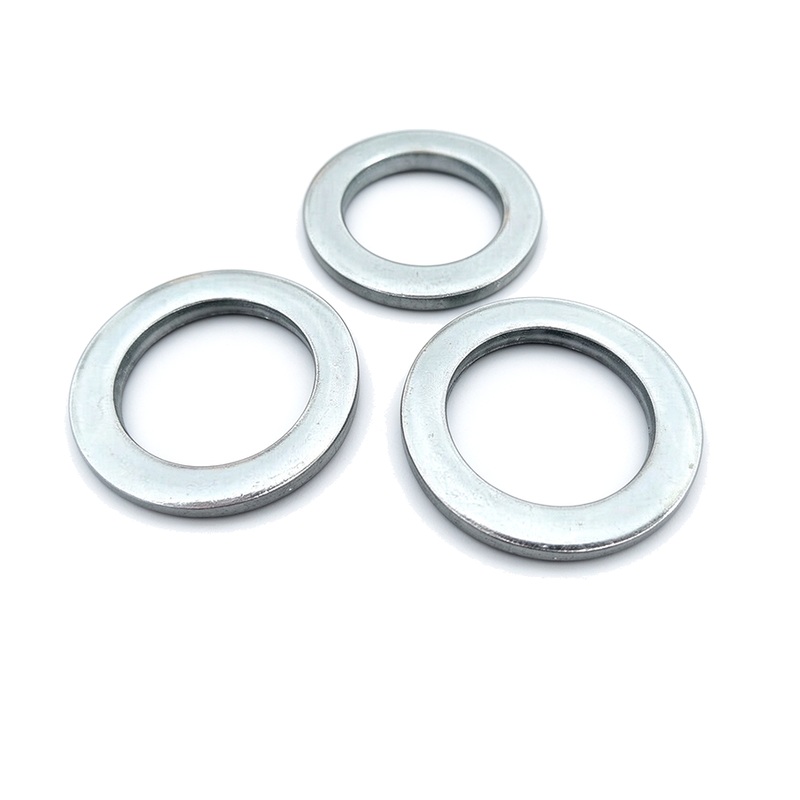
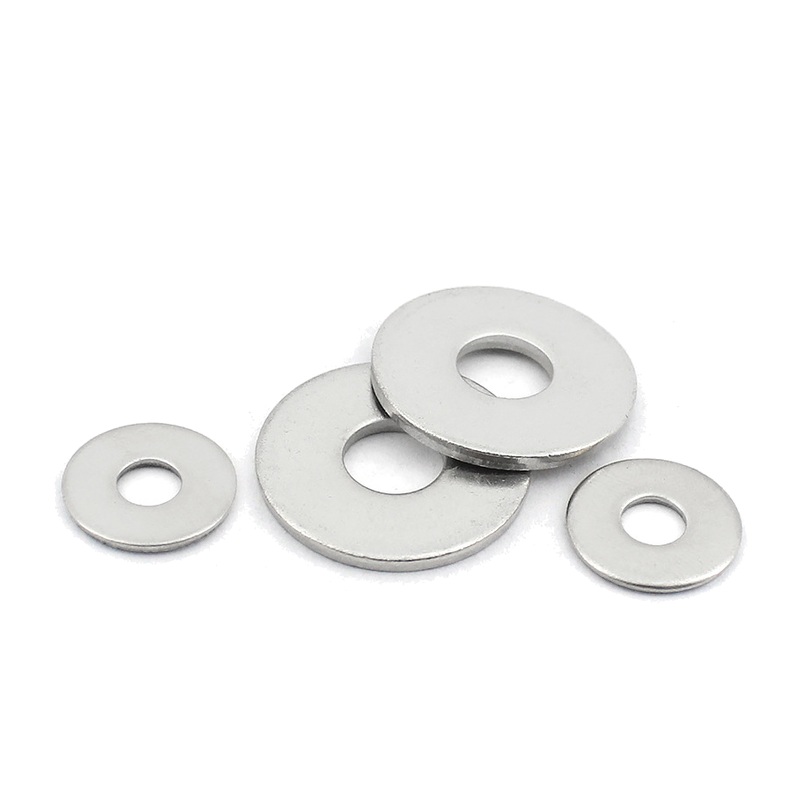
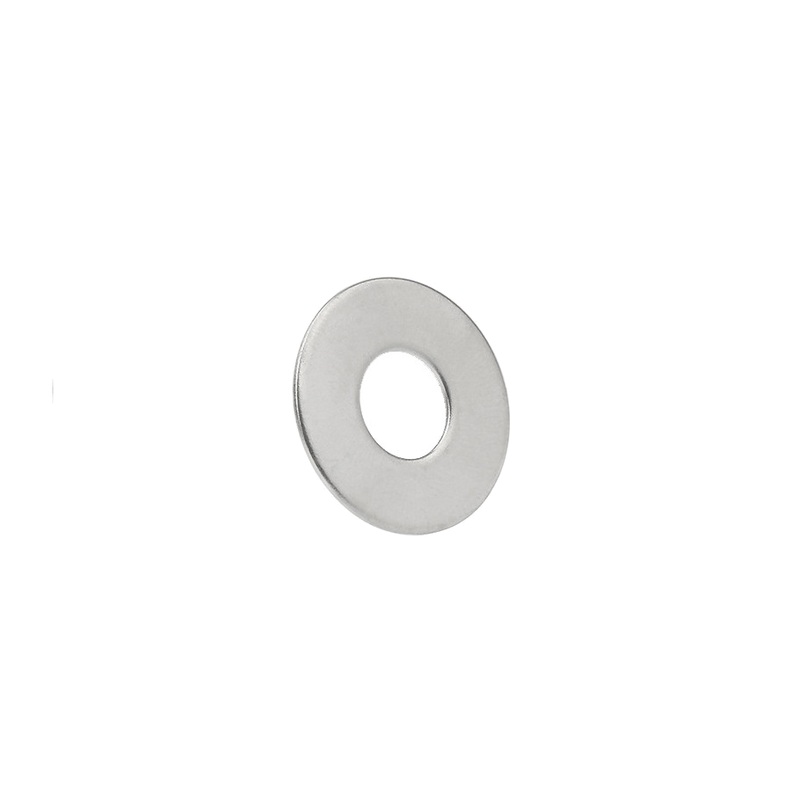
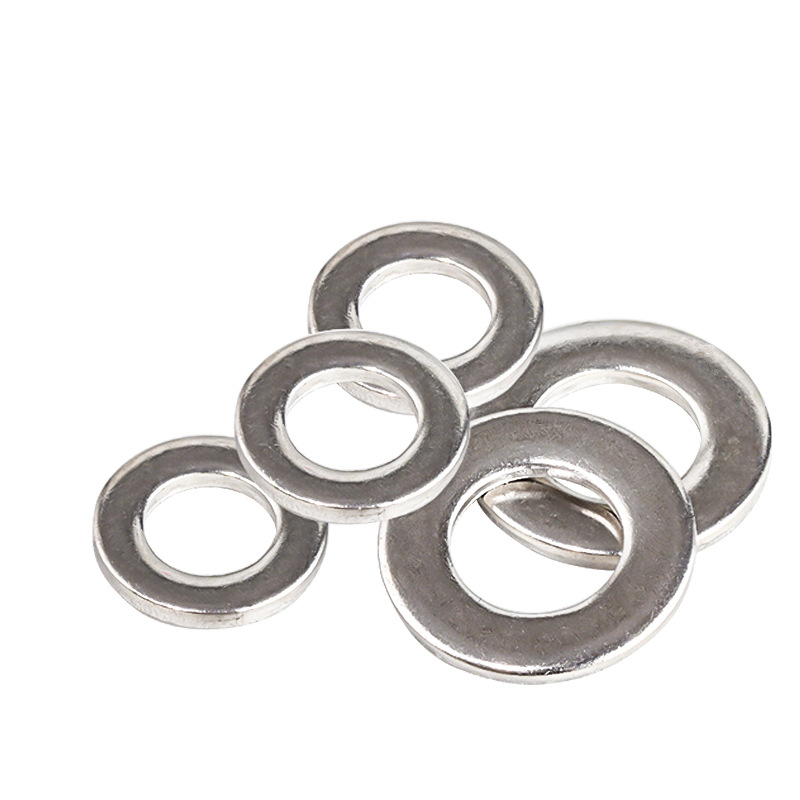
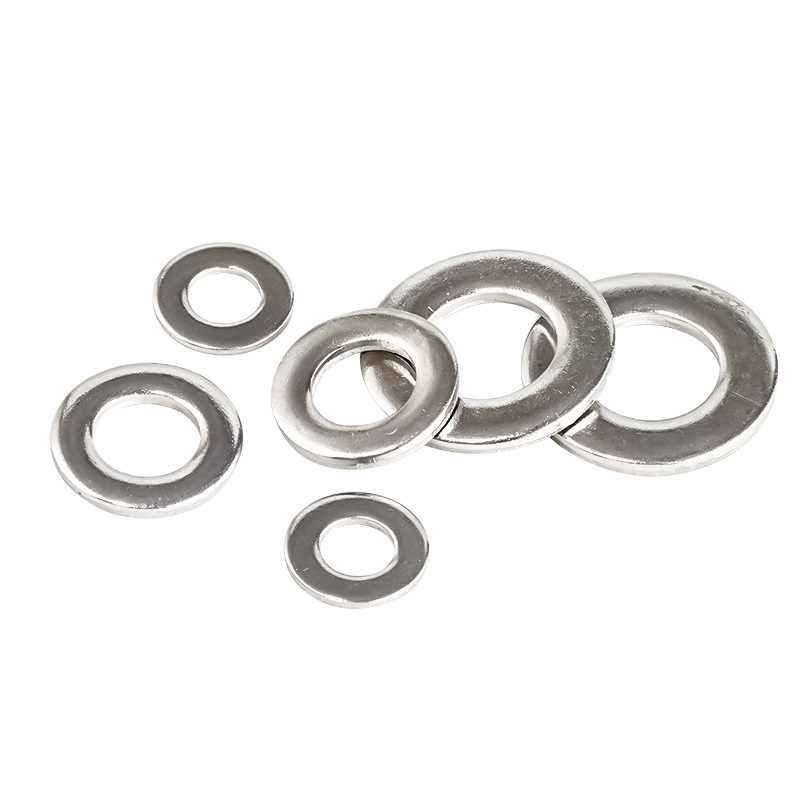
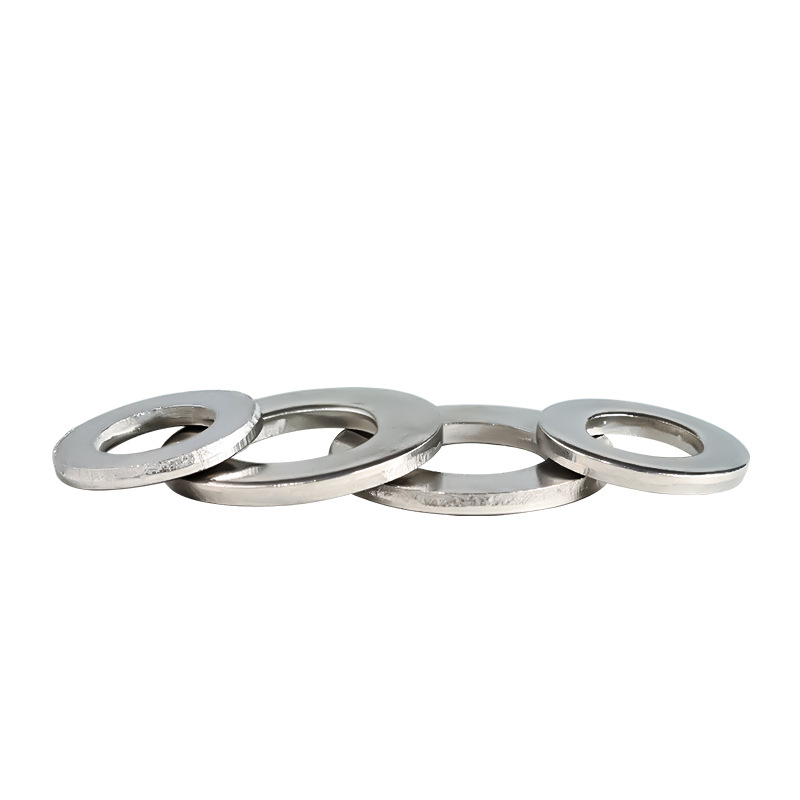
Heavy duty washers are flat washers designed to enhance load-bearing capacity and vibration resistance through increased thickness and optimized structure. Common applicable standards include DIN 7349 (Heavy Duty Flat Washers) and GB/T 96 (Large Washer Series). DIN 7349 washers feature significantly greater thickness compared to standard flat washers (e.g., M12 size has a 6mm thickness), enabling more effective pressure distribution and protection of mating surfaces. Heavy duty washers are widely used in applications demanding high connection stability and durability, such as wind power, shipbuilding, and heavy machinery. Materials primarily include carbon steel and stainless steel, with surface treatments such as zinc plating and black oxide available.
I. PRODUCT FEATURES
Significantly thickened design:
Thickness is substantially greater than standard flat washers. DIN 7349 standard specifies M12 at 6mm thickness and M24 at 10mm thickness, providing stronger structural support.
Clear material and hardness grades:
Common materials include carbon steel (Q235), stainless steel (304/316), and 65Mn spring steel. Hardness grades range from 100HV to 200HV and 300HV, meeting requirements ranging from general loads to 10.9-grade high-strength bolt connections.
Wide specification coverage:
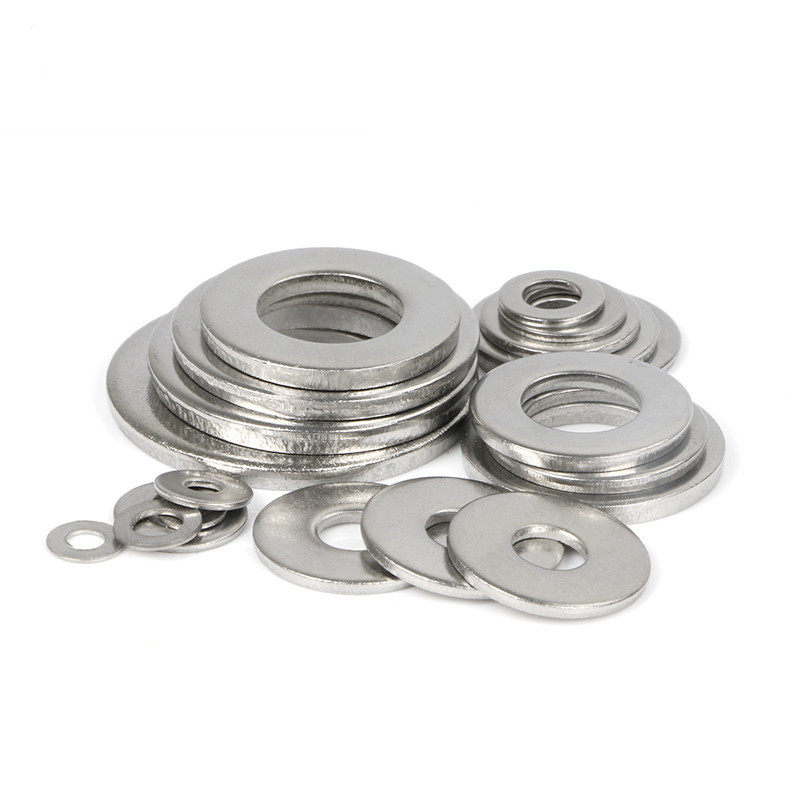
DIN 7349 covers sizes M3 to M30, while GB/T 96 covers M3 to M36, with non-standard custom sizes also available.
Diverse surface treatment options:
Available treatments include black oxide, zinc plating, Dacromet, hot-dip galvanizing, and more, suited to various corrosive environments.
Clearly defined product grades:
Common product grades are Grade A and Grade C, with guaranteed dimensional precision.
II. PRODUCT ADVANTAGES
Strong load distribution capability:
The thickened and enlarged design effectively distributes bolt preload, reducing unit area pressure on joined components. This is especially beneficial for fastening soft materials such as aluminum alloy and wood, preventing surface indentation.
Reliable vibration resistance and anti-loosening performance:
The thickened structure combined with high-strength materials provides superior resistance to vibration and impact, ensuring long-term connection stability. Per DIN 7349, washers exceeding 6mm thickness meet 100HV hardness, while those 6mm or under meet 200HV, achieving differentiated anti-loosening through hardness classification.
Suitable for high loads and harsh environments:
Specially designed for heavy-duty and demanding conditions, such as wind turbine towers, shipbuilding, and extreme cold outdoor equipment, delivering three core values: load distribution, vibration resistance and anti-loosening, and corrosion resistance with long service life.
Compatible with high-strength bolts:
200HV hardness grade is suitable for 8.8-grade bolts, while 300HV is suitable for 10.9-grade bolts, ensuring compatibility and safety in high-strength fastener assemblies.
III. APPLICATION SCOPE
Heavy duty washers are suitable for applications with high requirements on connection strength, stability, and durability:
Heavy mechanical equipment:
High-strength connections in industrial equipment, automotive manufacturing, and general equipment manufacturing.
New energy infrastructure:
Structures subjected to long-term alternating loads, such as wind turbine towers and solar panel mounting systems.
Construction and steel structures:
Critical node connections in building construction, bridges, and rail transit equipment manufacturing.
Shipbuilding and marine engineering:
Connection points requiring resistance to corrosion and dynamic loads in shipbuilding.
Medical devices and electronics manufacturing:
Equipment assembly demanding high connection reliability and precision.