
As the most widely used component in the fastener family, hex bolts are indispensable connecting parts in machinery manufacturing, construction engineering, hardware assembly, new energy equipment and other industries thanks to their uniform stress distribution, easy installation and strong adaptability. Many purchasers and engineers mistakenly believe that “all hex bolts are the same” during new product R&D and project procurement. However, three core parameters—material, strength grade and surface treatment—directly determine the service life, load-bearing capacity and corrosion resistance of bolts. A wrong selection will not only compromise product quality but also pose potential safety hazards and increase after-sales costs.
This guide is compiled based on real industrial standards, with no exaggeration or false information. It elaborates on various types of hex bolt models to help you accurately match application scenarios and solve fastener selection dilemmas for new products.
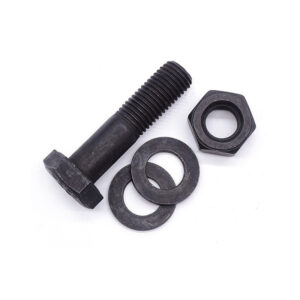
1. Classification by Material: The Backbone of Hex Bolts Determines Core Performance
Material is the foundation of hex bolts, with different materials corresponding to varied strength, corrosion resistance and cost. The mainstream models classified by material in the industry are clearly defined, suitable for different working conditions:
1.1 Carbon Steel Hex Bolts (Most Universal Type)
Carbon steel is the mainstream base material for hex bolts, featuring high cost-performance ratio. It is divided into low carbon steel and medium carbon steel, and also serves as the main material for high-strength bolts. Low carbon steel hex bolts are soft and highly ductile, ideal for light-load applications with no special anti-corrosion requirements, such as daily hardware assembly, furniture fixation and low-voltage equipment connection. Medium carbon steel hex bolts gain enhanced strength after heat treatment, widely used for medium-load machinery and construction component fixation, serving as the basic selection for industrial new products.
1.2 Stainless Steel Hex Bolts (Top Choice for Corrosion Resistance)
Stainless steel hex bolts are designed for superior corrosion resistance, divided into two common models based on alloy composition, suitable for harsh environments like humidity, acid-base exposure and outdoor use: Grade 201 stainless steel hex bolts offer cost-effective basic rust prevention, perfect for indoor dry environments, ordinary hardware new products and decorative components; Grade 304 stainless steel hex bolts deliver excellent acid and alkali resistance and oxidation resistance, making them the first choice for outdoor products, bathroom equipment, food machinery and new energy accessories; Grade 316 stainless steel hex bolts are high-end anti-corrosion models, resistant to seawater and strong acid-base corrosion, widely applied to marine accessories, chemical equipment and coastal engineering new products.
1.3 Other Material Hex Bolts
In addition to carbon steel and stainless steel, there are niche models such as alloy steel hex bolts (high strength and high temperature resistance, for heavy machinery and wind power equipment) and copper hex bolts (conductive and rust-proof, for electrical equipment and precision instruments). These are designed for special working conditions and not recommended for ordinary new products.
2. Classification by Strength Grade: Critical for Load Bearing, No Misalignment Allowed
The strength grade of hex bolts is directly related to load-bearing safety, with unified industrial standard markings. A higher number indicates greater tensile and yield strength. Common grades fall into three categories:
- Class 4.8 Low-Strength Hex Bolts: Made of low carbon steel without heat treatment, this is the lowest strength grade, suitable for non-vibration, light-load scenarios such as furniture assembly, small home appliances and ordinary bracket fixation. Strictly prohibited for load-bearing and high-pressure equipment.
- Class 8.8 Medium-High Strength Hex Bolts: Made of heat-treated medium carbon steel, this is the universal industrial high-strength model with balanced hardness and toughness. It adapts to mechanical transmission, building steel structures, auto parts and medium-sized equipment new products, boasting the widest application range.
- Class 10.9/12.9 Ultra-High Strength Hex Bolts: Made of precision heat-treated alloy steel, these bolts feature extremely high strength and fatigue resistance, specially designed for R&D of heavy-duty, high-vibration new products such as heavy machinery, molds, wind power, high-speed rail and high-end equipment, belonging to special fasteners.
3. Surface Treatment: Protective Coating to Extend Service Life
Surface treatment acts as the “protective armor” for hex bolts, enhancing both aesthetics and rust/corrosion resistance. Different materials are matched with exclusive surface treatments in strict compliance with industrial norms:
- Galvanization (Electrogalvanizing/Hot-Dip Galvanizing): The most common treatment for carbon steel bolts. Electrogalvanizing provides basic rust prevention at low cost; hot-dip galvanizing features a thick coating with strong rust resistance, suitable for outdoor and humid environment new products.
- Dacromet/Zinc-Aluminum Coating: High-end anti-corrosion treatment with no hydrogen embrittlement and long salt spray resistance, widely used for high-strength carbon steel bolts, automotive and new energy accessories.
- Black Oxide Finish: Natural finish for carbon steel bolts, used with anti-rust oil at low cost, suitable for indoor dry and sealed environments.
- Passivation Treatment: Exclusive treatment for stainless steel bolts, enhancing corrosion resistance while maintaining the natural color of stainless steel without damaging material properties.
4. Quick Match of Mainstream Hex Bolt Models & Applications (Direct Reference for New Product Selection)
Bolt Model | Core Parameters | Suitable New Product Scenarios |
|---|---|---|
Class 4.8 Carbon Steel Electrogalvanized Hex Bolt | Low Carbon Steel + Electrogalvanizing | Furniture, Small Home Appliances, Ordinary Brackets, Daily Hardware New Products |
Class 8.8 Carbon Steel Hot-Dip Galvanized Hex Bolt | Medium Carbon Steel + Hot-Dip Galvanizing | Construction Components, Machinery Parts, Outdoor Equipment, Medium Hardware New Products |
Grade 304 Stainless Steel Passivated Hex Bolt | 304 Stainless Steel + Passivation | Bathroom, Food Machinery, Outdoor Lamps, General New Energy Accessories |
Grade 316 Stainless Steel Hex Bolt | 316 Stainless Steel + Natural Passivation | Coastal Equipment, Chemical Instruments, Marine Accessories, High-End Anti-Corrosion New Products |
Class 12.9 Alloy Steel Dacromet Hex Bolt | Alloy Steel + Dacromet Coating | Heavy Machinery, Molds, Wind Power Equipment, High-End Equipment New Products |
Real User Pain Points & Solutions
Real Pain Point: During new product R&D, purchasers blindly select ordinary Class 4.8 carbon steel hex bolts with basic galvanizing to cut costs. When used in outdoor photovoltaic bracket new products, rust, thread slipping and loosening occur within 3 months, leading to rework and replacement, as well as damage to product reputation and delivery schedules.
Solutions: 1. For outdoor and high-humidity new products, abandon Class 4.8 ordinary bolts and switch to Class 8.8 carbon steel hot-dip galvanized hex bolts; for sufficient budgets, directly choose Grade 304 stainless steel models. 2. Before bulk procurement, obtain samples for salt spray and load-bearing tests to confirm scenario compatibility before large-scale ordering. 3. Establish a standardized fastener selection system, fixing the corresponding material-strength-surface treatment combination based on new product usage environment and load requirements to eliminate blind selection.
Although seemingly insignificant, hex bolts serve as the “invisible defense line” for new product quality. Only by mastering the three cores of material, strength and surface treatment, and accurately matching application scenarios, can you select the right fasteners, improve new product stability, reduce after-sales losses, and make every new product stand the test of the market.